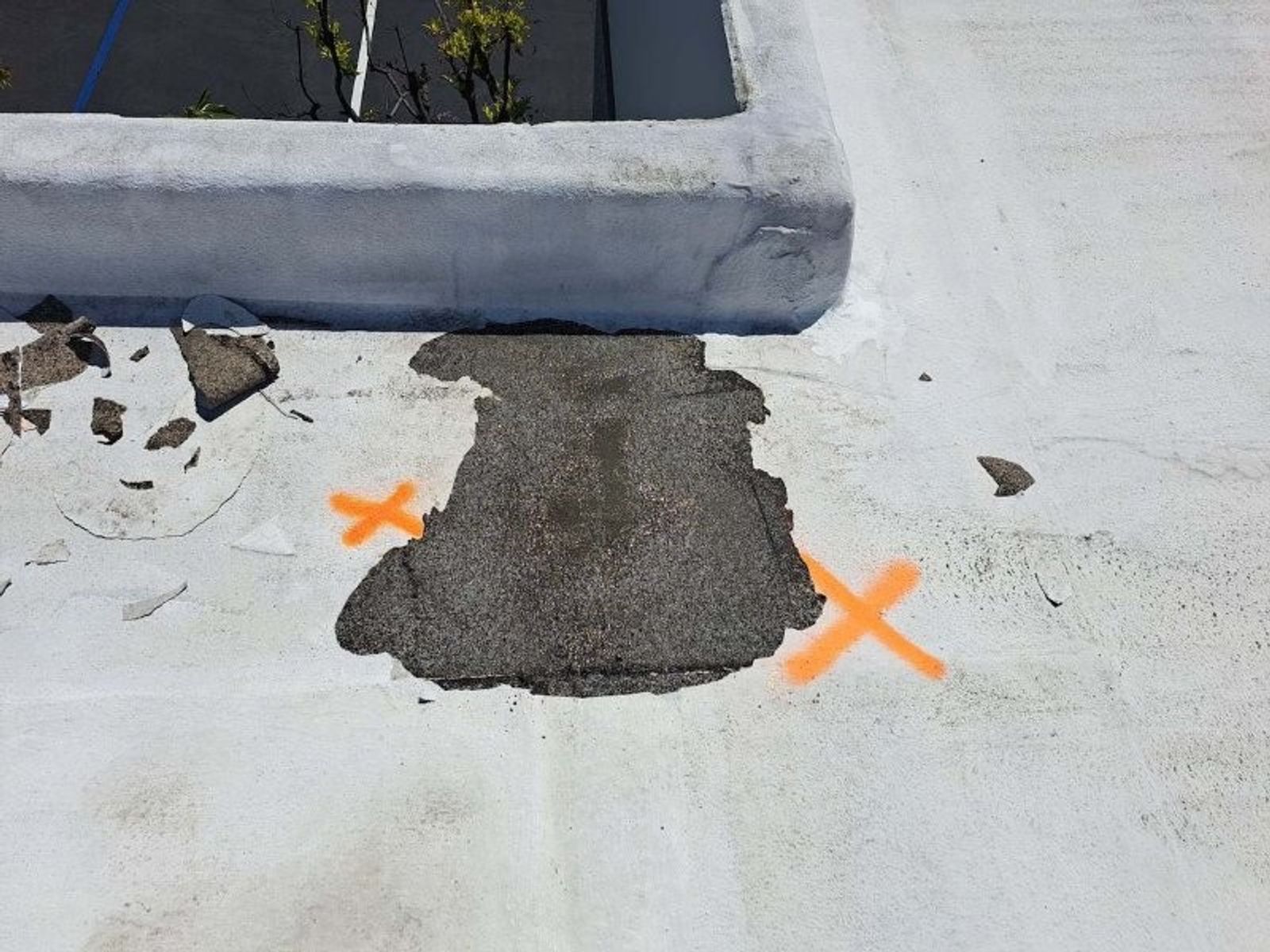
Close detail of acrylic-coated roof surface after cleaning and repair work.

Home / FAQ

Commercial roofing questions property managers ask

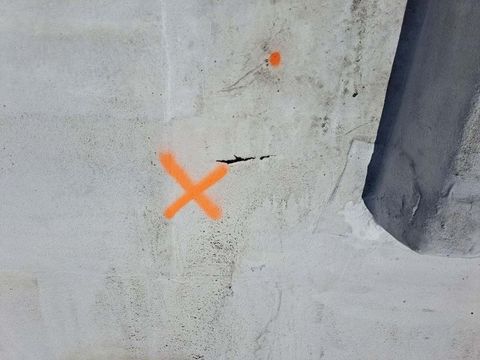
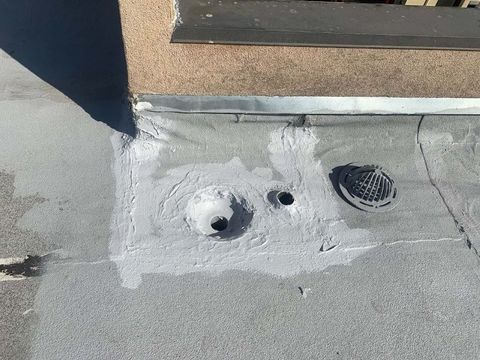
Weathered roof surface marked with orange spray paint next to a small crack. Close-up of a flat roof drain and nearby pipe sealed with fresh gray mastic, drain grate resting beside the bowl.

These are the questions that come up before a scope is written, grouped by the service they belong to. Every answer is general guidance rather than a quote on your building. The link under each group goes to the page that covers it in full.

Commercial roof repair questions

Leaks are the reason most facilities teams call. These are the questions that come up before a crew is even scheduled.

How do you stop a leaking roof during heavy rain?

You cannot dry a roof in a storm, so the first hour is containment. Move stock and electronics out of the water path, tarp and bucket what stays, and photograph the ceiling with a timestamp. If roof access is safe, clear debris off the nearest drain, then call so a crew can set a temporary seal and return for the permanent repair once the surface is dry.

More on Commercial Roof Repair

Is it better to repair or replace a flat roof?

Repair while the membrane is still bonded and the wet insulation is limited to a few countable areas. Replace when the deck is soft, the insulation is saturated across the field, or the same section fails every season. A moisture survey and a core sample settle it faster than anyone's opinion does.

More on Commercial Roof Repair

Does commercial insurance cover roof leaks?

It depends on the policy and on what caused the leak. Sudden damage from wind or storm is commonly covered, while wear, ponding, and deferred maintenance usually are not. We give you dated photos and a written condition note for the adjuster, but the coverage decision belongs to your carrier.

More on Commercial Roof Repair

Who is responsible for roof repairs in a commercial lease?

It depends on the lease type. A triple net lease often puts roof repair on the tenant and sometimes replacement as well, while a gross lease usually leaves the roof with the landlord. Read the maintenance clause and the capital repair clause before approving a scope, because those two are frequently split between the parties.

More on Commercial Roof Repair
Commercial roof coating questions

Coatings are the most oversold product in this trade. Here is the honest version, including where a coating is the wrong spend.

Which is better, acrylic or silicone roof coating?

Neither is better in general, because they fail in different places. Silicone holds up where water sits, so it suits roofs with slow drainage and known ponding. Acrylic recoats easily and takes foot traffic better, so it suits roofs that drain well and see regular service visits.

More on Commercial Roof Coatings

Is it worth getting your roof coated?

A coating is worth it when the roof underneath is sound, dry, and losing its surface rather than its structure. You buy surface life and reflectivity with far less disruption than a tear-off. It is not worth it over wet insulation, because the water stays trapped under the new skin.

More on Commercial Roof Coatings

What are the disadvantages of roof coatings?

Coatings do nothing for wet insulation or a failing deck, and they hide problems when the prep is rushed. The surface has to be clean, dry, and properly primed, so preparation is most of the labor and most of the risk. Silicone also collects dirt and can get slick when wet, and every coating needs recoating at some point.

More on Commercial Roof Coatings

Commercial roof restoration questions

Restoration sits between patching and replacement. These questions decide which side of that line your building is on.

Is roof restoration worth the money?

It is worth it when the deck and most of the insulation are dry and the membrane is still attached. You keep the existing system, skip the tear-off, and keep the building running while the work happens. It is not worth it when the survey finds widespread wet insulation, because you would be paying to cover a problem instead of removing it.

More on Commercial Roof Restoration

What is the typical lifespan of a commercial roof?

It varies by system, install quality, drainage, and maintenance, so a single number would be misleading. Sun exposure, ponding, and foot traffic move the result more than the brand name does. {{VERIFY: published service life ranges by membrane type}}

More on Commercial Roof Restoration

Can you reroof over an existing flat roof?

Often yes. A recover installs a new membrane over the existing one when the deck is sound and the existing assembly is dry. How many layers are already up there and what the local code allows both matter, so the walk checks that before a scope is written.

More on Commercial Roof Restoration

Commercial roof installation questions

New systems are a long commitment. These are the questions worth answering before a membrane gets specified.

Which is better, TPO or EPDM?

Neither wins everywhere, so it depends on the building. TPO is reflective and heat-welds into a strong seam, which suits sunny Los Angeles roofs that need to reject heat. EPDM tolerates movement and ages well, but it is usually black, so it absorbs heat unless it is coated or ballasted.

More on Commercial Roof System Installations

How often should a commercial roof be replaced?

Replace on condition, not on a calendar. A roof that leaks in new places each season, holds saturated insulation, or has lost its attachment is past the point where patching pays. Regular inspection is what tells you which year that is.

More on Commercial Roof System Installations

How much does a commercial roof cost?

Cost follows square footage, the system you pick, how much tear-off and insulation is involved, roof access, and how much equipment sits in the way. Occupied buildings, night work, and crane time all add to it. Current ranges are {{PRICE_RANGE_FROM_IRC}}.

More on Commercial Roof System Installations

Commercial roof inspection and certification questions

Inspections are the cheapest part of owning a roof and the part most often skipped. This is what one actually produces.

What does a roof inspection include?

A walk of the full field, the perimeter, the flashings, the drains, and every penetration, all documented with photos. We check seams, laps, curbs, standing water, and any interior stains you can show us. You get a written condition report with the repairs ranked by urgency, not a sales sheet.

More on Commercial Roof Inspection and Certification

How often should a commercial roof be inspected?

The common industry recommendation is twice a year, before and after the wet season, plus a look after any major storm. Roofs with heavy equipment, solar, or regular foot traffic earn more frequent visits, because that traffic is what damages them. A short log kept over time is worth more than one long report every few years.

More on Commercial Roof Inspection and Certification

What will fail a roof inspection?

Open seams and laps, cracked or lifted flashings, unsealed penetrations, blocked drains, standing water, loose termination bars, and wet insulation under the membrane. Punctures from foot traffic and abandoned equipment curbs show up on nearly every roof. Any of those can hold up a certification until it is repaired and re-checked.

More on Commercial Roof Inspection and Certification

Working with us

How the practice is set up, who it serves, and what happens after you send an address.

What does a commercial roofer do?

A commercial roofer works on the low-slope and flat roof systems that sit on commercial buildings, which is a different trade from residential shingle work. The scope runs from leak repair and coatings through restoration, new system installation, and inspection reporting. The buildings are warehouses, multifamily, retail, office, and light industrial.

Which areas do you cover?

Greater Los Angeles, the San Fernando Valley, and Santa Clarita. Anything past that is {{SERVICE_AREA_CONFIRM}}. Send the property address and you get a straight yes or no before anyone is scheduled.

How does a request start?

Call {{PHONE}} or send the contact form. Include the property address, the roof type if you know it, and what you are seeing, such as a leak, ponding, open seams, or storm damage. We walk the roof before we recommend any scope.

Still unanswered? Send the property address and what the roof is doing to the contact form, or call {{PHONE}}.