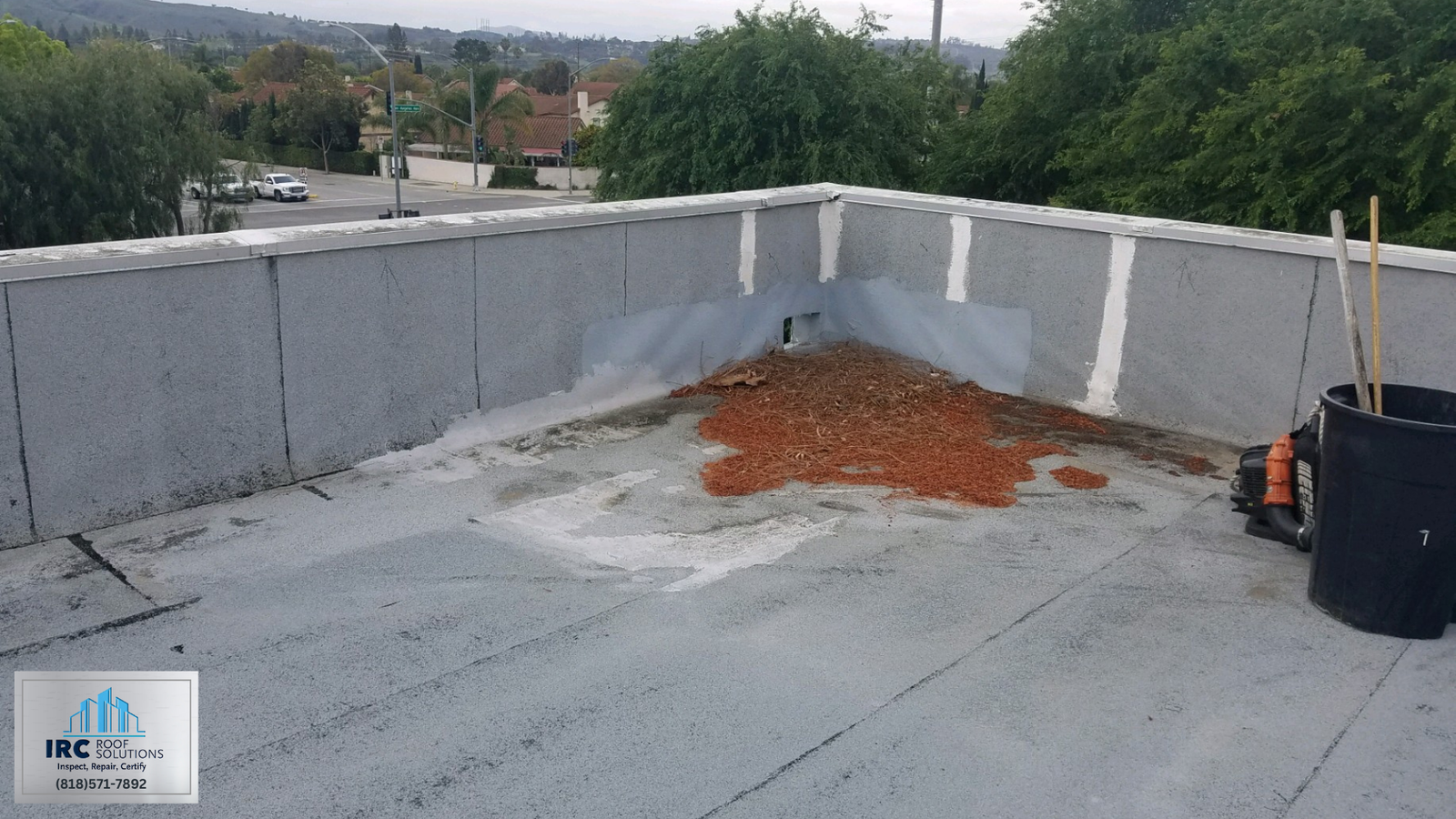
A roof moisture survey finds wet insulation hidden inside a commercial roof. From the surface, a wet roof and a dry roof can look the same. The survey shows where water has spread and how much of the roof it affects.
That answer drives almost every major roof decision. Repair, restoration, recover, and replacement all depend on how much of the insulation is still dry. We run moisture surveys on flat and low-slope roofs across greater Los Angeles.
Why wet insulation matters
Insulation that takes on water loses much of its insulating value. It also adds weight to the deck and can stay wet for years under a membrane. Steel decks rust and wood decks rot under it.
Water also travels. A leak at one flashing can soak insulation many feet away before a stain ever shows inside. That is why the area over the stain is rarely the whole story.
Wet insulation also hurts the roof above it. Fasteners holding the insulation to a steel deck can corrode, and the membrane can blister where trapped moisture heats up in the sun. A roof that looks tired on the surface is sometimes wet underneath.
Infrared roof scans
Infrared works because wet insulation holds heat longer than dry insulation. After a sunny day, the roof cools in the evening, and wet areas stay warmer. A thermal camera picks up those warm patterns across the roof.
The method is described in ASTM C1153, the standard practice for locating wet insulation with infrared imaging. It covers a large roof quickly, often in a single evening. The results are marked on the roof and drawn on a plan.
Infrared needs the right conditions. The roof has to be dry, the day before sunny, and the wind light. Heavy gravel and bare metal surfaces can hide or distort the pattern.
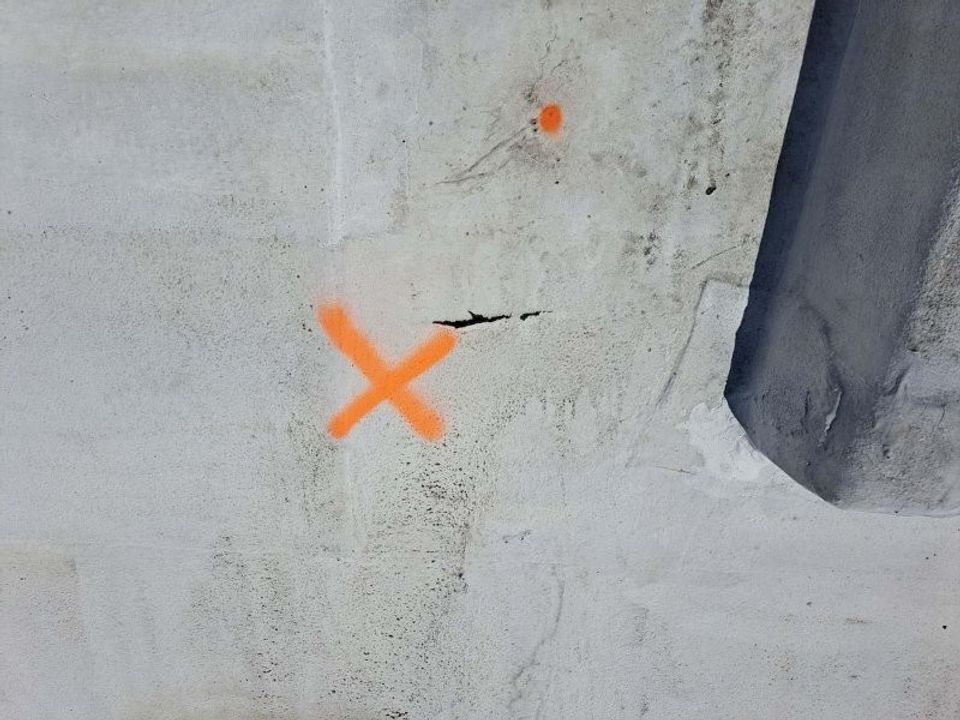
Orange spray paint marking a spot on a weathered roof surface next to a small crack.
Capacitance and impedance scanning
Capacitance and impedance meters read how the roof layers respond to a small electrical field. Water changes that response, so wet areas read higher than dry ones. The meter is rolled or set down across the roof on a grid.
ASTM D7954 covers moisture surveys using electrical capacitance and impedance scanners. These meters work in daylight and do not depend on the previous day's sun. They read the upper part of the assembly best, so deep moisture near the deck can be missed.
Surface conditions affect the readings too. Standing water, dew, and conductive materials on the roof can throw them off. The surface needs to be dry and clear before the grid is scanned.
Nuclear moisture gauges
A nuclear gauge measures hydrogen, which is present in water. Readings are taken on a grid and compared with dry areas of the same roof. Because asphalt and foam also contain hydrogen, the comparison has to be read carefully.
Nuclear gauges can read through gravel and thicker assemblies where other methods struggle. The gauge contains a radioactive source, so it takes trained, licensed operators. It is slower than infrared, so it tends to be used on specific areas or on roofs that other methods cannot read.
Core cuts confirm the findings
Every scan method shows differences, not proof. A core cut is a small sample taken through the roof layers down to the deck. It shows exactly what is there and whether it is wet.
Cores are taken in suspect areas and in areas that read dry, so the two can be compared. Each core also shows how many roof layers exist and what they are made of. Every hole is patched watertight right after the sample comes out.
The layer count matters for more than moisture. It tells us whether a recover is even an option, since code limits how many roofs can be stacked on a building.
Choosing a method for your roof
No single method fits every roof. Most surveys combine one scanning method with core cuts. The choice depends on the roof surface, the insulation type, and the timing.
- Infrared suits large, smooth-surfaced roofs when the weather cooperates.
- Capacitance or impedance suits smaller roofs, daytime work, and targeted areas.
- Nuclear suits gravel roofs and assemblies the other methods cannot read well.
- Core cuts go on every survey, because they confirm what the scan suggests.
Timing matters as much as method. The best moments to survey are before a restoration or recover is designed, after a run of leaks, and before buying a building. A survey done during escrow can change the price conversation.
Weather in Los Angeles helps. Long stretches of clear, dry days give infrared the conditions it needs for much of the year. Surveys right after rain wait until the surface dries.
What the survey decides
The survey report shows wet areas on a roof plan, with the square footage and core results. That map turns into a scope. A few small wet areas can be cut out during a repair or when planning a flat roof restoration.
Widespread wet insulation points to a full commercial roof replacement. Code backs this up. Los Angeles County's reroofing guidance does not allow a recover where the existing roof is water soaked.
Our comparison of restoration and replacement differences explains how those choices play out. The survey also helps with leak tracing on flat roofs, where water has spread far from its entry point. It fits into a broader roof inspection program as well.
What drives the cost of a moisture survey
Roof size, the number of roof areas, and the method chosen move the cost most. Nuclear grids take longer than an infrared scan, and every core cut adds time and a patch. Access and after-hours scheduling for infrared add labor.
The written proposal carries the number. It names the method, the number of cores, and what the report will include.
The finished report is yours to keep. It includes the wet area map, core photos and findings, and the conditions on the day of the scan. Other contractors can bid from the same map, so every proposal covers the same wet areas.
Questions on this service
How accurate is an infrared roof scan?
An infrared scan is very good at showing where a roof behaves differently from the areas around it. It does not prove those areas are wet on its own. That is why suspect areas are confirmed with core cuts before anyone writes a scope based on them.
When is the best time to do an infrared roof survey?
Usually in the evening after a clear, sunny day, when the roof is dry and the wind is light. Wet insulation holds the day's heat longer than dry insulation, so it shows up as warmer areas as the roof cools. Rain, dew, or strong wind can spoil the results.
Do core cuts damage the roof?
A core cut is a small opening through the roof layers, and it is patched right after the sample is taken. Done properly, the patch is watertight. The information from a few cores is worth far more than the small repair each one needs.
How can I tell if my roof insulation is wet?
Soft or spongy spots underfoot, blisters, rust stains on a steel deck, and recurring interior leaks are common signs. None of them shows how far the water has spread. A moisture survey with core cuts is the reliable way to find out.
Can a moisture survey be done on a gravel roof?
Yes, but the method matters. Heavy gravel can distort infrared and capacitance readings, while a nuclear gauge can read through it. Core cuts through the gravel then confirm what the readings suggest.
Related commercial roof inspection and certification services
This page is one part of commercial roof inspection and certification. The pages below cover the rest.
Other commercial roof services
Each property usually needs one clear scope, not all five at once. The walk tells us which page below matches the building.
- Commercial Roof Repair
- Commercial Roof Coatings
- Commercial Roof Restoration
- Commercial Roof System Installations
Ready for a written scope? Request a site visit or call (747) 308-4045.