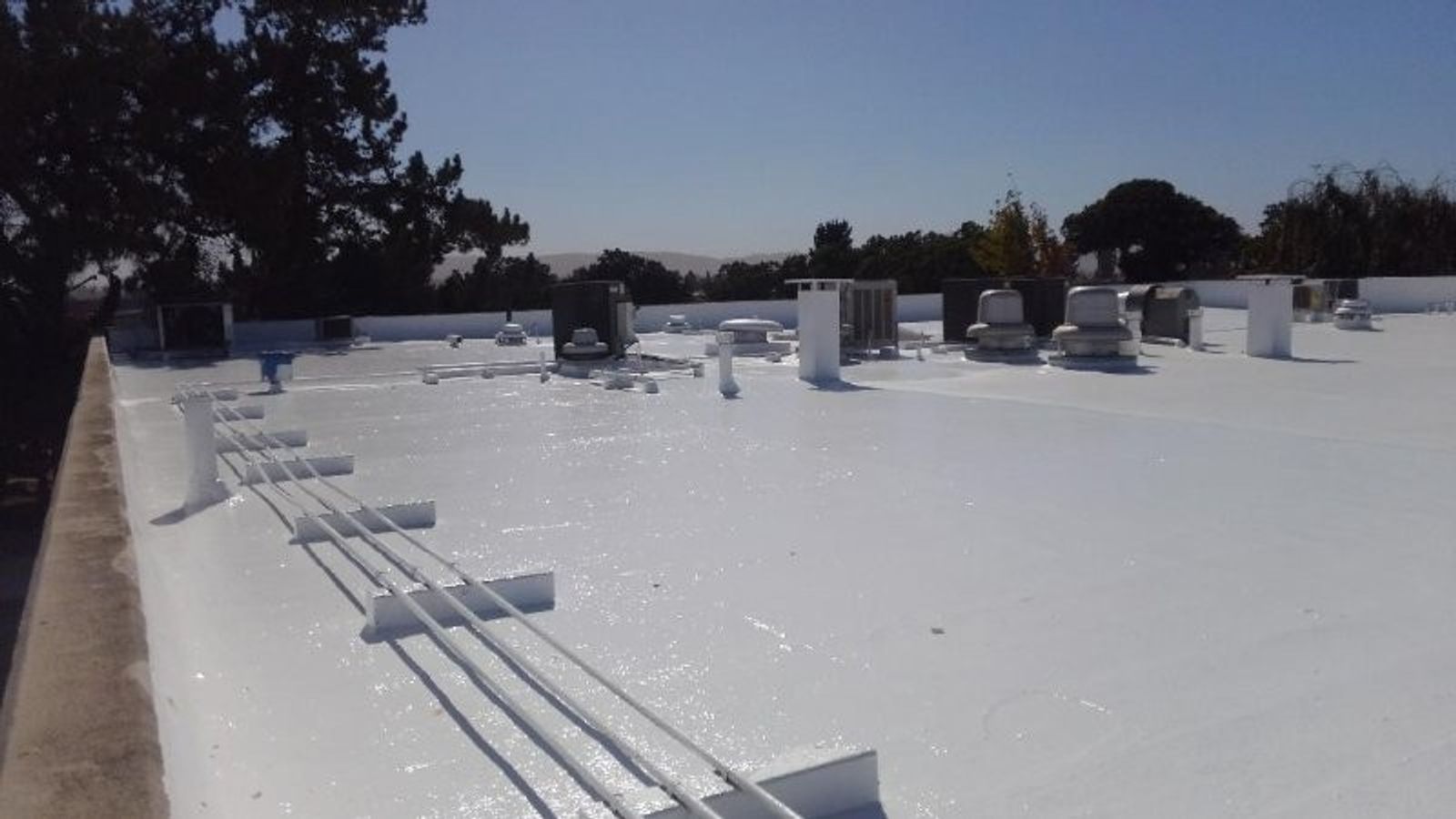
A commercial roof coating is a fluid-applied surface that goes over a roof you are keeping. It is the right answer for a sound, dry roof that is losing its top layer to sun and weather, and the wrong answer for a roof with water trapped in the insulation. We coat low-slope commercial roofs across greater Los Angeles and we will tell you when yours should not be coated.
The product matters less than the preparation. Most coating failures we see are prep failures, not chemistry failures. That is the part of the job worth asking every bidder about.
What a coating system does
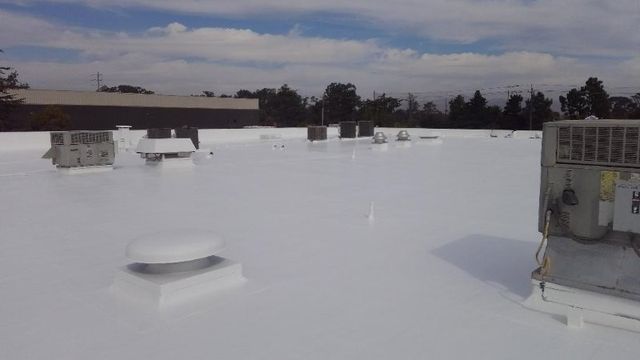
A coating adds a continuous waterproof film with no seams, so the details that usually leak get sealed as part of the surface. It also reflects sun off the roof, which lowers the surface temperature and slows the thermal cycling that opens seams in the first place. On the right roof, that combination buys years of surface life.
What a roof coating does not do is fix the assembly under it. It cannot dry wet insulation, it cannot re-attach a loose membrane, and it cannot stiffen a soft deck. Those get repaired first or the roof is not a coating candidate at all.
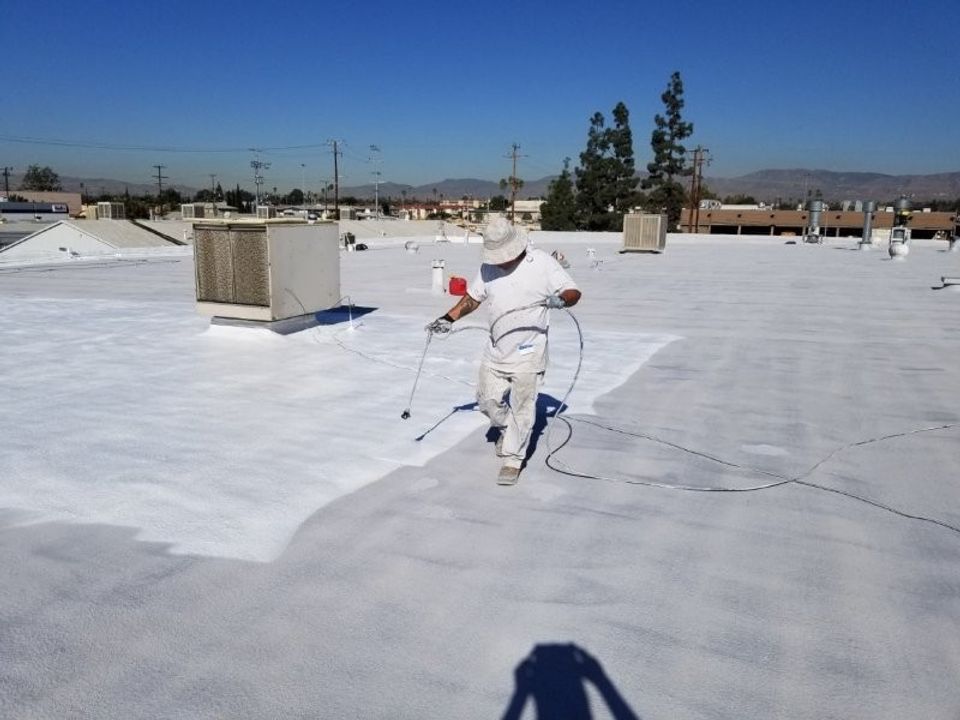
Coating being sprayed onto a flat commercial roof beside rooftop equipment.
Silicone vs acrylic vs other elastomerics for LA roofs
Every elastomeric roof coating is a flexible film, but they behave differently once the weather gets at them. In Los Angeles the deciding factors are drainage, sun, and how much foot traffic the roof takes from service crews. Here is the short version.
Silicone
A silicone roof coating cures with moisture and tolerates standing water, so it is the usual pick for roofs that drain slowly or pond in the low spots. It holds its waterproofing under ponding better than the alternatives. The tradeoffs are that it attracts dirt, which dulls the reflectivity over time, and it gets slippery when wet.
Acrylic
An acrylic roof coating is water based, highly reflective, and easy to recoat later without stripping what is already there. It suits roofs that actually drain and roofs that see regular service visits, because it walks better than silicone. It is not the right choice where water sits for days after a storm.
Polyurethane and hybrid systems
Polyurethane coatings add impact and abrasion resistance, which matters on roofs with heavy traffic paths or hail exposure. They are sometimes used as a base coat under silicone or acrylic rather than as the whole system. We specify the system from {{MANUFACTURER}} that matches your membrane and your drainage, not whatever happens to be on the truck.
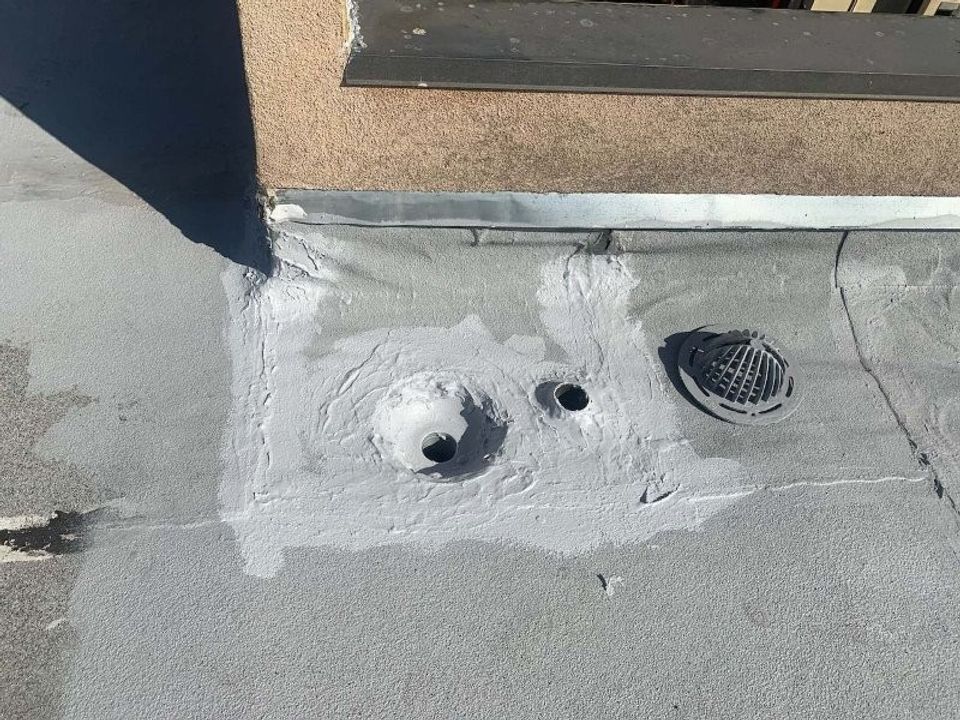
Roof drain and adjacent pipe sealed with fresh mastic during prep.
Which roofs can be coated and which cannot
Most commercial membranes accept a coating if they are dry and still attached. The list of candidates is long, and the list of disqualifiers is short and non-negotiable. We check both during the walk.
- Metal roofs, where coating seals the fastener penetrations and the seams at the same time.
- Single-ply membranes such as TPO, PVC, and EPDM, with the primer chosen for that sheet.
- Built-up and modified bitumen roofs that are sound and still bonded.
- Sprayed polyurethane foam roofs, which are designed to be recoated on a cycle.
- Existing coatings that have weathered but not failed, where a recoat is cheaper than a strip.
A roof gets disqualified when the moisture survey finds saturated insulation, when the deck is soft, or when the membrane has lost its attachment and is moving under foot. Coating over any of those buys nothing and hides the evidence. Those buildings belong on the commercial roof restoration path or in a new roof system conversation instead.
Coating around solar arrays
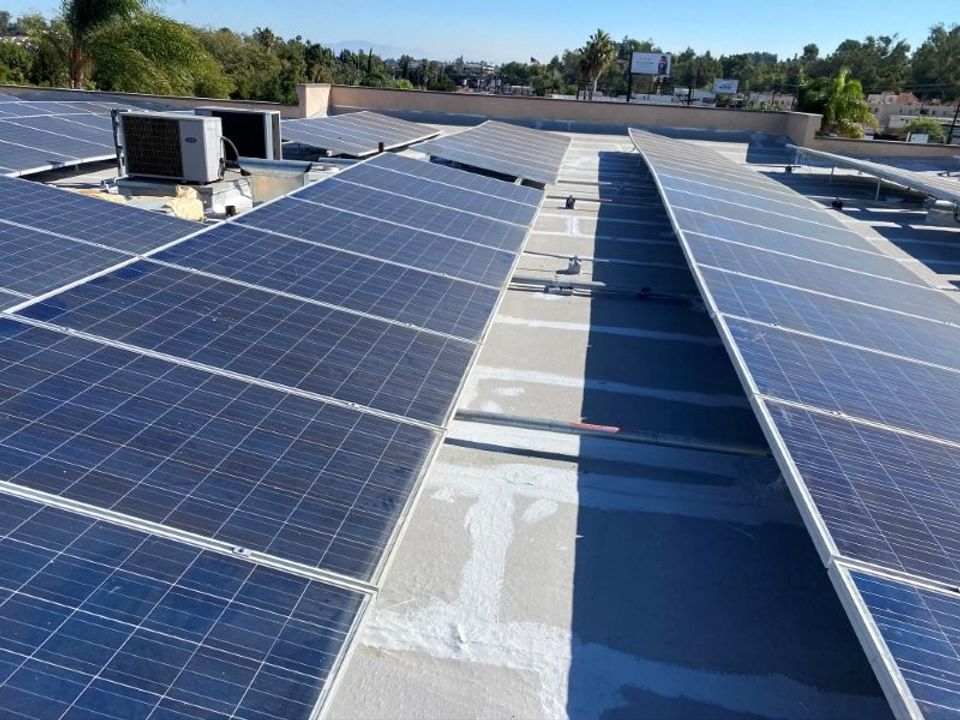
Solar makes a coating job harder in the same way it makes every roof job harder, because the array is in the way and it cannot be damaged. The racking feet, the conduit penetrations, and the shaded strips under the panels are all details that need sealing by hand. Those are the spots that leak later if they get sprayed past instead of prepped.
Work under an array is slower and it should be priced that way. We sequence the roof so panels are lifted or worked around in sections, the substrate under them is cleaned and repaired, and the coating gets full contact at every foot and stanchion. Coordination with your solar contractor happens before the first day, not during it.
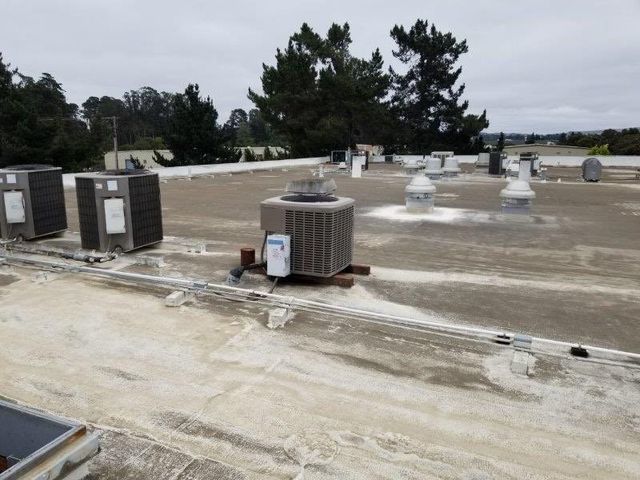
Before and after from the same job type. Captions stay to visible conditions only.
How a coating job runs
The sequence is the same on every roof, and most of the calendar is prep rather than coating. Skipping any step is what produces a two year failure on a system that should have lasted much longer. You see each stage documented before the next one starts.
- Inspect. Walk the roof, survey for moisture, and map the details that need hand work.
- Clean. Pressure wash the field, remove dirt, chalk, grease, and biological growth, then let it dry.
- Repair. Fix the seams, flashings, penetrations, and drains, and replace any wet insulation found.
- Prime. Apply the primer specified for that membrane, since primer is what makes the coating stick.
- Reinforce. Embed fabric at seams, curbs, and penetrations where movement will happen.
- Coat. Apply the base and top coats at the specified thickness, checked as the work goes.
- Final check. Walk it again with you, photograph the finished details, and close the file.
If any step of that gets cut to hit a number, you are buying paint. A roof coating contractor Los Angeles owners should hire will put the prep in writing rather than describe it verbally. Ask for the film thickness and the primer by name.
Cool roofs and energy
A cool roof coating is simply a highly reflective one, and the effect on a dark roof in Los Angeles heat is easy to feel by hand. A lower surface temperature means less heat pushed into the building and less thermal stress on the membrane. Both of those are real, and both are hard to quantify for your specific building without your own energy data.
California energy code sets reflectance and emittance requirements for some roofing work, and those requirements change by climate zone and project type. We check the current code for your building before the scope says a coating meets it.
Getting a commercial roof coating scoped
Every coating decision ends the same way, with somebody walking your specific roof. Send the address and what the roof is doing now, and we will say whether a coating is the right spend. If it is not, we say that too, and point to repair or a documented inspection first.
Call {{PHONE}} or send the property address through the contact form.
Questions on this service
Which is better, acrylic or silicone roof coating?
Neither is better in general, because they fail in different places. Silicone holds up where water sits, so it suits roofs with slow drainage and known ponding. Acrylic recoats easily and takes foot traffic better, so it suits roofs that drain well and see regular service visits.
How long does a silicone or elastomeric roof coating last?
Service life depends on the chemistry, the film thickness applied, the condition of the roof underneath, and the sun and traffic it takes. Warranty terms come from the coating manufacturer, not from a general rule of thumb. {{VERIFY: published service life for silicone and acrylic, manufacturer data sheet}}
Is it worth getting your roof coated?
A coating is worth it when the roof underneath is sound, dry, and losing its surface rather than its structure. You buy surface life and reflectivity with far less disruption than a tear-off. It is not worth it over wet insulation, because the water stays trapped under the new skin.
What are the disadvantages of roof coatings?
Coatings do nothing for wet insulation or a failing deck, and they hide problems when the prep is rushed. The surface has to be clean, dry, and properly primed, so preparation is most of the labor and most of the risk. Silicone also collects dirt and can get slick when wet, and every coating needs recoating at some point.
What are the different types of commercial roof coatings?
The common families are silicone, acrylic, polyurethane, and asphalt or aluminum based coatings, with silicone and acrylic covering most low-slope commercial work in Los Angeles. Silicone is moisture cured and handles ponding, acrylic is water based and reflective, and polyurethane adds impact and traffic resistance. The right family depends on the existing membrane, the drainage, and how the roof gets used.
How much does commercial roof coating cost?
Cost follows square footage, how much prep and repair the roof needs first, the coating chemistry, the number of coats and the film thickness specified, and the work around equipment, drains, and solar. A dirty or failing surface costs more to prepare than to coat. Current ranges are {{PRICE_RANGE_FROM_IRC}}.
Other commercial roof services
Each property usually needs one clear scope, not all five at once. The walk tells us which page below matches the building.
- Commercial Roof Repair
- Commercial Roof Restoration
- Commercial Roof System Installations
- Commercial Roof Inspection and Certification
Ready for a written scope? Request a site visit or call {{PHONE}}.