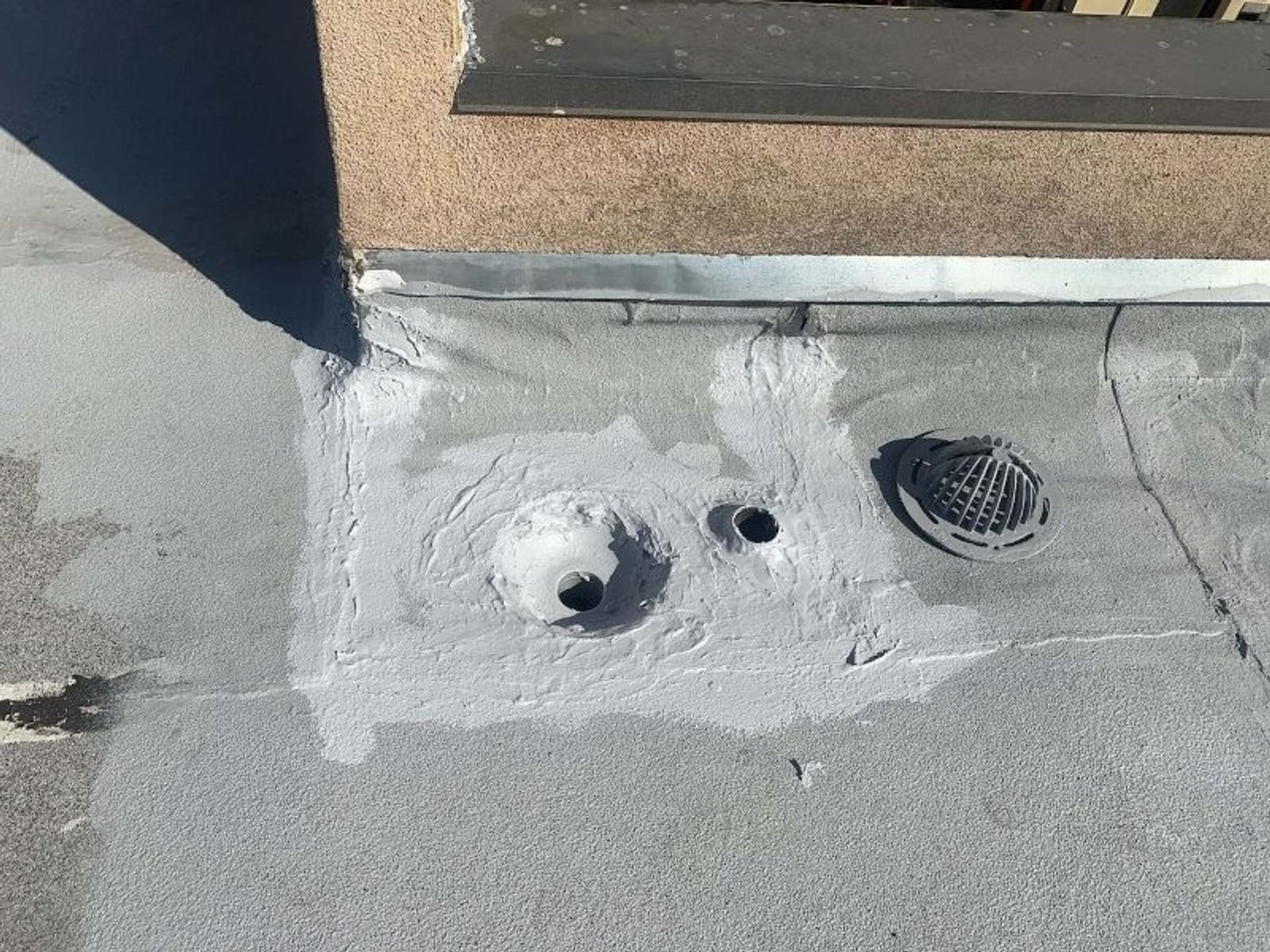
Emergency roof repair is about the first few hours. Water is coming through, people are in the building, and the goal is to stop the damage from spreading. The permanent fix comes later.
We handle emergency roof leak repair on commercial and industrial flat roofs across greater Los Angeles. This page covers what to do inside the building, what a temporary repair on the roof looks like, and how the job moves from stopgap to finished.
Deciding whether it is an emergency
Not every leak needs a crew in the rain. A drip into a bucket in a warehouse corner can wait for a dry day. Water over electrical panels, a ceiling that is sagging, or a roof torn open by wind cannot.
- Water near electrical panels, lighting, servers, or other powered equipment.
- A ceiling that is bulging, sagging, or dropping tiles.
- Active leaks over occupied units, tenant spaces, or stored inventory.
- Membrane peeled back or torn open, with the insulation or deck exposed.
- Deep water standing on the roof because drains or scuppers are blocked.
Any one of those justifies an emergency call. If you are unsure, describe what you see and the call can sort out the urgency.
Inside the building first
Life safety comes before property. Water and electricity are the main hazard, so shut off power to affected circuits if it can be done safely. Keep people out from under any ceiling that is holding water.
Wet floors under a leak cause falls, especially on sealed concrete and tile. Mark the area and put down absorbent mats where people have to walk. A facility log with times and photos helps later, for both the owner and any claim.
Our parent page on repairing commercial roofs in Los Angeles has a short triage checklist for property managers. The steps here go further into what happens once the roof itself is being worked on.
Temporary measures on the roof
A temporary repair has one job: slow the water enough to protect the interior until the roof is dry. The right measure depends on the roof, the weather, and what failed. Most fall into a few types.
Clearing the drainage path
Many storm leaks start with a blocked drain. Water backs up, rises above the flashing, and runs in at the edges. Clearing the drain or scupper often slows the leak within minutes.
Wet-surface sealants and patches
Some roof cements and patching materials are made to stick to damp surfaces. They can close an open seam, a split, or a failed boot long enough to get through a storm. They do not bond like a finished repair and are not meant to.
Covering a torn or open section
When wind has peeled back membrane, the exposed area needs cover. On a flat roof that means sheeting that is weighted or fastened so it will not lift. A loose cover can catch wind and cause more damage than the original tear.
Diverting water under the deck
Sometimes the roof cannot be reached and the water has to be managed from below. Plastic sheeting hung under the leak can funnel water into a drum or a floor drain. It keeps a single drip from spreading across racks, desks, or finished flooring.
Open-deck warehouses make this easier because the leak point is visible. Buildings with drop ceilings are harder, since water runs along the grid and tiles before it falls. Pulling a few tiles near the stain often shows where it is really entering.
A person walking a commercial roof and photographing the membrane and equipment.
When the roof is not safe to work
Wet membrane is slick, and many commercial roofs have skylights and open edges. Commercial roof work falls under federal fall protection requirements, and a storm does not suspend them. High wind, lightning, or darkness can make a roof unsafe no matter how bad the leak is.
In those cases the work stays inside. The crew protects the interior, catches water, and moves contents. The roof work starts when conditions allow it.
From temporary patch to permanent repair
Every temporary measure gets a return visit. The permanent repair needs a clean, dry surface that matches the membrane, and a storm provides neither. The emergency materials are usually removed so the finished repair bonds to sound roof.
The return visit is also when the real source gets confirmed. An emergency patch goes where the water is obvious, which is not always where it started. Our guide to finding the true source of a commercial roof leak explains how that search works.
Once the source is known, the fix follows the membrane type. Seams, cracks, and ponding on any low-slope system are covered on our flat roof membrane repair page. If the damage came from high wind or a heavy storm, the steps for documenting it are on our storm damage assessment and documentation page.
What drives the cost of an emergency call
Emergency work costs more than a scheduled repair because it happens under worse conditions. The written proposal carries the number and lists what went into it. These are the usual drivers.
Timing matters first. Night, weekend, and storm work take more labor and more care. Access matters next, because a tall building or a roof reached only through a tenant space slows every step.
The size of the temporary measure and the amount of interior protection also count. So does the return visit for the permanent repair, which is usually its own line.
Preparing before the next storm
Many Los Angeles roofs go months without rain. Drains fill with leaves, dust, and debris during the dry season and nobody notices. Then the first storm finds every clog at once.
Model property codes expect that roof drains are kept free of obstructions. A fall walk to clear drains and check flashings prevents many emergency calls. Our notes on how often to inspect a commercial roof cover the timing.
Keep a simple file for each building. Include a roof plan with drain locations, the roof type, how the roof is reached, and who holds the key. That file shortens every emergency call.
Questions on this service
What counts as a roof emergency on a commercial building?
Active water entering an occupied space, water near electrical equipment, a sagging ceiling, or a membrane torn open to the deck all count. So does a roof holding deep water because drains are blocked. A slow drip into a bucket in a storage room can usually wait for dry weather.
Is it safe to put a tarp on a flat commercial roof?
Only if it is weighted and secured so wind cannot lift it, and only when someone can get to the roof safely. On a flat roof a loose tarp can catch wind, tear flashings, and block drains. Sealing the opening with a temporary patch material is often the better choice.
Should I cut a hole in a ceiling that is filling with water?
A bulging drywall or plaster ceiling can drop without warning, so keep people out from under it first. Some facilities teams release the water into a container with a small hole, but only after power to nearby fixtures is off and the area is clear. If in doubt, leave it and keep people away.
Will an emergency roof patch hold until the permanent repair?
A temporary patch is meant to hold for days or weeks, not seasons. It is set on a wet, dirty surface, so it cannot bond like a finished repair. Plan the permanent repair for the first dry stretch.
What information should I have ready when I call about a roof emergency?
Have the property address, where the water is showing inside, whether the space is occupied, and how the roof is reached. Photos of the interior help, as does the roof type if you know it. Mention any rooftop equipment or solar near the problem area.
Related commercial roof repair services
This page is one part of commercial roof repair. The pages below cover the rest.
- Commercial Roof Leak Repair
- Flat Roof Repair
- Storm Damage Roof Repair
- TPO Roof Repair
- Roof Flashing Repair
Other commercial roof services
Each property usually needs one clear scope, not all five at once. The walk tells us which page below matches the building.
- Commercial Roof Coatings
- Commercial Roof Restoration
- Commercial Roof System Installations
- Commercial Roof Inspection and Certification
Ready for a written scope? Request a site visit or call (747) 308-4045.