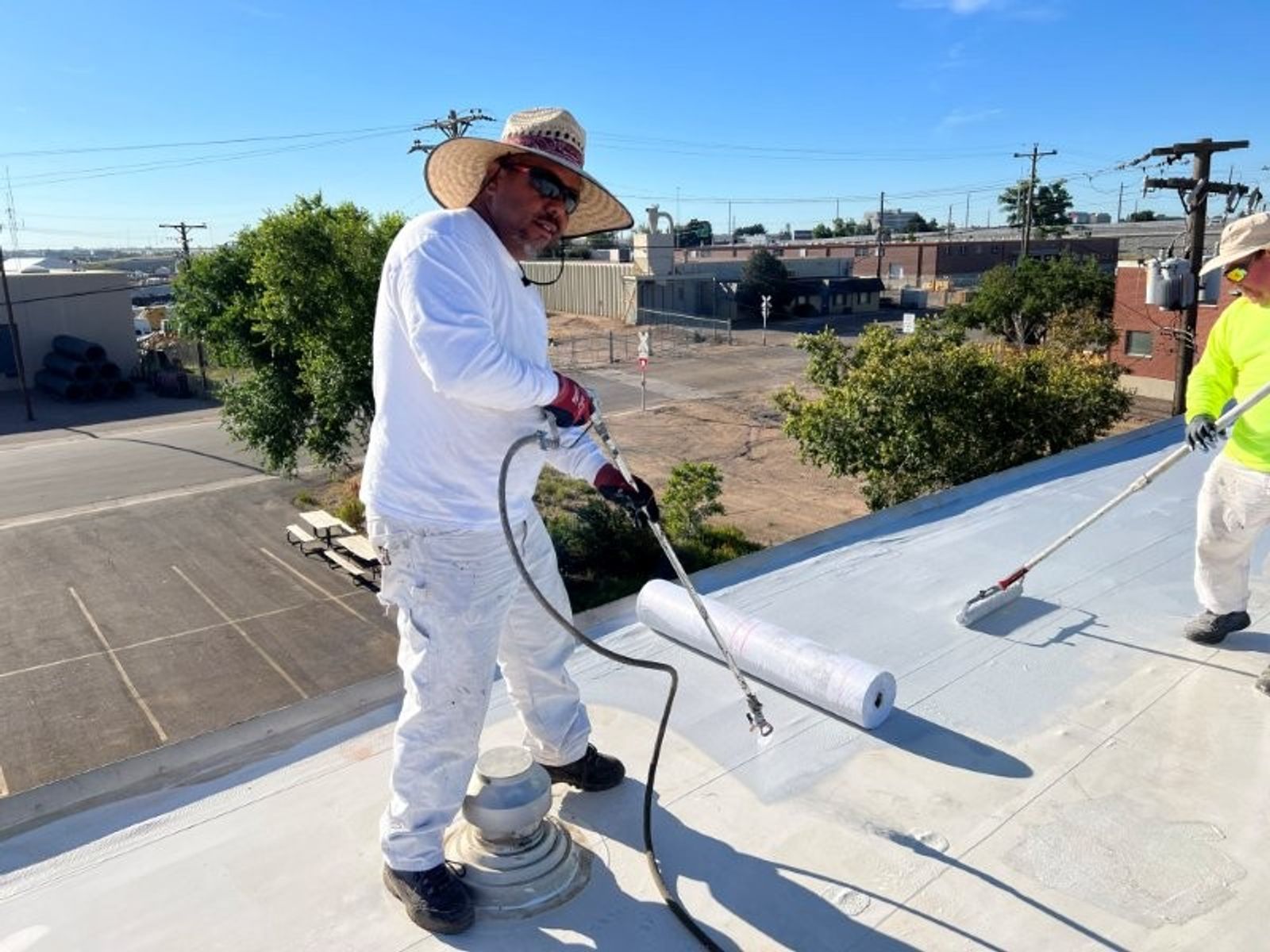
Flat roof restoration renews a low-slope commercial roof in place. The existing membrane stays, the failed details get rebuilt, and a new surface goes over the field. The building keeps running while the work happens.
Most flat roofs in Los Angeles wear out from the top down. Sun and heat break down the surface long before water reaches the deck. That pattern is why so many of them are worth restoring instead of tearing off.
Which flat roofs restore well
The roof type matters less than its condition. Built-up, modified bitumen, single-ply, and sprayed foam roofs can all be restored. What a good candidate shares is a dry assembly and a membrane still bonded to what sits under it.
Each system brings its own prep work. The survey notes these conditions so the scope reflects the roof you actually have.
- Built-up roofs: loose gravel comes off, and blisters and splits in the plies get cut out and repaired.
- Modified bitumen: open laps, lost granules, and cracked seams at the end laps get addressed first.
- Single-ply: seams get probed, and membrane pulling away from walls or curbs gets re-secured.
- EPDM: perimeter shrinkage and aged seam tape are the usual problems before any surface goes on.
- Sprayed foam: eroded and blistered areas are ground back to sound foam and filled.
Proving the roof is dry first
A new surface seals in whatever is under it. If the insulation is wet, restoration traps that water against the deck. The roof then fails from the inside while it looks new from above.
That is why the work starts with an infrared and capacitance moisture survey and core cuts to confirm what the scan shows. The wet areas get outlined on a roof plan. Those sections are cut out and replaced with new insulation before anything else goes down.
The walk also checks the deck from below where we can get access. Rust stains on a steel deck or dark areas on wood sheathing tell us where water has been sitting.
The building code follows the same logic for new roofs over old ones. Los Angeles County's reroofing guidance does not allow a recover over an existing roof that is water soaked or deteriorated. A dry roof is the starting condition for keeping what you have.
The restoration sequence on a flat roof
After the wet material is gone, the details come next. Flashings at walls and curbs get rebuilt or reinforced. Pipe boots, pitch pans, and drain clamping rings get the same attention, because these are the spots where water gets in.
Then the field gets cleaned. Dirt, chalking, and loose material all prevent a bond, so the surface is washed and left to dry fully. Some substrates need a primer, including asphalt roofs that can bleed through a light coating.
Reinforcing fabric goes into the seams and details that move. The base coat and top coat follow at the thickness the specification calls for. Thickness is checked as it goes on, since a thin coat is the most common reason a restored roof wears out early.
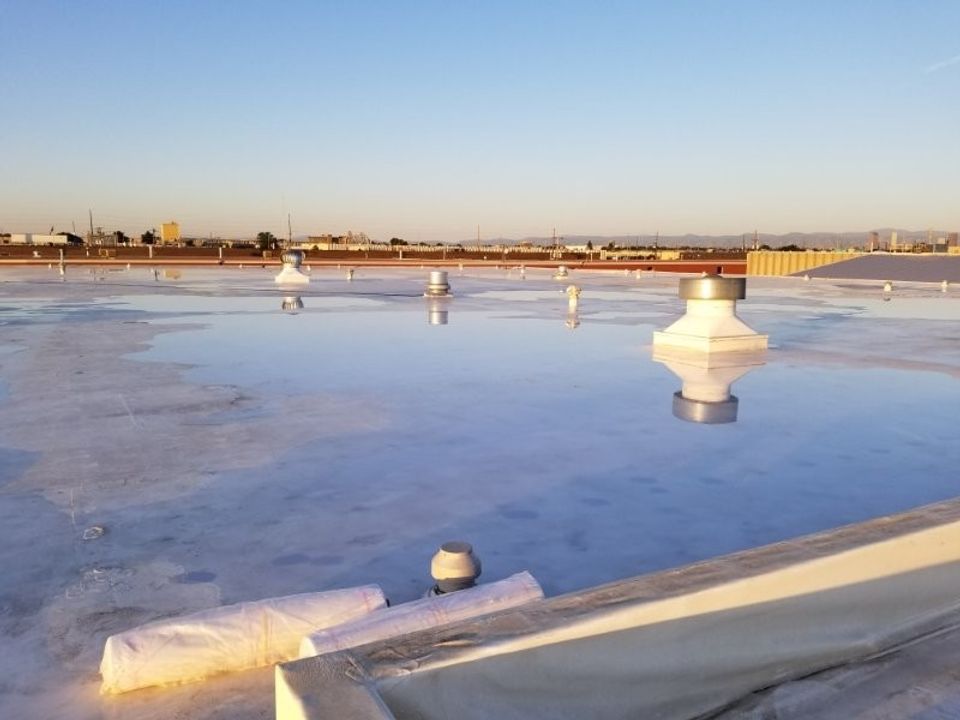
Standing water across a flat roof field, with vents and rolled material at the edge.
Ponding and drainage on low-slope roofs
Water that stays on a flat roof long after a storm speeds up every kind of wear. It holds dirt against the surface and loads the deck. It also finds any seam that is even slightly open.
Restoration is the right time to correct it. Clogged drains get cleared, low areas can be built up with tapered insulation or crickets, and an added drain or scupper can take water off a dead spot. Where a roof will always hold some water, the silicone restoration process for ponding roofs is usually the specification, since silicone handles standing water well.
Roof restoration vs replacement on a flat roof
The choice comes down to what the survey finds. Wet insulation in a few areas can be cut out during a restoration. Wet insulation across most of the field means the roof needs to come off.
The energy code also treats the two differently. Under the 2025 California Energy Code, recoating a nonresidential roof is exempt from the insulation upgrade but still has to meet the cool roof rules. Replacements and recovers can trigger added insulation.
That difference often shapes the budget as much as the roofing does. Added insulation can mean raising curbs, flashings, and edge metal to meet the new roof height. A restoration leaves those heights where they are.
If the numbers point toward a new roof, the tear-off versus recover decision comes next. If only a few details are failing and the surface is sound, targeted flat roof repair may be all the roof needs this year.
Is roof restoration worth it for your building
It depends on how long you plan to hold the building and what shape the roof is in today. A dry roof with worn surfaces and a handful of failed details is the classic case. Owners on a shorter hold often prefer restoration because it avoids a tear-off during their ownership.
Industry sources support the longer view as well. The roof coatings trade association notes that a properly applied coating can extend roof life up to 10 years or more, depending on the type, conditions, and film thickness. Coatings can also be recoated as they wear, which keeps the same roof in service across more than one cycle.
The comparison belongs in the context of the full commercial restoration scope, including surface repairs, drainage, and code items. A cheap coat over a wet or poorly prepared roof is never worth it.
Flat roof restoration cost drivers
Two flat roofs of the same size can land far apart on price. The difference is almost always in the prep and repair work. These are the items that move the number most.
- How much wet insulation the survey finds and how much has to be replaced.
- The number of penetrations, curbs, drains, and wall flashings to rebuild.
- Gravel removal on built-up roofs and grinding on foam roofs.
- Drainage corrections such as crickets, tapered insulation, or added drains.
- The coating system and the total thickness specified.
- Access, rooftop equipment, and whether work has to happen around tenants.
The written proposal carries the number, with each item broken out. That way you can see where the money goes and compare bids on the same scope.
Questions on this service
How long does a flat roof restoration take?
Most of the schedule comes from the repair phase and the weather. Wet insulation removal, flashing rebuilds, and drain work all happen before any coating goes on. Coatings also need a dry surface and a dry forecast to cure, so the written proposal lays out the sequence instead of a single date.
Can a flat roof with ponding water be restored?
Yes, if the insulation under the ponds is dry and the drainage is part of the scope. Drains can be cleared or added, and low spots can be built up with tapered material or crickets. Where some ponding will remain, the coating has to be one suited to standing water.
Do I need a permit to restore a flat roof in Los Angeles?
In the City of Los Angeles, applying an approved coating to an existing roof is listed as an express permit item. Other cities and unincorporated county areas set their own rules. On nonresidential buildings, the Title 24 cool roof requirements can also apply to a recoat.
Can a gravel built-up roof be restored?
Often, yes. The loose gravel has to come off first, and the surface underneath is cleaned and checked for blisters and splits. The moisture survey still decides, because gravel can hide wet areas that are hard to read from the surface.
Does flat roof restoration fix a soft or sagging deck?
No. Restoration works on the membrane surface and the details. A deck that is soft, rusted through, or sagging needs structural repair or replacement in that area before anything else happens. Soft spots underfoot are one of the first things we check on the walk.
Related commercial roof restoration services
This page is one part of commercial roof restoration. The pages below cover the rest.
Other commercial roof services
Each property usually needs one clear scope, not all five at once. The walk tells us which page below matches the building.
- Commercial Roof Repair
- Commercial Roof Coatings
- Commercial Roof System Installations
- Commercial Roof Inspection and Certification
Ready for a written scope? Request a site visit or call (747) 308-4045.