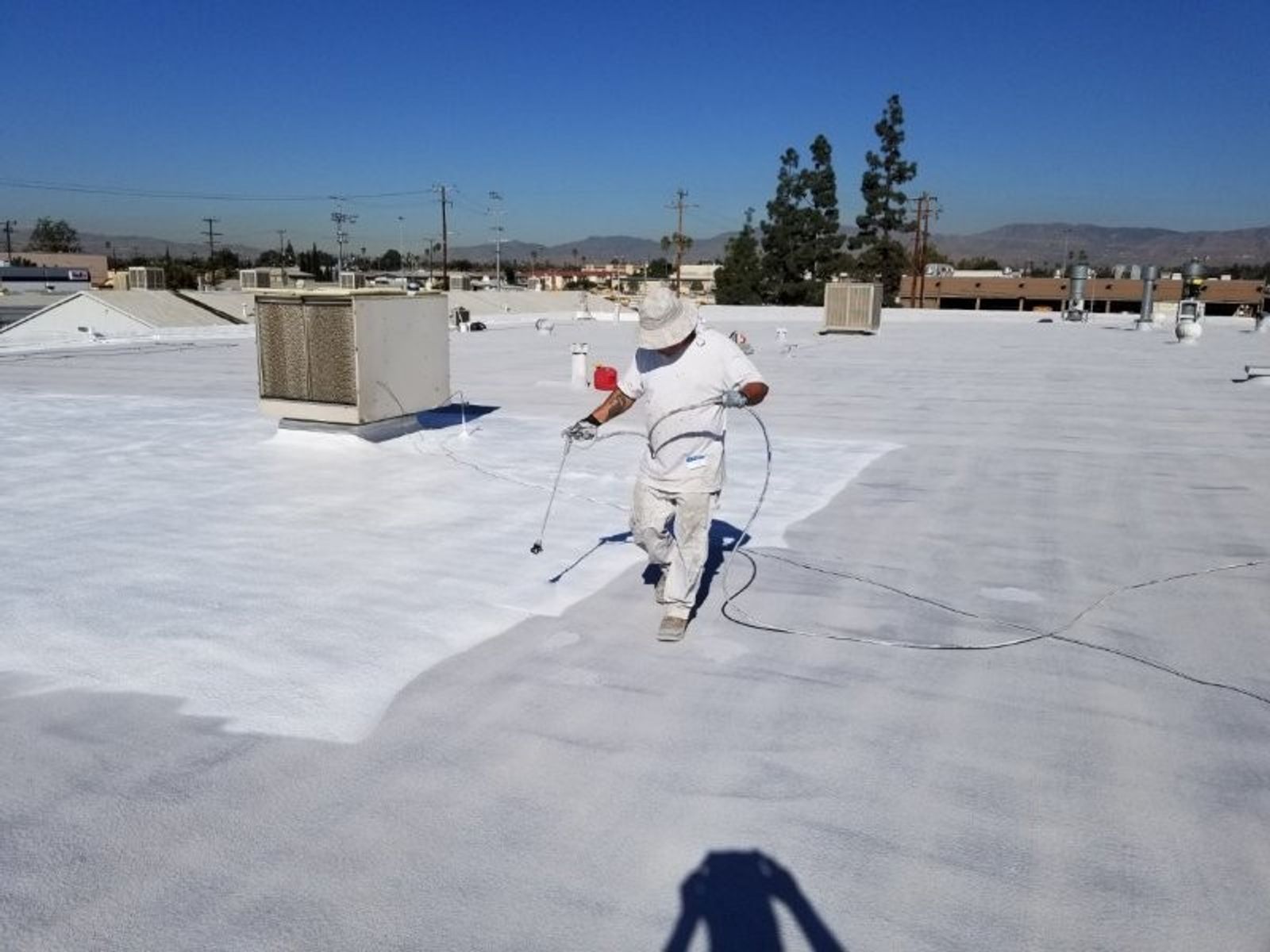
A silicone roof coating is a moisture-cured film that stays waterproof where water sits. On a flat commercial roof with slow drains or low spots, that one property often decides the product. The rest of the decision is prep, film thickness, and what the roof will need at its next recoat.
We apply silicone coatings on low-slope commercial and industrial roofs across greater Los Angeles. This page covers the product decision and what a good specification says. The full sequence of a project built on silicone is on our silicone roof restoration process page.
When silicone is the right chemistry
Silicone does not break down under standing water the way water-based coatings can. That makes it the usual choice on roofs that hold water for a day or two after a storm. Drains set too high and sagging areas between framing are the typical causes.
Silicone also resists breakdown from ultraviolet light. It keeps its flexibility through years of Los Angeles sun, which is the main thing that ages a flat roof here. That stability is why many specifications call for a single thick pass instead of several thin coats.
It has limits worth knowing before you pick it. Dirt clings to the surface and lowers its reflectance until the roof is washed. A wet silicone roof is also slick underfoot.
Silicone vs acrylic on a flat roof
The choice between silicone and acrylic usually comes down to three questions. They cover water, foot traffic, and the future of the roof.
- Does water stand anywhere longer than a day or two after rain? Silicone tolerates it and acrylic does not.
- Do service crews cross the roof every week? Acrylic walks better and shows scuffs less.
- What will the next recoat use? Very little bonds to cured silicone except more silicone.
That last point gets missed in most bids. Once a roof is silicone, the next coat is silicone, or the old film has to be cleaned and primed with a product made for the job. The water-based side of the tradeoff is covered on our acrylic roof coating for well-drained roofs page.
Prep and adhesion testing
Silicone bonds to a clean surface and lets go of a dirty one. The roof gets pressure washed, chalky old coating and loose granules come off, and grease near kitchen exhausts gets degreased. Then the surface has to dry completely before anything goes down.
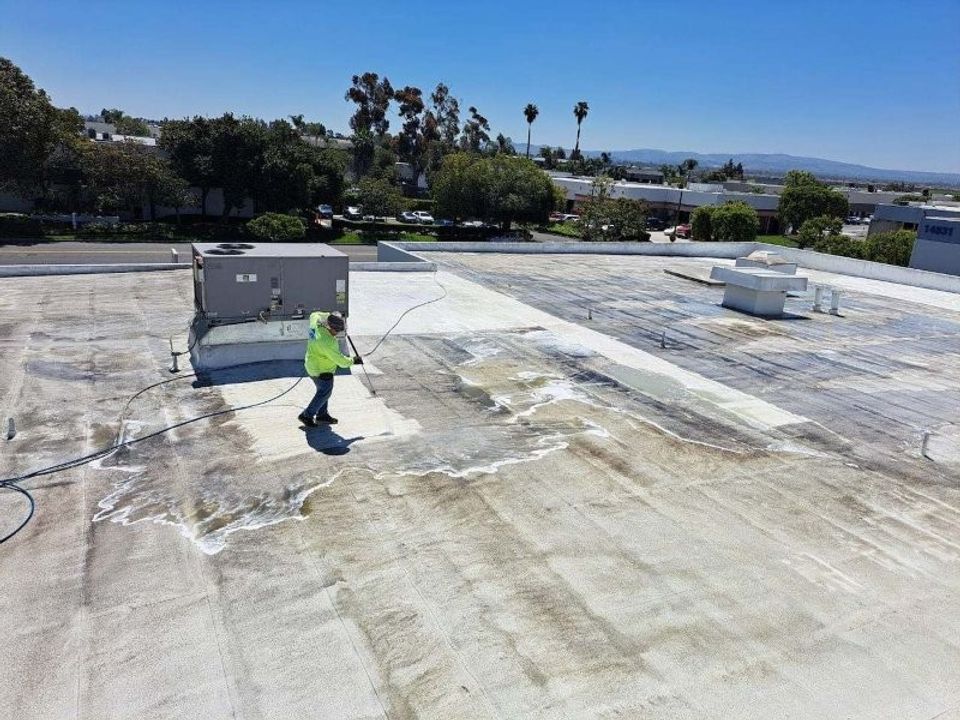
Pressure washing leaves a clean strip of membrane beside the soiled surface.
Before choosing a primer, we run adhesion test patches on the actual roof. Small areas are coated with and without primer, a strip of fabric is set into each, and the strips are pulled after cure. How each strip releases shows whether the coating is bonding to the roof or just sitting on it.
Primer depends on the substrate. Aged asphalt surfaces can bleed oils that stain and weaken the film, so they usually need a bleed-blocking primer. Single-ply and metal roofs have their own primer requirements, and the test patches settle any doubt.
Film thickness is the specification
Silicone is bought by the gallon, but it performs by thickness. The specification should name a dry film thickness in mils and an application rate that reaches it. Most silicones are high in solids, so wet and dry readings sit close together, though they are not identical.
During application the crew checks wet film with a mil gauge across the roof. Edges and low spots get extra readings because thin film shows up there first. Ask for the readings to be recorded in the job file.
Details need their own attention. At seams, drains, and penetrations, polyester fabric is set into a base layer and fully covered. Exposed fabric edges are where silicone jobs start to peel.
Cure, weather, and Los Angeles timing
Silicone cures by drawing moisture from the air, so humidity helps the cure. Many products skin over quickly and handle light rain soon after application. The product data sheet sets the real window, and the schedule should follow it.
The surface still has to be dry. Near the coast, the marine layer leaves morning dew that must burn off before coating starts. On Santa Ana days, wind carries overspray onto cars and neighboring buildings, so we roll instead of spray or move the date.
Winter rain affects silicone less than acrylic once it is down. The harder part in winter is getting a dry roof to coat, since each storm can push the start back by days.
Recoat cycles and service life
A coated roof is a maintained surface. The Roof Coatings Manufacturers Association says a properly applied coating can extend roof life by up to 10 years or more, depending on type, conditions, and film thickness. It also notes that coatings can be recoated as they wear.
A silicone recoat means washing the old film, testing adhesion again, and adding silicone to the specified thickness. Worn areas get checked for thin spots and exposed fabric first. Done on schedule, that work can keep a worn surface from forcing a tear-off.
None of this works over a wet roof. A roof moisture survey with infrared or capacitance scanning finds saturated insulation before it gets sealed in. When the wet area is large, the question becomes whether restoration or replacement fits the roof.
Title 24 and permits for a silicone recoat
California's energy code covers recoats, not only new roofs. Under the 2025 Building Energy Efficiency Standards, a nonresidential roof that is recoated must use a product rated by the Cool Roof Rating Council. That version applies to permit applications filed on or after January 1, 2026.
The performance numbers apply when the recoated area is more than 50 percent of the roof or more than 2,000 square feet, whichever is less. A low-slope nonresidential roof then needs an aged solar reflectance of at least 0.63 and a thermal emittance of at least 0.75. An SRI of at least 75 is the alternative path.
A recoat is exempt from the insulation requirement that a replacement triggers. In the City of Los Angeles, the LADBS express permit bulletin lists applying an approved coating to an existing roof as an express permit item.
What drives the cost of a silicone coating
The written proposal carries the number, and it follows the roof. The biggest drivers are square footage, prep and repairs, the specified dry film thickness, and the detail work at curbs, drains, and penetrations. Wet insulation removal and difficult access add to it.
Silicone is usually compared against acrylic on price. Compare them at the same film thickness and the same prep, or the comparison means little. Our overview of commercial roof coating options covers the other chemistries at a higher level.
Questions on this service
Can silicone roof coating be applied to a roof that ponds water?
Yes, ponding tolerance is the main reason owners pick silicone. It holds its bond and stays waterproof under standing water that would soften a water-based coating. The low spots still need to be clean and fully dry on the day the coating goes down.
Can you put acrylic coating over an old silicone roof coating?
Not directly. Very little sticks to cured silicone except more silicone, so a silicone roof is normally recoated with silicone. Any other plan needs a primer made for that purpose and a passing adhesion test on the actual roof.
Do you need a primer before applying silicone roof coating?
Sometimes. Aged asphalt roofs usually need a bleed-blocking primer, and some single-ply and metal roofs need a primer for adhesion. Test patches on the roof settle the question before the full job starts.
How thick should a silicone roof coating be?
The coating system specification sets the dry film thickness, and it varies by product and by the condition of the roof. The proposal should list that target in mils and the application rate that reaches it. Wet film readings taken during the work show whether it was met.
Is a silicone coated roof slippery?
It can be when wet, and that matters on roofs with frequent service traffic. Walk pads along the paths to equipment reduce the risk and protect the coating. Anyone on the roof should also follow normal fall protection practice.
Related commercial roof coatings services
This page is one part of commercial roof coatings. The pages below cover the rest.
Other commercial roof services
Each property usually needs one clear scope, not all five at once. The walk tells us which page below matches the building.
- Commercial Roof Repair
- Commercial Roof Restoration
- Commercial Roof System Installations
- Commercial Roof Inspection and Certification
Ready for a written scope? Request a site visit or call (747) 308-4045.