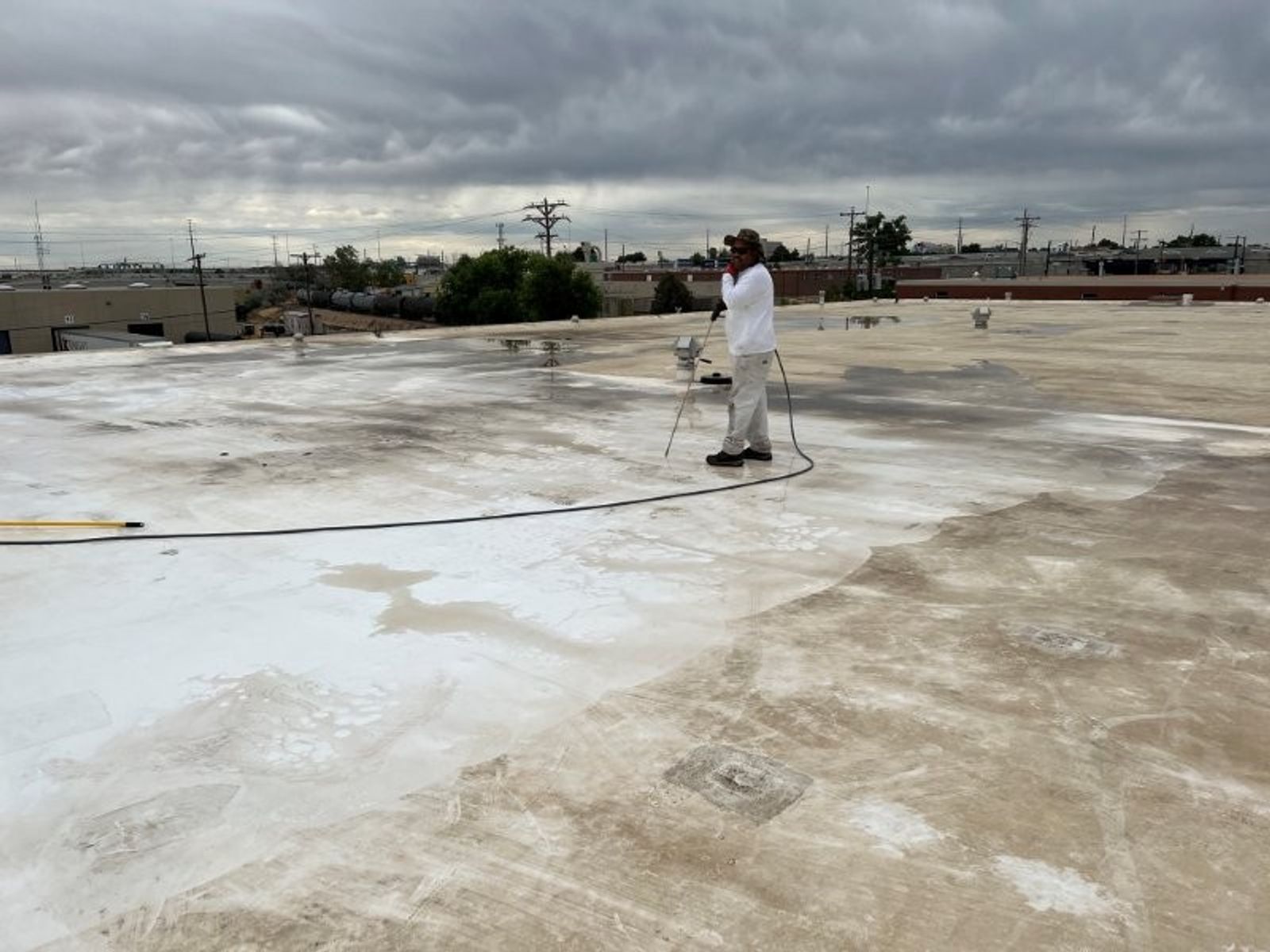
Storm damage roof repair starts after the weather clears. The question is what the storm changed on the roof, and how to prove it. A careful assessment answers both.
We assess and repair storm damaged roofs on commercial and industrial buildings across greater Los Angeles. Flat and low-slope roofs are all we do. If water is still coming in right now, start with our page on the first hours of a roof emergency.
What storms do to Los Angeles roofs
Los Angeles storms are few, but they tend to arrive hard. Winter systems can drop heavy rain in a short window after months of dry weather. Santa Ana winds bring strong, gusty air from the opposite direction, often with little warning.
Each one stresses a roof differently. Heavy rain tests drainage and every seam that sits in water. High wind pulls at edges, corners, and anything loosely attached.
Wind damage on flat roofs
Wind moving over a flat roof mostly pulls on it. Air flows over the edge and creates suction that lifts the membrane upward. That uplift is strongest at the perimeter and corners, which is where wind damage starts.
- Edge metal and coping that has loosened, bent, or pulled away from the wall.
- Membrane lifted or peeled back at corners and along the perimeter.
- Fasteners that have backed out, leaving bumps or tented spots in the sheet.
- Adhered membrane that billowed in the wind and lost its bond to the insulation.
- Rooftop equipment, vents, or solar racking that shifted and tore the flashing around it.
Edge systems matter most here. Industry guidance such as the ANSI/SPRI/FM 4435/ES-1 standard sets wind design requirements for low-slope roof edges. Once an edge lets go, the wind can peel the membrane behind it.
Rain, debris, and drainage damage
Heavy rain finds weaknesses that already existed. A partly clogged drain can back water up over flashings and into the building. Ponding that clears in a day during light rain can sit much deeper during a big storm.
Wind-driven debris adds new damage. Branches, palm fronds, and loose items from nearby roofs can puncture a membrane or crack a skylight. Punctures are small and easy to miss from a distance. A walk at close range is the only way to find them all.
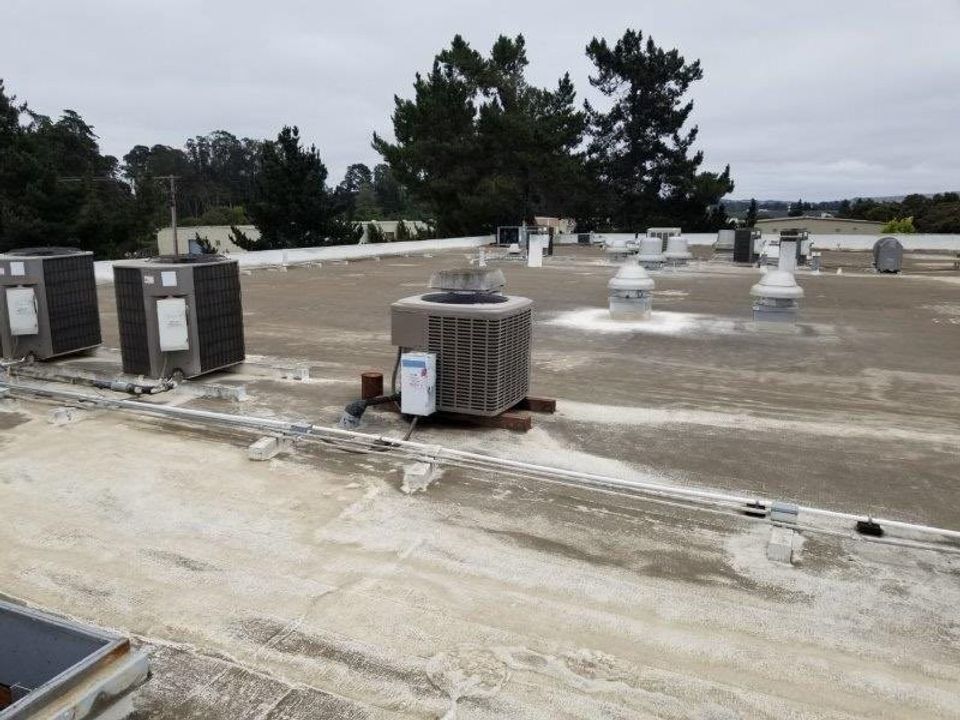
Weathered commercial roof with HVAC units, vents, and conduit runs.
How a post-storm assessment works
A storm walk covers the whole roof, not just the area above a leak. The perimeter comes first, then corners, equipment, penetrations, drains, and the open field. Each finding gets photographed with a date and its location on a roof plan.
Flashings get a close look because storms test them hard. Wind loosens terminations and water runs behind them. Our page on parapet and curb flashing repair covers those details in depth.
Some damage is hidden. Water can enter through a small opening and spread through the insulation without showing inside. A moisture survey of the roof insulation shows how far it has traveled.
Documenting damage for an insurance claim
The storm record is what supports a claim. We provide dated photos, a roof plan marking each area, and a written description of what we found. We describe condition and do not make coverage decisions.
The coverage decision belongs to your carrier. The California Department of Insurance guide to commercial insurance explains how commercial property policies work. Read your policy for notice deadlines and any duty to prevent further damage.
Records from before the storm help too. A recent inspection report or photos showing the roof in good condition make it easier to separate new damage from old wear. Keep them in the building file.
Telling storm damage from old wear
Not every problem found after a storm was caused by it. Cracked coatings, brittle membrane, and seams that opened slowly over years are wear. A storm often reveals them by pushing water through for the first time.
Fresh damage tends to look fresh. Bent metal with clean edges, torn membrane with sharp tear lines, and debris sitting on top of the damage all point to a recent event. Weathered edges, dirt in the cracks, and old patches point the other way.
Our write-up keeps the two apart. It describes what looks recent and what looks long-standing, with a photo for each. That honesty makes the record more useful to everyone who reads it.
Repair sequence after a storm
Storm repairs follow a clear order. Temporary protection comes first, so the next rain does not add to the loss. Permanent repairs follow once the scope is documented and, where a claim is open, agreed on.
Perimeter and edge repairs usually lead the permanent work. A loose edge can let the next wind event peel back the repairs behind it. Punctures, torn flashings, and wet insulation follow.
When the storm damage is spread across most of the roof, repair may no longer be the right scope. The choice between a new roof over the old one and a full tear-off is covered in our notes on tear-off versus recover. Wet or damaged decks generally rule out a recover.
What drives the cost of storm repairs
Storm repair costs follow the extent of the damage and how quickly the work has to happen. The written proposal carries the number and breaks it down by area. Three things move it most.
Edge and perimeter damage often means new metal fabricated to fit, not just a patch. Wet insulation has to be found, cut out, and replaced before the roof is closed. Temporary protection and a later permanent repair also add up to two visits instead of one.
Checking the roof after the next storm
A repaired roof should be checked again after the next big weather event. Roofing trade guidance recommends inspections twice a year and after severe weather. That walk confirms the repairs held and catches anything new.
Storm damage is one part of the wider commercial roof repair services we provide. The same photo record carries forward, so each visit builds on the last one.
Questions on this service
How do I know if my commercial roof has storm damage?
Interior leaks after a storm are the obvious sign, but many damaged roofs do not leak right away. Loose edge metal, lifted membrane at corners, torn flashings, and debris on the roof all call for a closer look. A roof walk after any major wind or rain event is the only reliable way to know.
How soon after a storm should a commercial roof be inspected?
As soon as it is safe to walk. Early inspection finds damage before the next rain turns it into a leak, and it creates a dated record close to the event. Many policies also expect prompt notice of a loss, so check yours.
Should I make repairs before the insurance adjuster sees the roof?
Temporary repairs that prevent further damage are generally expected, and they should be photographed before and after. Permanent repairs are usually best held until the adjuster has seen the damage or agreed to a plan. Your policy and your carrier decide the details.
Can wind damage a commercial roof without tearing it off?
Yes. Wind can loosen fasteners, peel seams, and lift membrane off the insulation without leaving a visible hole. Adhered roofs sometimes billow in high wind, which can break the bond below. Those problems often show up as leaks weeks after the storm.
Is old roof wear covered the same as storm damage?
Usually not. Most commercial property policies separate sudden damage from gradual wear and deferred maintenance. That is why a clear record of the roof's condition before and after a storm is so useful.
Related commercial roof repair services
This page is one part of commercial roof repair. The pages below cover the rest.
- Commercial Roof Leak Repair
- Flat Roof Repair
- Emergency Roof Repair
- TPO Roof Repair
- Roof Flashing Repair
Other commercial roof services
Each property usually needs one clear scope, not all five at once. The walk tells us which page below matches the building.
- Commercial Roof Coatings
- Commercial Roof Restoration
- Commercial Roof System Installations
- Commercial Roof Inspection and Certification
Ready for a written scope? Request a site visit or call (747) 308-4045.