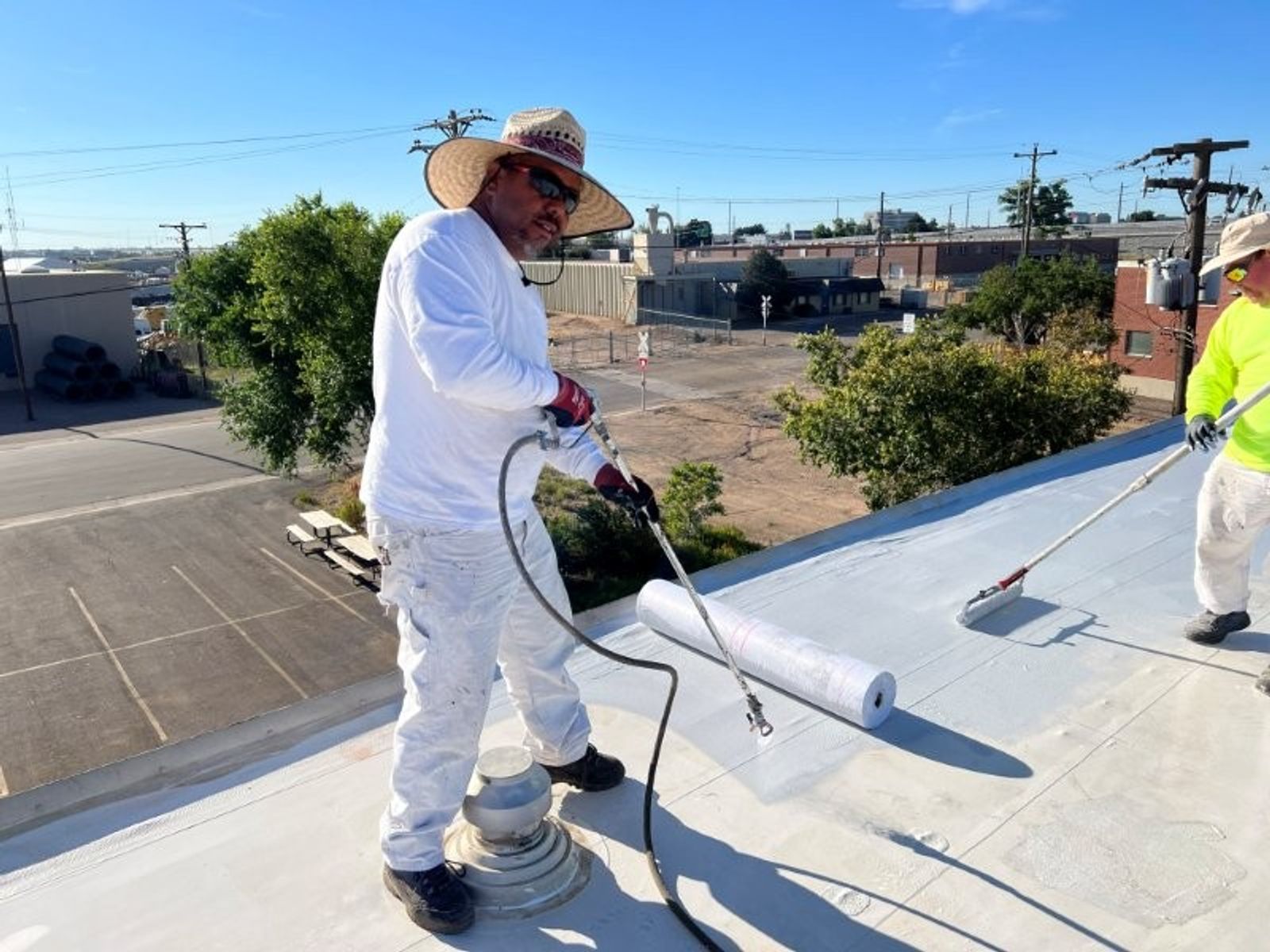
Commercial roof restoration keeps the roof you already own and renews it, instead of tearing it off and starting over. It is a full scope, not a paint job: a moisture survey, real repairs to the details that fail, and then a new surface across the field. Roof restoration Los Angeles commercial buildings qualify for covers low-slope, flat, and metal roofs.
The reason to consider it is money and disruption. A restoration keeps tenants working, keeps the old roof out of a landfill, and usually costs less than a full replacement. The reason to skip it is simpler: if the insulation is wet, restoration is the wrong scope.
Restoration vs replacement: the real differences
The roof restoration vs replacement question is usually framed as a price comparison, which misses the point. They are different scopes that solve different problems. One renews a surface, the other rebuilds an assembly.
- Scope. Restoration repairs and resurfaces the existing system. Replacement removes everything to the deck and builds new.
- Disruption. Restoration is quieter, faster, and does not open the building to weather. Replacement stages the roof in sections and exposes the deck.
- Waste. Restoration sends almost nothing to the landfill. A tear-off fills roll-offs.
- What it can fix. Restoration cannot dry wet insulation or fix a failing deck. Replacement can.
- Accounting treatment. Owners often treat restoration as an operating expense and a full replacement as a capital expense. How that lands for your entity is a question for your accountant, not for us.
That last point is where most of the interest comes from, and it is also where we stop. We can describe the scope precisely so your finance team can classify it. We do not give tax advice.
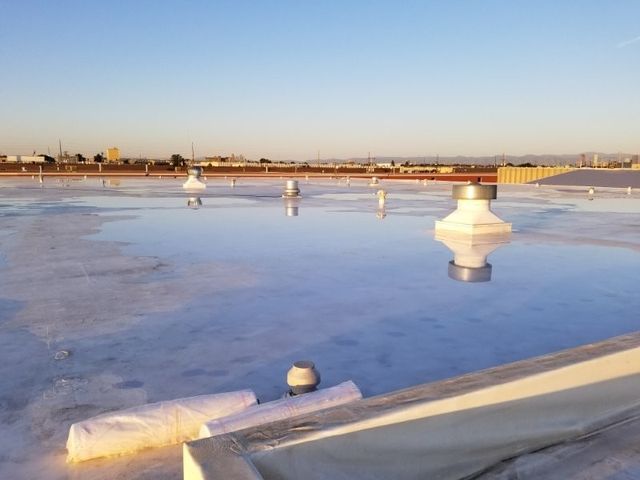
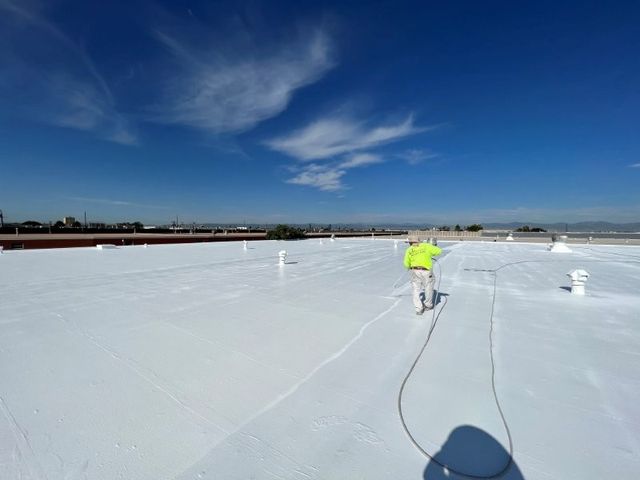
Before and after from the same job type. Captions stay to visible conditions only.
When a roof is a good restoration candidate
A good candidate is dry, attached, and structurally intact, with problems that live on the surface and at the details. That describes a large share of commercial roofs in Los Angeles, because sun does more damage here than water does. The survey is what proves it.
- The deck is solid and the insulation is dry across most of the field.
- The membrane is still bonded and does not move underfoot.
- Leaks trace to countable details such as flashings, seams, penetrations, and drains.
- Surface wear, chalking, crazing, or a failed prior coating is the dominant condition.
- Drainage works, or can be made to work with repairs and added drains.
When it is not
We say no to restoration when the moisture survey lights up across the field, when cores come back saturated, or when the deck is soft or corroded. We also say no when the membrane has lost attachment, because a new surface over a loose sheet will not stay put. Those buildings go to commercial roof system installation instead, and we will show you the cores that made the call.
What commercial roof restoration involves
Restoration runs in a fixed order, and the surface goes on last. Most of the labor and most of the value is in the first three steps. A contractor who wants to skip to the coating is selling something else.
- Survey. Walk the roof, take cores, and map wet areas so the wet insulation gets removed rather than buried.
- Repair. Rebuild flashings, seams, curbs, pipe boots, and drains, and replace the insulation that came out.
- Prepare. Clean the field down to a sound, dry, primed surface.
- Reinforce. Embed fabric at the details that move, which is where the next leak would have started.
- Resurface. Apply the specified system from {{MANUFACTURER}} at the specified thickness.
- Document. Photograph the work and hand over a closeout file for the property records.
Step two is the one people underestimate. Roof restoration services that quote only square footage have not looked at your flashings yet. Ask for the repair scope in writing before you compare prices.
Restoring flat and low-slope roofs
Flat roof restoration is the most common version of this work in Los Angeles, because so much of the commercial stock is low slope. Built-up, modified bitumen, single-ply, and sprayed foam roofs all restore well when they are dry. Silicone roof restoration is the usual specification where water sits after a storm, since silicone tolerates ponding better than the alternatives.
Drainage gets fixed as part of the scope, not admired as a feature of the building. Standing water accelerates every failure mode a flat roof has. If the roof will never drain properly, we say so and price the correction rather than coating over a pond.
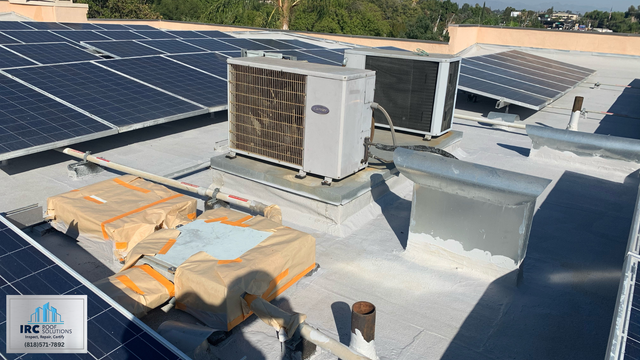
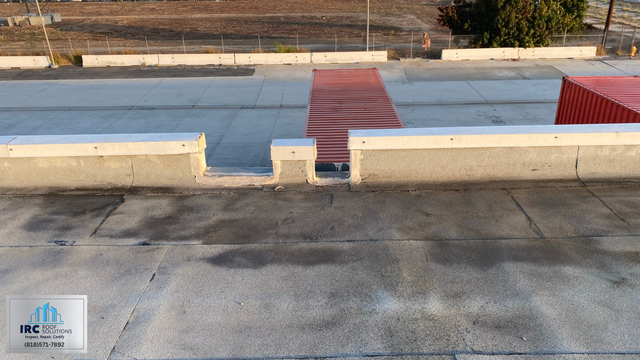
Before and after from the same job type. Captions stay to visible conditions only.
Restoring metal roofs
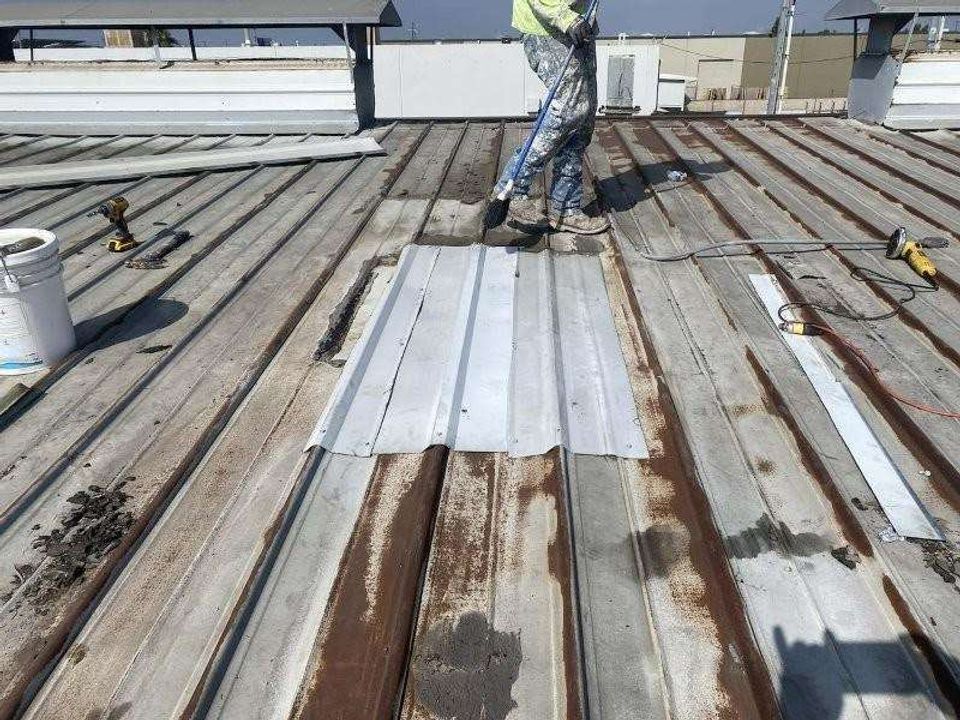
Metal roof restoration targets the two things that fail on aging metal: the fasteners and the seams. Thousands of exposed fastener penetrations work loose as the panels expand and contract, and every one of them is a potential leak. Restoration treats the rust, seals the fasteners and laps, and puts a continuous surface over the whole panel field.
The panels have to be worth saving. Surface rust is a restoration problem, while perforation and failed structural attachment are a replacement problem. We take cores and check the fastener hold before we quote either one.
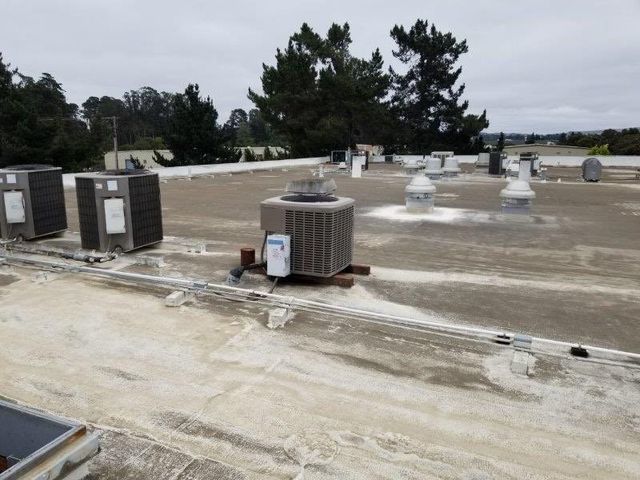
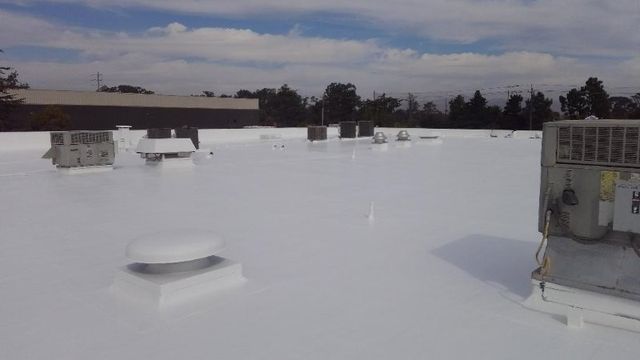
Before and after from the same job type. Captions stay to visible conditions only.
What drives roof restoration cost
Roof restoration cost is mostly a function of how much repair the roof needs before the surface goes on. Two roofs of identical size can be far apart in price if one has sound flashings and the other has none. That is why we survey before we quote.
- Square footage and the number of penetrations, curbs, and drains.
- How much wet insulation has to be cut out and replaced.
- The condition of the flashings, terminations, and edge metal.
- The system and film thickness specified, and any warranty term you want with it.
- Access, solar arrays, and whether the building stays occupied during the work.
Current ranges are {{PRICE_RANGE_FROM_IRC}}.
Where restoration sits next to the other scopes
If a handful of details are leaking and the field is fine, you want commercial roof repair, not a restoration. If the surface is worn but the details are sound, a straight commercial roof coating may be enough. Restoration is the middle scope that includes both.
Every one of those decisions starts from the same evidence, which is why a commercial roof inspection comes first. If you are asking is roof restoration worth it on your building, the answer comes out of the moisture survey rather than a brochure. Send the address and the leak history to {{PHONE}} and we will walk it before anyone quotes anything.
Questions on this service
Is roof restoration worth the money?
It is worth it when the deck and most of the insulation are dry and the membrane is still attached. You keep the existing system, skip the tear-off, and keep the building running while the work happens. It is not worth it when the survey finds widespread wet insulation, because you would be paying to cover a problem instead of removing it.
What are the key differences between roof restoration and roof replacement?
Restoration keeps the existing roof and renews its surface, while replacement removes the roof down to the deck and builds a new assembly. Restoration is faster, quieter, and far less disruptive to tenants, and it generates almost no landfill waste. Replacement is the only honest answer once the insulation is saturated or the deck has failed.
What is the typical lifespan of a commercial roof?
It varies by system, install quality, drainage, and maintenance, so a single number would be misleading. Sun exposure, ponding, and foot traffic move the result more than the brand name does. {{VERIFY: published service life ranges by membrane type}}
Does a 20 year old roof need to be replaced?
Not automatically. Age is a prompt to inspect, not a verdict, and plenty of older roofs are dry, attached, and good restoration candidates. What decides it is the moisture survey, the condition of the flashings and drains, and whether the deck is sound.
Can you reroof over an existing flat roof?
Often yes. A recover installs a new membrane over the existing one when the deck is sound and the existing assembly is dry. How many layers are already up there and what the local code allows both matter, so the walk checks that before a scope is written.
Is recoating a metal roof worth it?
Usually yes, if the panels are structurally sound and the corrosion is surface level. Recoating seals the fastener holes and the seams that leak on almost every aging metal roof, and it stops the rust cycle before it eats through. It is not worth it where panels are perforated or the structural fasteners have lost their hold.
Other commercial roof services
Each property usually needs one clear scope, not all five at once. The walk tells us which page below matches the building.
- Commercial Roof Repair
- Commercial Roof Coatings
- Commercial Roof System Installations
- Commercial Roof Inspection and Certification
Ready for a written scope? Request a site visit or call {{PHONE}}.