An elastomeric roof coating is a fluid-applied film that stretches with the roof and returns to shape. That elasticity is what separates a roof coating from paint. On a flat commercial roof in Los Angeles sun, it is the difference between a film that moves and one that cracks.
We apply elastomeric coatings on low-slope commercial and industrial roofs across greater Los Angeles. In this market the word usually means a white acrylic system. This page explains the term, how a commercial elastomeric coating should be specified, and what keeps it working.
What elastomeric actually means
Elastomeric describes behavior, not a single product. The cured film has to elongate under stress and recover when the stress is gone. A roof needs that because it expands in afternoon heat and contracts at night, every day of the year.
Several coating families meet that description. Acrylic, silicone, and polyurethane are the common ones on commercial roofs. Our page on silicone roof coating for ponding roofs covers the one built for standing water.
Elasticity fades with age. An old coating that has gone hard and chalky has lost much of its stretch, so cracks show up first over seams and at curbs. Recoating before that point keeps the surface flexible.
Acrylic elastomeric, the common commercial choice
Acrylic elastomeric coatings are water based and bright white. They reflect sunlight well, clean up with water, and can be recoated with more acrylic after a wash. For roofs that drain properly, that makes them a practical long-term surface.
Acrylic also tends to pick up less dirt than silicone. A cleaner surface holds more of its reflectance between washes, which matters on a roof chosen partly for staying cool.
Their weakness is standing water. A water-based film that sits under a pond for days can soften and lose adhesion. The full breakdown of that tradeoff is on our acrylic roof coating and ASTM D6083 page.
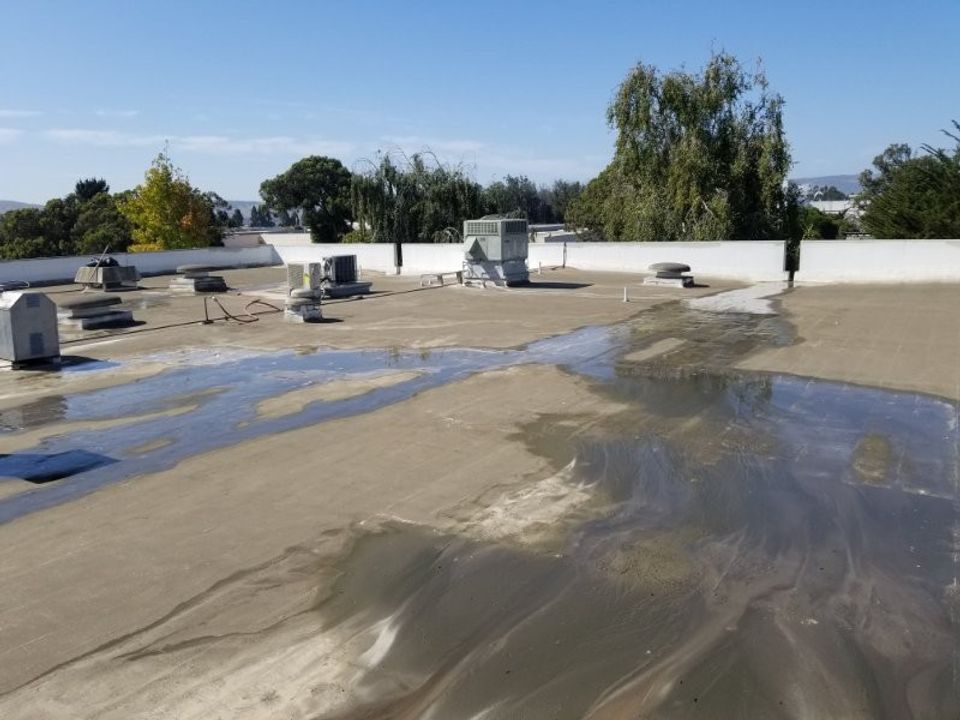
Worn field membrane and mechanical units on a roof before recoating.
Reading an elastomeric coating spec
Two bids that both say "elastomeric coating" can describe very different jobs. The specification is where the difference shows. A complete one answers each of these points in writing.
- The coating family and the primer, chosen for the membrane on your roof.
- The number of coats, the wet mils per coat, and the target dry film thickness.
- Where fabric reinforcement goes, such as seams, curbs, drains, and penetrations.
- How the roof will be cleaned and what repairs happen before coating.
- The product's Cool Roof Rating Council values, so the energy code can be checked.
Film thickness deserves the most attention. Acrylics carry a lot of water, so the dry film is much thinner than the wet coat that went down. A bid that lists gallons without a dry thickness leaves the most important number undefined.
Prep and reinforcement at details
The open field of a roof is easy to coat. The details are where movement concentrates, and where a coating alone tends to split. Seams, curb corners, drain bowls, and pipe penetrations all get fabric reinforcement set into a wet base coat.
Flashings that are loose or too short get fixed before any of that happens. Coating over a failed flashing only hides it for a season. Our flashing repair at walls, curbs, and parapets page explains what gets rebuilt.
Cleaning comes first on every roof. Dirt, chalking, and biological growth all keep an elastomeric film from bonding. Adhesion test patches then confirm the primer choice before the full roof is coated.
Weather windows in Los Angeles
Water-based elastomerics cure by drying, so weather sets the schedule. Each product lists a minimum temperature and a dry period it needs before rain or dew. Coating too late in the day is a common cause of wash-off.
Coastal and valley sites behave differently. Near the coast, marine layer mornings can keep the surface damp until late morning. Inland, summer heat can skin the film too fast, so crews often start early and stop before the hottest hours.
The winter rainy season shortens the windows. We plan acrylic work around the forecast and keep each day's area small enough to finish and cure. A coat rained on before it sets gets removed and redone.
Cool roof performance and Title 24
A white elastomeric surface reflects much of the sun that would otherwise heat the roof. The EPA explains how cool roofs reduce heat absorbed by buildings and the surrounding area. The savings for a specific building still depend on its insulation and use.
California's 2025 Energy Code applies to nonresidential roofs that are recoated. The product must be rated in the Cool Roof Rating Council directory. When more than 50 percent of the roof or more than 2,000 square feet is recoated, whichever is less, the numbers apply.
For low-slope nonresidential roofs, those numbers are an aged solar reflectance of at least 0.63 and a thermal emittance of at least 0.75. An SRI of at least 75 also qualifies. Recoats are exempt from the insulation requirement, but not from this rule.
Service life and recoat planning
HUD's useful life table lists elastomeric white and cool roofs at 15 years as a planning average. It is a budgeting figure, not a prediction for your roof. Film thickness, drainage, traffic, and upkeep all move the real number.
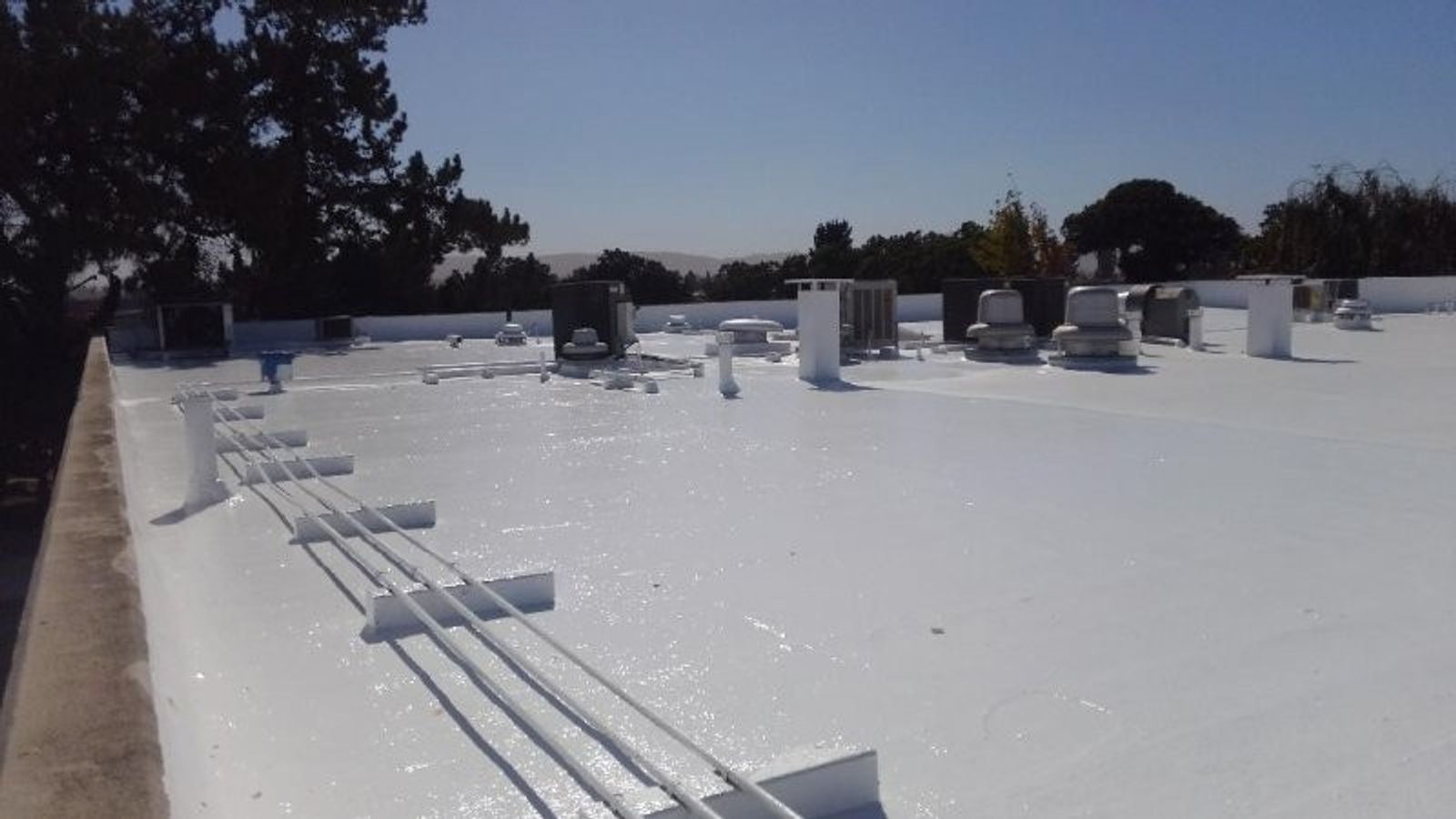
White coated commercial roof surface after the work was finished.
The coating wears from the top down, so a recoat renews it before the membrane is exposed. Regular walks catch thin spots, dirt buildup, and damaged details early. A sensible roof inspection schedule tells you when that recoat is coming.
What drives the cost of an elastomeric coating
The written proposal carries the number. It moves with roof area, cleaning and repair scope, the specified dry film thickness, and the amount of detail reinforcement.
Equipment density and access add labor on most commercial roofs. A roof crowded with curbs and penetrations costs more per square foot than an open one, because every detail is hand work.
Compare bids at the same film thickness and the same prep scope. Our guide to coating systems for commercial roofs covers how the families compare at a higher level.
Questions on this service
What does elastomeric mean in a roof coating?
Elastomeric means the cured film stretches and then returns to its original shape. A roof grows and shrinks every day as it heats and cools, so the coating has to move with it without cracking. Acrylic, silicone, and polyurethane roof coatings are all elastomeric.
Is elastomeric roof coating the same as acrylic?
Not exactly, though the two terms are often used as if they were. Acrylic is one family of elastomeric coating, and it is the one most people mean when they say elastomeric. Silicone and polyurethane coatings are elastomeric too.
Will an elastomeric coating stop my roof from leaking?
A coating seals the surface, but it does not repair the detail that is letting water in. Failed flashings, open seams, and bad penetrations need to be repaired and reinforced before coating. Any wet insulation under the leak also has to come out first.
Can elastomeric roof coating be applied in cold or damp weather?
Water-based elastomerics need a dry surface, a minimum temperature, and time to cure before dew or rain. The product data sheet lists those limits. In Los Angeles that usually means starting after the morning dew is gone and finishing well before evening.
Does a white elastomeric roof coating lower cooling costs?
A reflective coating lowers the roof surface temperature, which reduces the heat pushed into the building below. How much that saves depends on the insulation, the building use, and the cooling system. Your own utility data is the only way to measure it for your building.
Related commercial roof coatings services
This page is one part of commercial roof coatings. The pages below cover the rest.
Other commercial roof services
Each property usually needs one clear scope, not all five at once. The walk tells us which page below matches the building.
- Commercial Roof Repair
- Commercial Roof Restoration
- Commercial Roof System Installations
- Commercial Roof Inspection and Certification
Ready for a written scope? Request a site visit or call (747) 308-4045.