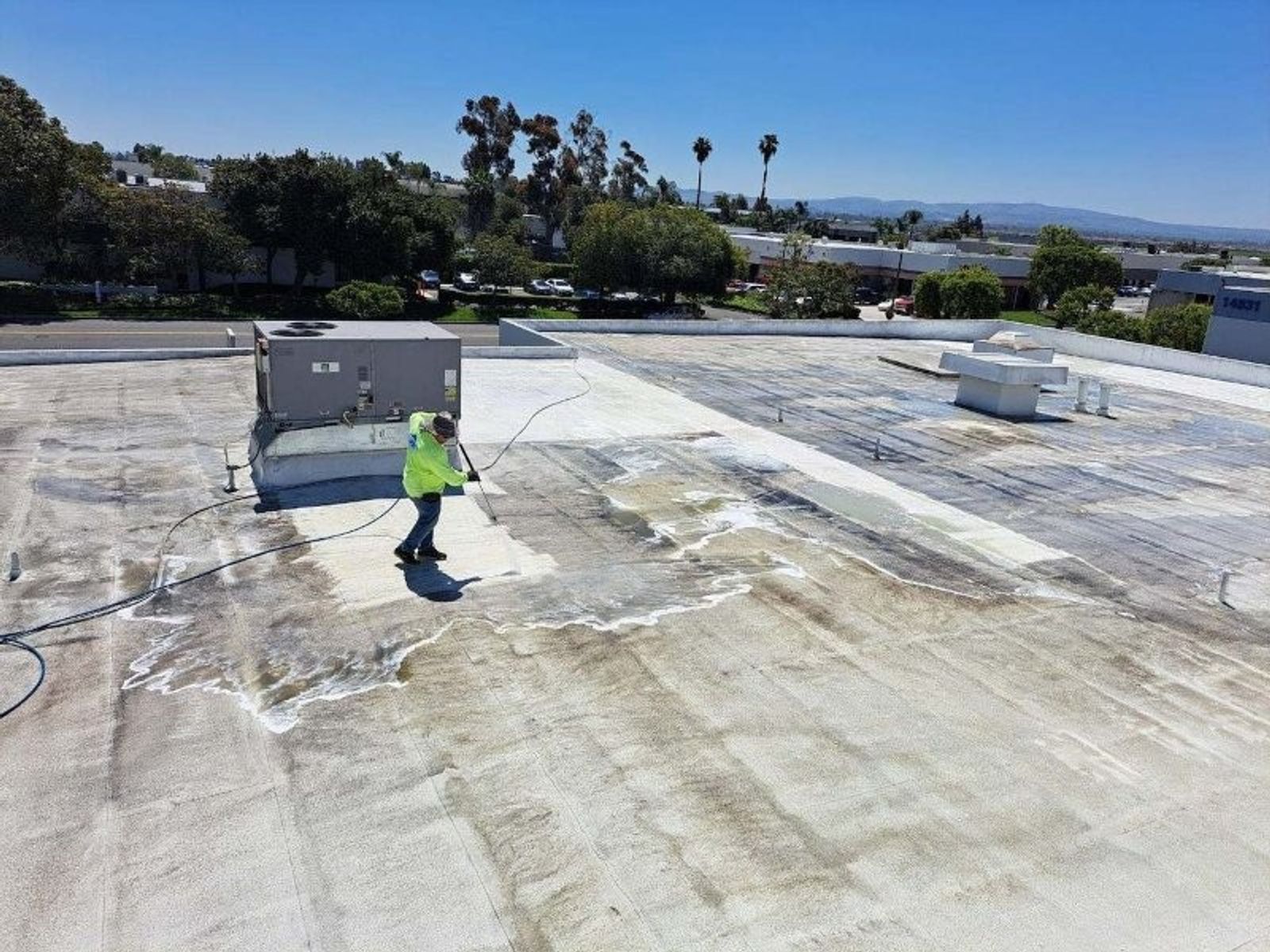
Commercial roof maintenance is a schedule of visits that catches small problems before they turn into leaks. Each visit checks the roof, clears the drains, handles minor repairs, and records what was found. The result is a roof that lasts longer and a file that shows how it was cared for.
We run maintenance programs on flat and low-slope commercial roofs across greater Los Angeles. Some cover one building. Others cover a portfolio of properties with different roof types and different owners.
Why scheduled maintenance pays off
Most roof failures start small. A clogged drain, a lifted flashing, or a puncture from a service tech can sit unnoticed for months. By the time water shows up inside, insulation may be wet across a wide area.
Maintenance keeps those problems small. Sealing a seam on a scheduled visit takes minutes, while replacing the wet insulation under it later can take days. The value of the program is in the repairs you never need.
Los Angeles adds its own pattern. Long dry stretches let debris pile up in drains with nobody watching. The first real storm of the season then finds every blocked drain and weak seam at once, which is why the fall visit carries the most weight.
A preventive roof maintenance schedule
The roofing industry has long recommended inspecting low-slope roofs twice a year, in spring and fall, and after severe weather. That rhythm fits Los Angeles well. A fall visit gets the roof ready for the rainy months, and a spring visit checks what the storms left behind.
Some events call for a visit outside the schedule. These are the ones we ask property managers to report.
- A heavy storm or strong wind event, even if no leak has shown up inside.
- Replacement or major service of rooftop HVAC units.
- Any new penetration, such as a vent, conduit run, or antenna mount.
- Solar array installation, removal, or panel service.
- A new tenant whose build-out includes rooftop work.
What happens on each visit
Every visit starts with drains. Leaves, trash, and roofing debris get cleared from drains, scuppers, and gutters, and strainers are checked or replaced. Model property codes expect roof drains to stay free of obstructions, so this step matters beyond the roof itself.
Next comes a walk of the full roof. Seams, flashings, penetrations, and equipment curbs get a close look. Small defects like open laps or cracked sealant are repaired on the spot where the weather allows.
Larger items go on a list for the property manager. Each one is photographed, located, and ranked by how soon it needs attention. Leaks that need investigation are handled as a separate call, since tracing a leak back to its source can take testing beyond a routine visit.
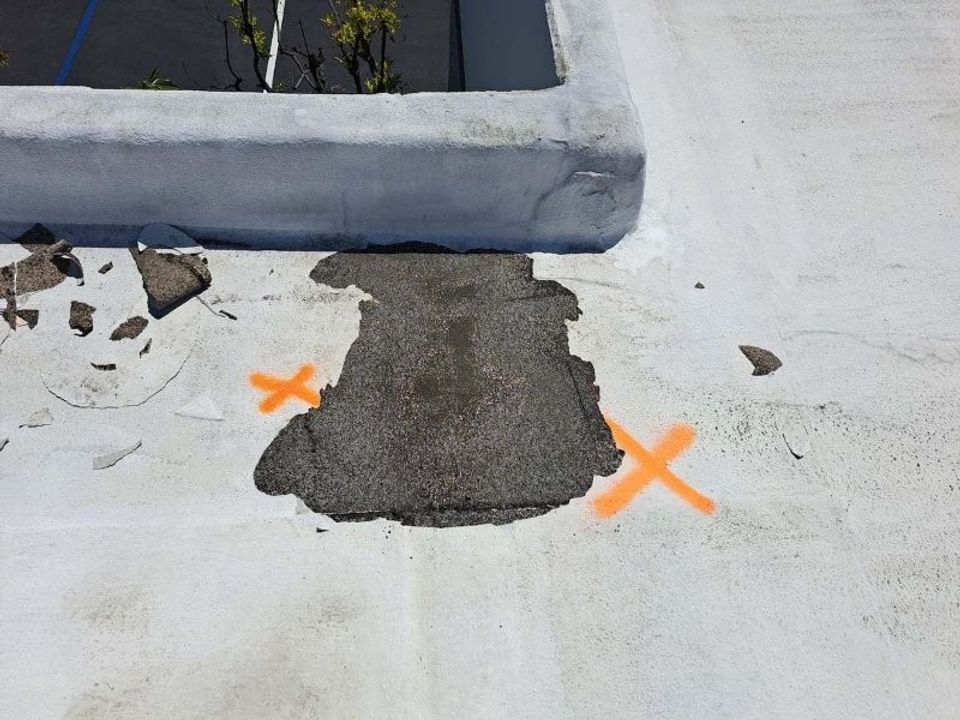
Coated roof surface up close after cleaning.
Starting a program on a roof with no history
Many buildings come to us with no roof file at all. Nobody knows when the roof went on, what system it is, or what was repaired last. The first visit fills that gap.
That baseline visit takes longer than a routine one. We identify the roof system, measure the roof areas, and map every drain, curb, and penetration. Existing damage gets photographed so it is not confused with new damage later.
The baseline also sets priorities. Urgent items get addressed first, and the rest go into a plan spread across the next few visits. Later visits then compare against that starting point.
Roof cleaning and coated roofs
White and coated roofs lose reflectivity as dirt builds up. A cleaning brings back much of that brightness and makes cracks easier to spot. It also removes the grime that holds moisture against the surface.
The cleaning method depends on the surface. Pressure that is safe on a coated roof can damage an older membrane, so the approach is matched to the system. Coated roofs also need occasional touch-ups at wear points, which extends the time before a full recoat.
Controlling rooftop traffic
Much of the damage we find on commercial roofs comes from foot traffic. HVAC techs, electricians, and antenna crews walk the same paths and drop screws and tools. Over time those paths wear through the membrane.
A few simple controls help. A sign-in log for anyone going on the roof creates accountability, and walkway pads protect the busiest routes. Roof work of any kind also has to follow OSHA fall protection rules, which is one more reason to know who is up there.
Portfolio reporting for property managers
For a portfolio, the report format matters as much as the roof work. Each building gets the same structure every visit, with dated photos and a running history. You can compare one roof with another and one year with the last.
Roof maintenance services work best with one point of contact for the whole portfolio. Visits can be grouped by area, so buildings near each other in the same part of Los Angeles are covered on the same trip. Reports arrive in the same format no matter which building they cover.
Each report separates routine maintenance from capital needs. That split helps with budgets, and it also helps your accountant, since federal tax rules treat repairs and improvements differently. The classification itself is your accountant's call.
The same history is useful when a building sells or refinances. A clean maintenance file makes roof certification ahead of a sale or refinance much simpler. It also supports the ranking approach described in our leak triage guidance for property managers.
When maintenance is no longer enough
Every roof reaches a point where repairs keep coming back. Seams open in new places, the surface cracks across the field, and wet areas start to spread. Maintenance reports show that trend before it becomes an emergency.
At that point the reports support the next decision. A dry roof with a worn surface may be ready for restoring the flat roof before it reaches replacement. A roof with widespread wet insulation needs a bigger scope, and the full inspection and reporting work documents that case.
Questions on this service
What is included in a commercial roof maintenance program?
A program covers scheduled inspections, drain and scupper clearing, small repairs such as sealing seams and flashings, and debris removal. Each visit ends with a dated report and photos. Over time those reports become the roof's service history.
Should a commercial roof be cleaned?
Coated and white roofs benefit from periodic cleaning, because dirt lowers how much sunlight they reflect. Cleaning also exposes cracks and open seams that dirt can hide. The method has to suit the membrane, since high pressure can damage some surfaces.
Does roof maintenance affect my roof warranty?
It can. Many roof warranties require the owner to maintain the roof and keep drains clear, and some require records of that work. Read your warranty terms and keep every maintenance report in the property file.
How do we stop other trades from damaging our roof?
Set a rule that anyone going on the roof signs in and reports what they did. Walkway pads along service paths keep foot traffic off the membrane. A roof check after major equipment work catches punctures and loose flashings before they leak.
Can one maintenance program cover buildings with different roof types?
Yes. The schedule and report format stay the same across the portfolio, while the checks on each visit match that building's roof system. That keeps reporting consistent without treating a metal roof like a single-ply roof.
Related commercial roof inspection and certification services
This page is one part of commercial roof inspection and certification. The pages below cover the rest.
Other commercial roof services
Each property usually needs one clear scope, not all five at once. The walk tells us which page below matches the building.
- Commercial Roof Repair
- Commercial Roof Coatings
- Commercial Roof Restoration
- Commercial Roof System Installations
Ready for a written scope? Request a site visit or call (747) 308-4045.