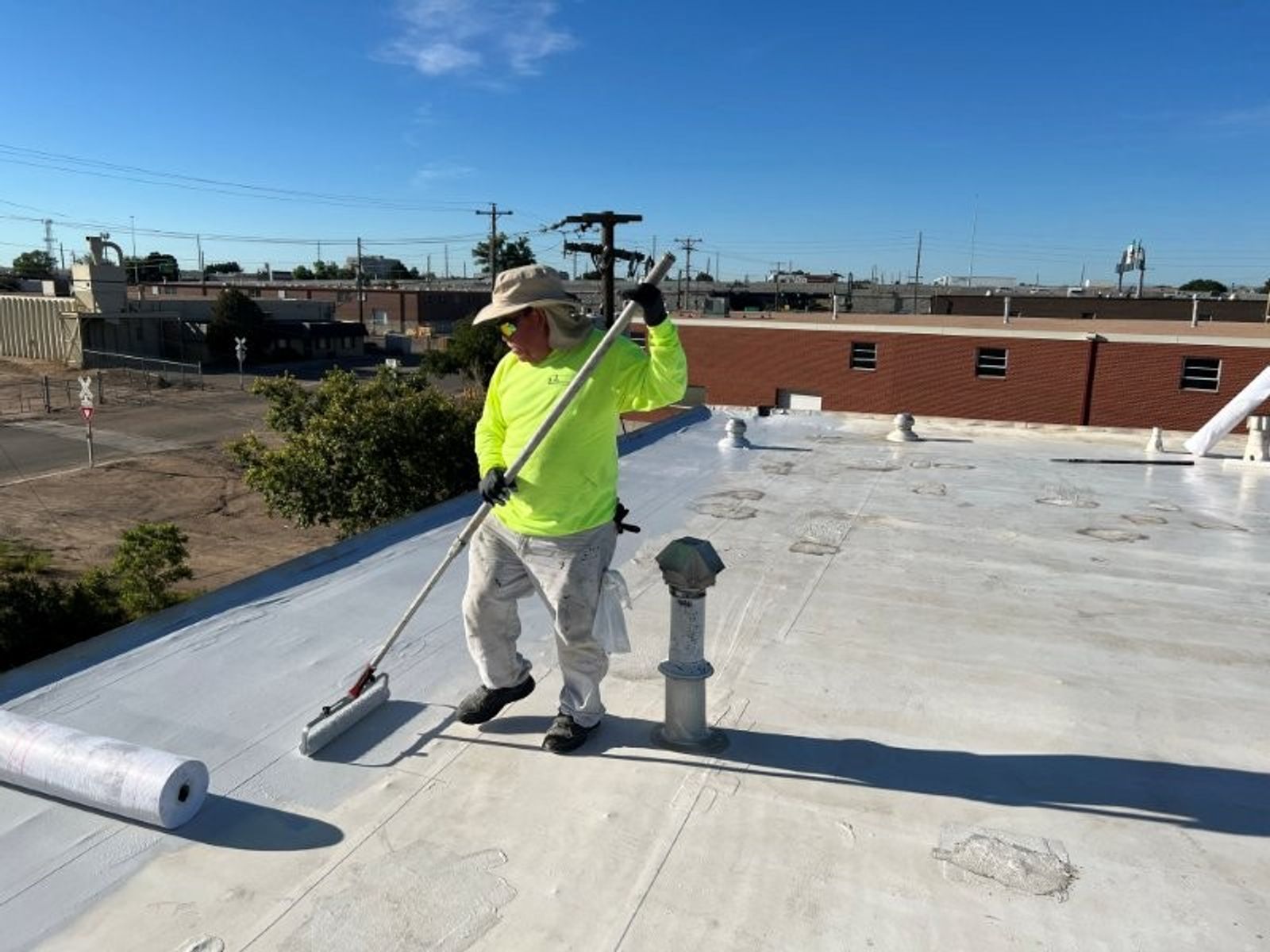
Commercial roof installation is the scope you choose when the existing assembly is finished, not just tired. We install single-ply, built-up, and metal systems on commercial buildings across greater Los Angeles. This page is a system-by-system guide so you can read a proposal and know what you are actually buying.
A new roof is a twenty-plus year decision made in an afternoon, usually under pressure from a leak. Before that happens, get the building inspected so the choice is made on evidence. An inspection before you replace costs a fraction of a wrong decision.
TPO roofing
TPO roofing is the most specified single-ply system on commercial buildings right now, and for Los Angeles that makes sense. A TPO roofing membrane is white and highly reflective, so it rejects a large share of the sun that would otherwise load the building. The seams are hot-air welded, which produces a joint as strong as the sheet itself when the welding is done right.
TPO roofing installation lives or dies on the welds and the attachment. We test seams as the work goes rather than discovering a cold weld during the first storm. Sheet thickness, walk pads, and the detail work at curbs are where we spend the extra effort.
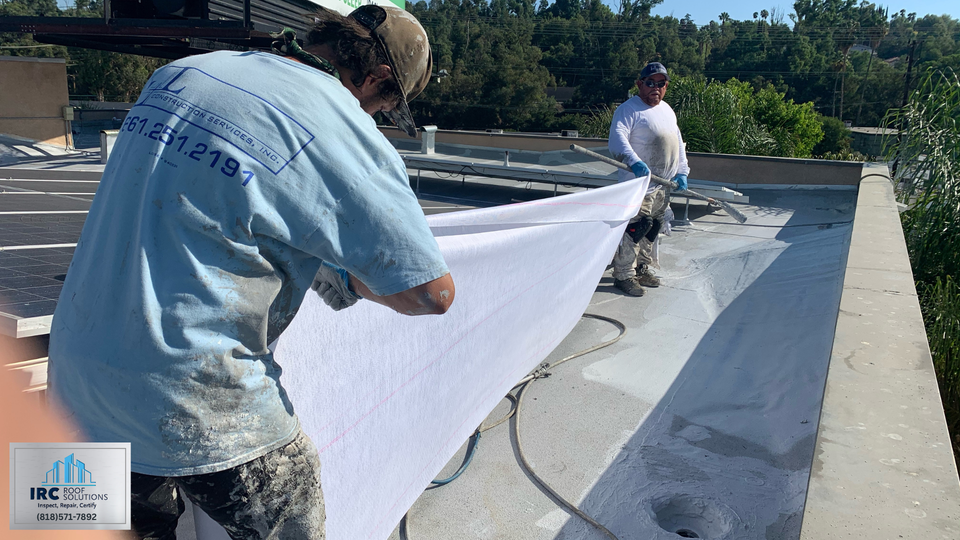
Single-ply membrane detail on a commercial low-slope roof.
PVC roofing
PVC roofing is the choice where the roof takes chemical or grease exposure, which in practice means restaurants, food processing, and any building with heavy kitchen or industrial exhaust. The sheet resists grease and chemical attack far better than TPO does, and it welds the same way. It is also inherently fire resistant.
The tradeoff is cost, since PVC generally prices above TPO for the same square footage. On a roof with grease exhaust, that premium buys years you would otherwise lose. On a clean warehouse roof, it usually does not.
TPO vs PVC vs EPDM for LA buildings
The tpo vs pvc question and the EPDM comparison both come down to what lands on your roof and how much sun it takes. Los Angeles pushes most buildings toward a reflective membrane, but the exceptions are real. Here is how we sort it.
- TPO. Reflective, welded seams, good general-purpose value for warehouse, retail, and office roofs.
- PVC. Same welded seams, much better chemical and grease resistance, higher material cost.
- EPDM. Rubber roofing that handles movement and cold well and has a long field history, but it is usually black and absorbs heat unless coated or ballasted.
EPDM roofing still has a place here, particularly on buildings with a lot of structural movement or unusual detailing. It is simply not the default in a climate where surface temperature is the main enemy. If the roof is already EPDM and sound, a reflective coating may get you most of the benefit without a new system.
Single-ply membrane systems
A single ply roofing membrane is one continuous sheet, and the system around it matters as much as the sheet. Insulation type and thickness, the cover board, and the attachment method all get specified together. Get one of those wrong and the sheet cannot save the roof.
Attachment
Membranes are mechanically fastened, fully adhered, or ballasted, and each has a place. Fastened systems are fast and economical but transmit deck movement to the sheet. Fully adhered systems cost more, look flatter, and hold up better under wind uplift at the perimeter.
Insulation and cover board
Insulation carries the thermal performance and tapered insulation is how you fix drainage on a dead-flat roof. A cover board over the insulation protects the membrane from foot traffic and hail. Bids that leave the cover board out are cheaper for a reason.
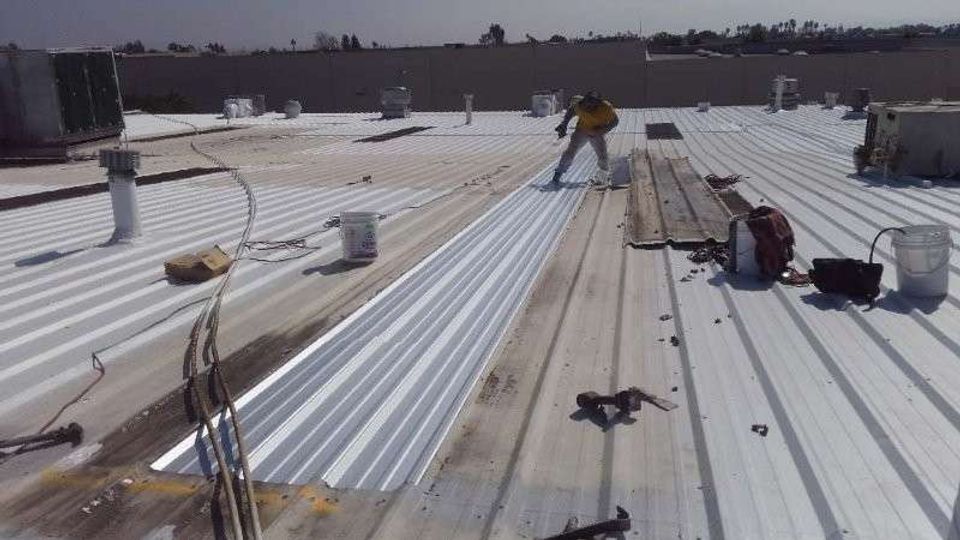
New metal roof panels being installed alongside weathered existing panels.
Commercial metal roofing
Commercial metal roofing suits buildings with enough slope to shed water and owners who want a long service life out of the structure. Standing seam systems hide their fasteners and move with the panels, which is why they outlast exposed-fastener systems. Exposed-fastener panels are cheaper up front and need their fasteners serviced over time.
Metal roof contractors get called for panel replacement, wall panel work, and repairs at the same time, because the roof and the siding are often the same assembly. We handle panel replacement, trim, and the flashing details where the roof meets the wall. If the existing panels are sound, metal roof restoration is usually the cheaper path.
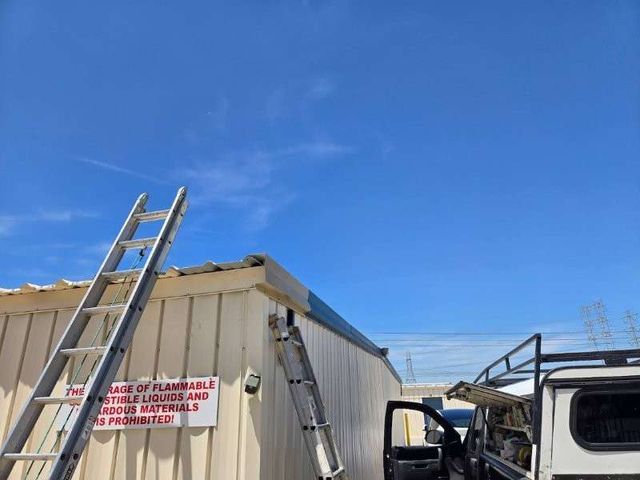
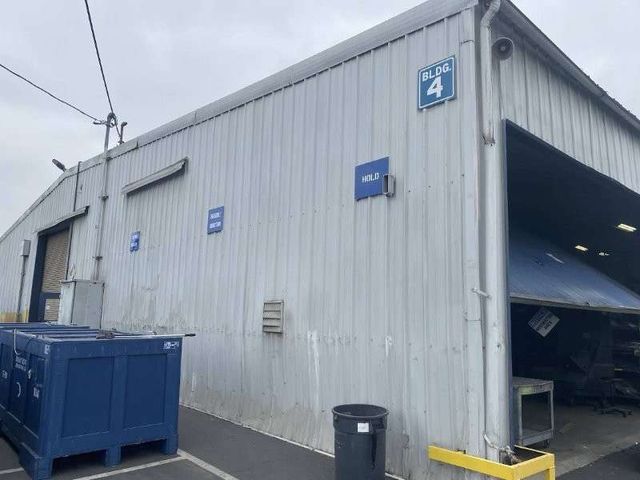
Metal roof and wall panel work on commercial buildings. Captions stay to visible conditions only.
Commercial roof replacement: tear-off vs recover
A commercial roof replacement can mean removing everything down to the deck or installing a new system over the existing one. Tear-off is the complete answer and the only option when the insulation is wet or the deck needs work. A recover keeps the existing assembly in place and costs less, but only qualifies when that assembly is dry and sound.
How many roof layers already exist matters, and so do the local code limits on additional layers. We check both during the walk, along with the deck condition and the height of the existing curbs and terminations. None of this is residential shingle work and we do not do anything resembling it.
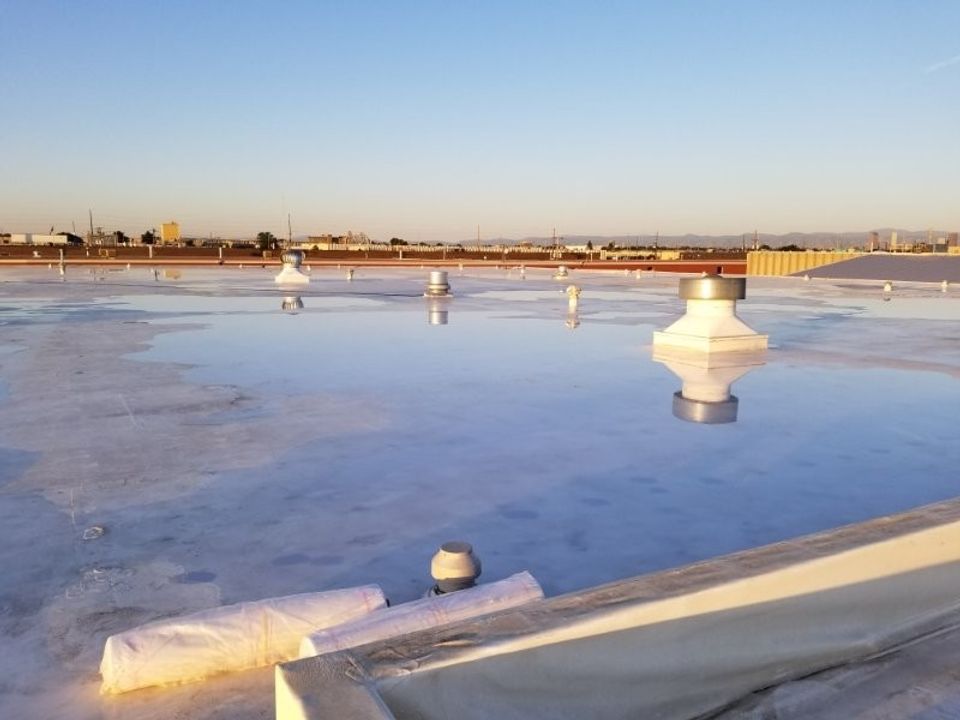
Existing roof with standing water, documented before a new system was scoped.
How to choose a commercial roofer
Roof replacement companies are not interchangeable, and the cheapest bid is usually the one missing the most scope. Read the proposals side by side at the details rather than at the bottom line. The differences show up at the flashings, the drains, and the edge metal.
- Does the scope name your membrane, insulation, cover board, and attachment method?
- Is the tear-off included, and how is unexpected wet insulation handled and priced?
- Who carries the warranty, the manufacturer or the contractor, and for how long?
- Are license and insurance certificates current and provided without being chased?
- Does the crew have experience with your specific system, not just single-ply in general?
The contractor of record on this work is {{PLACEHOLDER}}. License numbers, insurance limits, and warranty terms come in writing with the proposal.
Before you commit to a commercial roof installation
Roof installation is the most expensive answer, so it should be the last one considered. If the leaks are countable, start with commercial roof repair. If the field is worn but dry, look at commercial roof restoration first.
When replacement really is the answer, the evidence should already be in a report you can hand to ownership. Call {{PHONE}} with the address and we will schedule the walk that produces it.
Questions on this service
Which is better, TPO or EPDM?
Neither wins everywhere, so it depends on the building. TPO is reflective and heat-welded into a strong seam, which suits sunny Los Angeles roofs that need to reject heat. EPDM tolerates movement and ages well, but it is usually black, so it absorbs heat unless it is coated or ballasted.
What are the downsides of TPO roofing?
TPO formulations have changed over the years, so field history varies more than it does with older membranes. The seams are only as good as the welds, which makes installer skill and weld testing decisive. Thinner sheets are also easier to puncture under foot traffic, so walk pads matter on roofs with rooftop equipment.
How often should a commercial roof be replaced?
Replace on condition, not on a calendar. A roof that leaks in new places each season, holds saturated insulation, or has lost its attachment is past the point where patching pays. Regular inspection is what tells you which year that is.
How much does a commercial roof cost?
Cost follows square footage, the system you pick, how much tear-off and insulation is involved, roof access, and how much equipment sits in the way. Occupied buildings, night work, and crane time all add to it. Current ranges are {{PRICE_RANGE_FROM_IRC}}.
How do you choose a commercial roofer?
Ask for the license, the insurance certificates, and a written scope that names your specific membrane, insulation, and attachment method rather than a generic package. Compare what each bid includes at the flashings, drains, and edge metal, because that is where numbers quietly diverge. A contractor who inspects first and tells you a smaller scope will do is worth more than the lowest line item.
Other commercial roof services
Each property usually needs one clear scope, not all five at once. The walk tells us which page below matches the building.
- Commercial Roof Repair
- Commercial Roof Coatings
- Commercial Roof Restoration
- Commercial Roof Inspection and Certification
Ready for a written scope? Request a site visit or call {{PHONE}}.