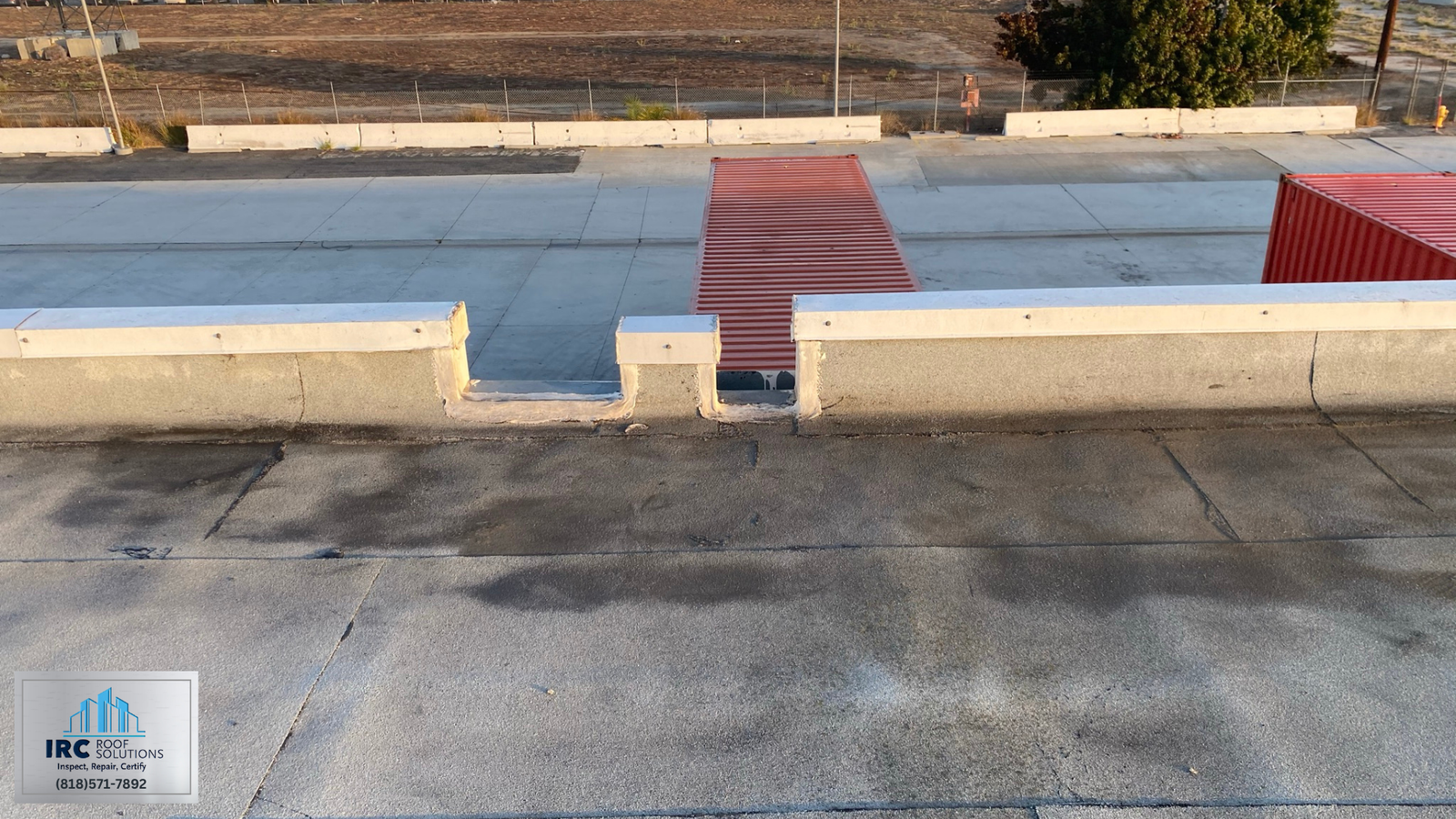
TPO roofing is a heat-welded thermoplastic membrane used on a large share of new low-slope commercial roofs. A white TPO roofing membrane reflects most of the sun that hits it. On a Los Angeles warehouse or retail roof, that reflectivity is the main reason owners choose it.
This page covers TPO roofing installation from the deck up. It explains what the sheet is, how it gets attached, and where installs go wrong. We install TPO on commercial and industrial buildings across greater Los Angeles.
What TPO membrane is
TPO stands for thermoplastic polyolefin. The sheet blends polypropylene with ethylene-propylene rubber around a polyester reinforcing scrim. Because it is thermoplastic, hot air softens the edges so two sheets fuse into one piece.
The industry standard for the sheet is ASTM D6878, which sets minimum physical properties for TPO sheet roofing. Your proposal should state that the sheet meets it. That one line rules out a lot of off-spec material.
Choosing thickness and color
TPO usually comes in 45, 60, or 80 mil. Thicker sheet has more material above the scrim, and that top layer is what the sun slowly wears away. More of it means more weathering life and better puncture resistance.
Roofs with a lot of foot traffic need the extra margin. HVAC techs, solar crews, and plumbers all walk the same paths to the same units. Thicker sheet plus walk pads along those paths is the usual answer.
White is the default in Los Angeles for good reason. California's energy code requires rated cool roof products on nonresidential reroofs, and you can look up any sheet in the Cool Roof Rating Council product directory. Colored sheets exist, so check their rated values before choosing one.
Attachment and the layers under the sheet
A TPO roof is a system. Under the membrane sit insulation, usually a cover board, and sometimes tapered insulation that slopes water toward the drains. Each layer is fastened or adhered to the one below, and the wind design sets how many fasteners go where.
Mechanically attached TPO places fasteners and plates inside the seam laps. The next sheet then welds over them. It is fast and works well on steel decks.
Fully adhered TPO bonds the whole sheet down with adhesive. That spreads wind load across the full surface and keeps the sheet from billowing in gusts. Our comparison of single-ply attachment methods goes deeper on when each one fits.
Insulation under TPO is most often rigid board, laid in two layers with the joints offset. The offset keeps heat from escaping straight through a line of gaps. A cover board on top gives the membrane a firm, even surface that resists dents from foot traffic and hail.
How a TPO roofing installation runs
Every roof is different, but the sequence stays about the same. Each step has to be right before the next one covers it.
- Tear-off or preparation of the existing roof, with wet insulation found and removed.
- Deck repair where rust, rot, or loose panels show up once the old roof is off.
- Insulation and cover board laid in staggered layers, then fastened or adhered.
- Membrane rolled out, attached, and welded at every lap.
- Flashings at walls, curbs, drains, and penetrations, built from compatible TPO.
- Edge metal, walk pads, and a final seam check across the whole roof.
In Los Angeles the weather rarely stops a job for long, but the marine layer can slow a morning. Dew on the sheet affects welding and adhesive until the surface dries. Welding gets scheduled for the dry part of the day.
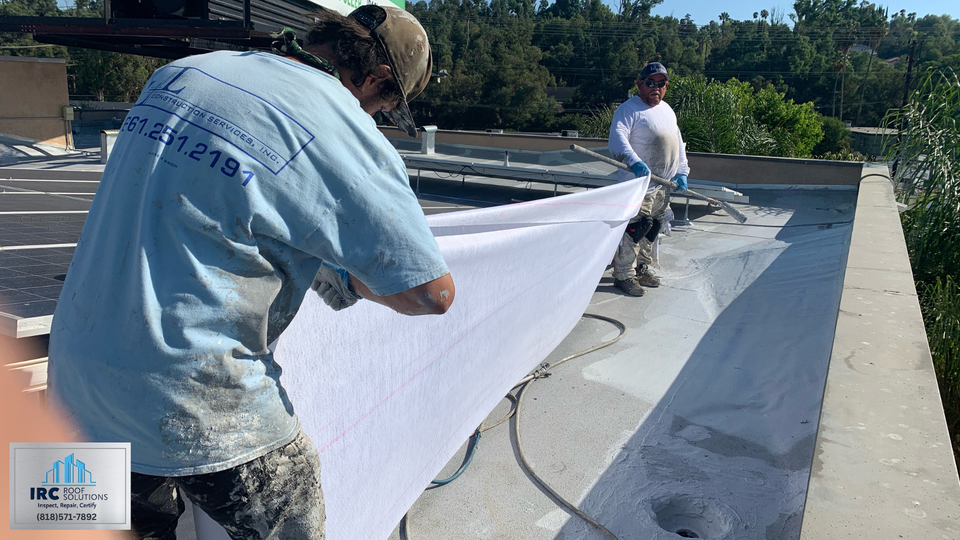
Single-ply membrane installation work on a low-slope commercial roof.
Where TPO installs go wrong
Most TPO failures trace back to welds. A cold weld looks fine at a glance, then opens under the first strong wind or a season of heat cycling. The fix is tedious but simple.
Test welds get run and pulled apart at the start of each day. Every seam gets probed by hand after welding. Any section that looks off gets cut open and checked.
Dirty sheet is the second cause. TPO that has sat in the sun and collected dust welds poorly until it is cleaned. Detail work is the third, especially inside corners, pipe boots, and the base of HVAC curbs.
If your building already has a TPO roof with aging seams, that is a repair question. Our page on repairing weathered TPO seams and failed welds covers it.
How long TPO lasts
For planning, the HUD useful life table lists thermoplastic membranes such as TPO at 15 years. That is a planning average, not a promise. Sheet thickness, attachment, drainage, and foot traffic all push the real number up or down.
Los Angeles adds its own stresses. Long dry seasons keep the sheet under steady sun, and summer heat pushes surface temperatures up day after day. Dust and soot from freeways and industrial areas settle on the roof and hold heat against the membrane.
Maintenance moves it the most. Clear drains, walk pads where crews actually walk, and a seam check after heavy weather keep small problems from turning into wet insulation.
TPO or PVC for your building
For most warehouses, offices, and retail roofs in Los Angeles, TPO is the practical choice. The exception is any roof that takes grease or chemical exhaust. Restaurants and food plants usually belong on a PVC membrane built for grease and chemical exposure.
A white sheet also affects what the building spends on cooling. Our coatings page explains how reflective roofs cut cooling loads, and the same physics applies to white TPO.
What a TPO proposal should include
A good proposal names the sheet thickness, the attachment method, the insulation type and total thickness, and the cover board. It describes how flashings, drains, and edge metal will be built. It also says plainly whether the old roof comes off.
Cost follows those choices, plus roof size, access, and how much equipment sits in the way. The written proposal carries the number once the roof has been walked. To see how TPO sits among the other systems we install, read our guide to new commercial roof systems.
Questions on this service
Can TPO be installed over an existing commercial roof?
Sometimes. A TPO recover can go over one existing roof when that roof and the deck are dry and sound. Reroofing rules do not allow a recover over more than one existing layer or over a water soaked roof, so core cuts or a moisture survey come first.
What thickness of TPO should a commercial roof use?
Common sheets are 45, 60, and 80 mil. Thicker sheet has more material above the reinforcement, which adds weathering life and puncture resistance. Roofs with heavy foot traffic or a lot of rooftop equipment are the usual case for going thicker.
Is TPO roofing considered a cool roof?
White TPO is highly reflective and many sheets carry Cool Roof Rating Council ratings. Whether a specific product meets California's cool roof values depends on its rated aged reflectance and emittance. Check the product's rating before it goes into the proposal.
How long does a TPO roof installation take?
It depends on roof size, whether the old roof comes off, deck repairs, and how much equipment has to be flashed around. Most of the time goes into tear-off and detail work at curbs, drains, and edges. The proposal lays out the schedule once the roof has been walked.
How are TPO seams checked after welding?
Test welds are run and pulled apart at the start of each day to confirm the welder settings. Every finished seam gets probed by hand with a blunt tool to find gaps. Any suspect section gets cut, inspected, and patched with a welded cover strip.
Related commercial roof system installations services
This page is one part of commercial roof system installations. The pages below cover the rest.
Other commercial roof services
Each property usually needs one clear scope, not all five at once. The walk tells us which page below matches the building.
- Commercial Roof Repair
- Commercial Roof Coatings
- Commercial Roof Restoration
- Commercial Roof Inspection and Certification
Ready for a written scope? Request a site visit or call (747) 308-4045.