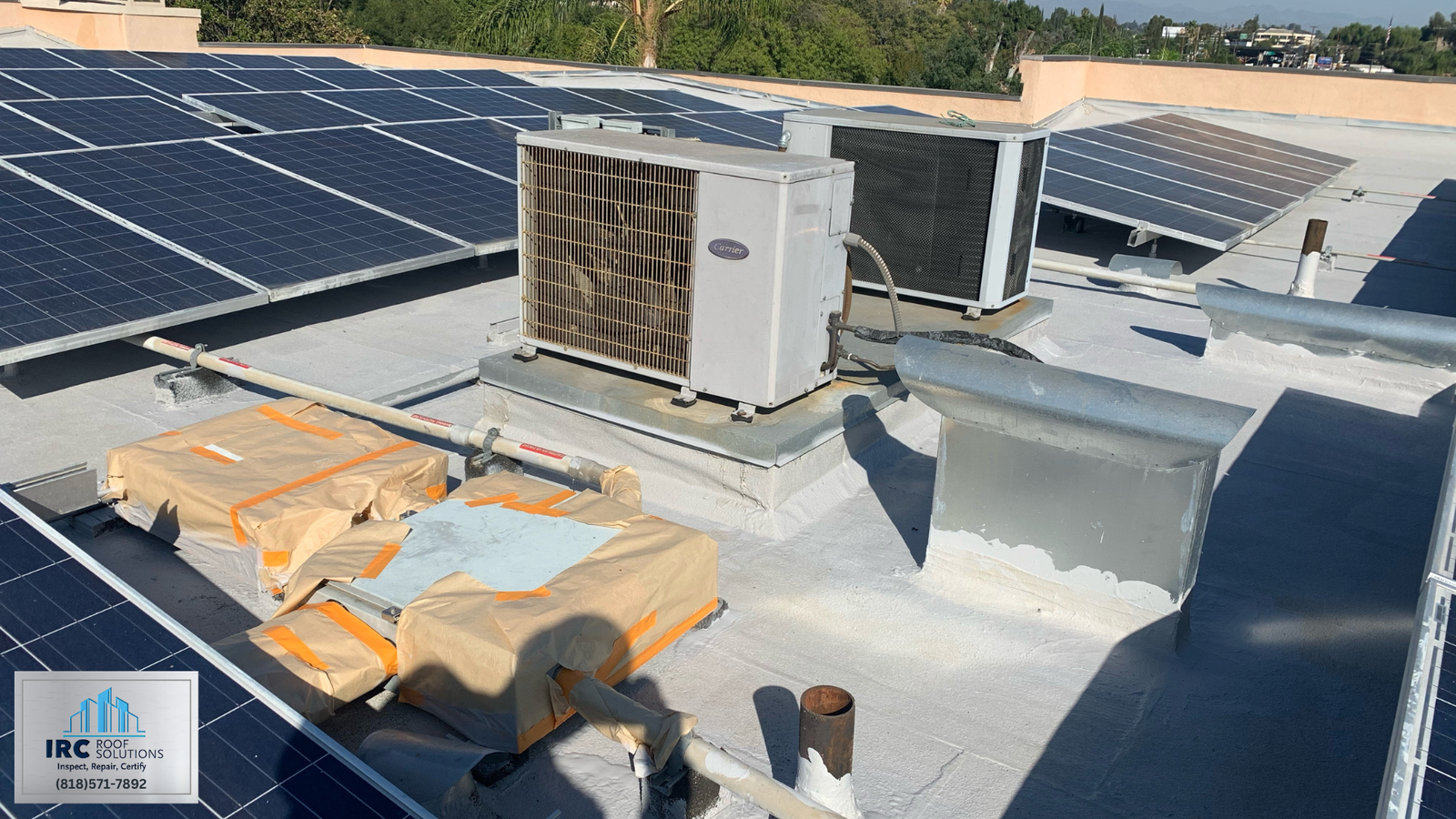
A single ply roofing membrane is one layer of factory-made sheet that does the waterproofing on its own. Built-up and modified roofs stack several plies. A single-ply roof relies on one sheet, its seams, and how well it is held down.
This page helps you choose among single-ply roofing systems for a commercial building in Los Angeles. It compares the three main sheets and the three ways to attach them. The goal is to read a proposal with the right questions in hand.
The three single-ply sheets
TPO and PVC are thermoplastics. Their seams are welded with hot air, so each lap becomes one fused piece. EPDM is a synthetic rubber, and its seams are joined with tape or adhesive.
TPO
TPO is the most common choice for general commercial roofs. It is white, reflective, and welded. Our page on TPO membrane installs and sheet thickness covers it in detail.
PVC
PVC is chosen where grease or chemicals reach the roof. It welds like TPO but resists oils and fats far better. The details are on our PVC roofing page for restaurant and grease exhaust roofs.
EPDM
EPDM is a rubber sheet with a long field history, covered by ASTM D4637. It tolerates movement well. Most EPDM is black, so it absorbs heat unless it gets a reflective surface.
Many older Los Angeles buildings already have EPDM on the roof. When it is sound, the question is whether to keep it, coat it, or replace it with a reflective sheet. That depends on how wet the roof is underneath and how the seams have aged.
EPDM vs TPO vs PVC compared
Side by side, the three sheets differ in a handful of ways. Each one matters on a real roof.
- Seams: TPO and PVC are welded. EPDM seams are taped or glued.
- Heat: TPO and PVC are usually white. EPDM is usually black.
- Grease and oils: PVC leads. TPO and EPDM hold up less well.
- Movement: EPDM stretches the most. PVC is flexible. TPO is the stiffest of the three.
- Planning life: HUD lists EPDM and thermoplastics at 15 years each, as budget averages.
Those planning figures come from the HUD useful life table. In Los Angeles, sun and heat do more damage than cold. That tilts most decisions toward a white thermoplastic, and EPDM comes up mostly as a comparison or on an existing roof being evaluated.
Mechanically attached vs fully adhered vs ballasted
The sheet gets the attention, but attachment decides how the roof behaves in wind. There are three main methods. Each fits a different kind of building.
Mechanically attached
Fasteners and plates hold the sheet to the deck, set inside the seam laps. The next sheet covers them and is welded or taped. It is fast and economical on decks that hold a fastener well.
The tradeoff is movement. Wind lifts the sheet between fastener rows, and that billowing works on the seams over time. Fastener rows run closer together at corners and edges for that reason.
Fully adhered
Adhesive bonds the sheet across its whole surface. Wind load spreads evenly and the sheet stays flat. It costs more in labor and material and needs a dry, clean surface to bond.
Adhered systems suit decks that do not hold fasteners well, such as some concrete or older wood decks. They also bond well over a cover board, which gives the adhesive a firm surface. The adhesive has limits for temperature and moisture that shape the work day.
Ballasted
A loose-laid sheet is held down by stone or pavers. It installs quickly and shields the membrane from direct sun. It also adds a lot of weight, which the structure has to be able to carry.
Ballast also makes leaks slower to find, because the stone has to be moved first. Wind exposure and parapet height limit where it can be used.
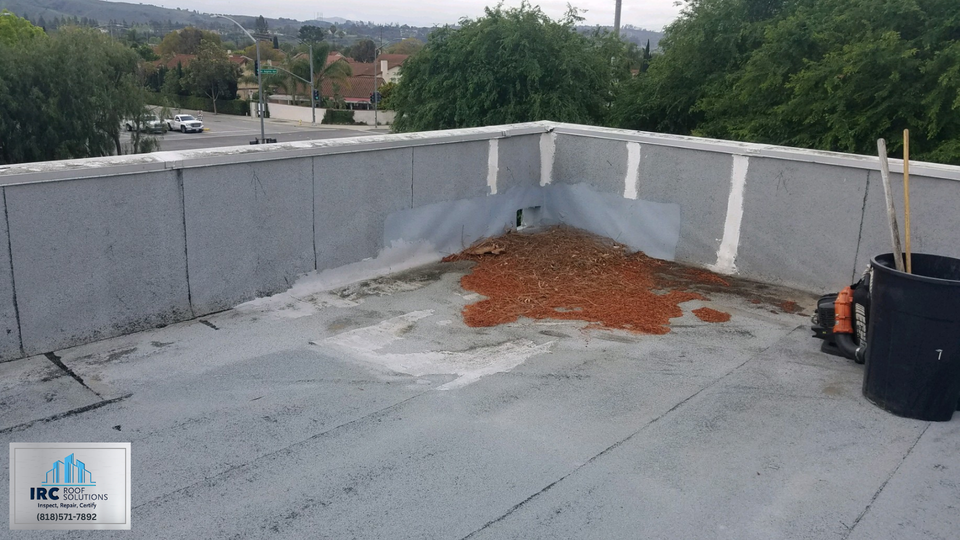
A large commercial roof field with mechanical units spread across it.
Edge securement and wind
Most single-ply wind failures start at the edge. Wind lifts the metal, the membrane peels back with it, and the field can follow. Edge metal is often the most under-specified part of a bid.
The industry reference for edge systems is SPRI ES-1, the wind design standard for low-slope roof edge systems. It sets how edge metal is designed and tested against wind loads. A proposal should say the edge system meets it.
Santa Ana wind events make this more than paperwork in parts of greater Los Angeles. Corners and perimeters take the highest uplift. That is where fastening gets denser and the edge detail gets the most care.
Insulation, cover board, and drainage
The sheet sits on insulation, and the insulation carries the energy performance. Under California's energy code, replacing or recovering a nonresidential roof triggers insulation requirements. A simple recoat does not.
Tapered insulation fixes ponding on dead-flat decks by building slope toward the drains. A cover board over the insulation takes foot traffic and protects the sheet from punctures. Both are line items worth checking on any bid.
Drains deserve the same attention as the sheet. New insulation raises the roof surface, so drain bowls and scuppers often need to be reset to the new height. A drain left low turns into a permanent puddle around the outlet.
Choosing a system for your building
Start with the building. What lands on the roof, what the deck is made of, how much equipment sits up there, and how long you plan to own it all shape the choice.
Then look at what is already there. A dry existing roof may support a recover, or even a restoration instead of a new sheet. A moisture survey of the existing insulation answers that before anyone prices a tear-off.
Ask each bidder to name the sheet, its thickness, the attachment method, and the edge system in writing. Ask how the flashings will be built and what happens if wet insulation turns up. Cost follows those answers, and the written proposal carries the number after the roof walk.
If the roof may be worth keeping, read how restoration compares with full replacement. When a new sheet is the answer, our overview of commercial roof installation lays out the full range of systems.
Questions on this service
What is a single-ply roof?
It is a roof waterproofed by one layer of factory-made sheet instead of several built-up plies. The common sheets are TPO, PVC, and EPDM. The sheet sits over insulation and is held down by fasteners, adhesive, or ballast.
Is mechanically attached or fully adhered better?
Each fits different buildings. Mechanically attached systems are faster and more economical on decks that hold fasteners well. Fully adhered systems cost more but spread wind load across the whole sheet and stop it from billowing.
Which single-ply membrane lasts the longest?
HUD planning tables list EPDM and thermoplastic membranes like TPO and PVC at 15 years each. Those are averages for budgeting, not predictions. Thickness, attachment, drainage, foot traffic, and exposure on the roof make a bigger difference than the sheet type.
Why do single-ply roofs fail at the edges?
Wind uplift is highest at corners and perimeters. If the edge metal lifts, the membrane peels back with it and the field can follow. Edge systems designed to a recognized wind standard and tighter fastening at the perimeter address that.
Can you walk on a single-ply roof?
Yes, with care. Repeated foot traffic and dropped tools can puncture the sheet, especially thinner sheets over soft insulation. Walk pads along service paths and a cover board under the membrane protect it.
Related commercial roof system installations services
This page is one part of commercial roof system installations. The pages below cover the rest.
Other commercial roof services
Each property usually needs one clear scope, not all five at once. The walk tells us which page below matches the building.
- Commercial Roof Repair
- Commercial Roof Coatings
- Commercial Roof Restoration
- Commercial Roof Inspection and Certification
Ready for a written scope? Request a site visit or call (747) 308-4045.