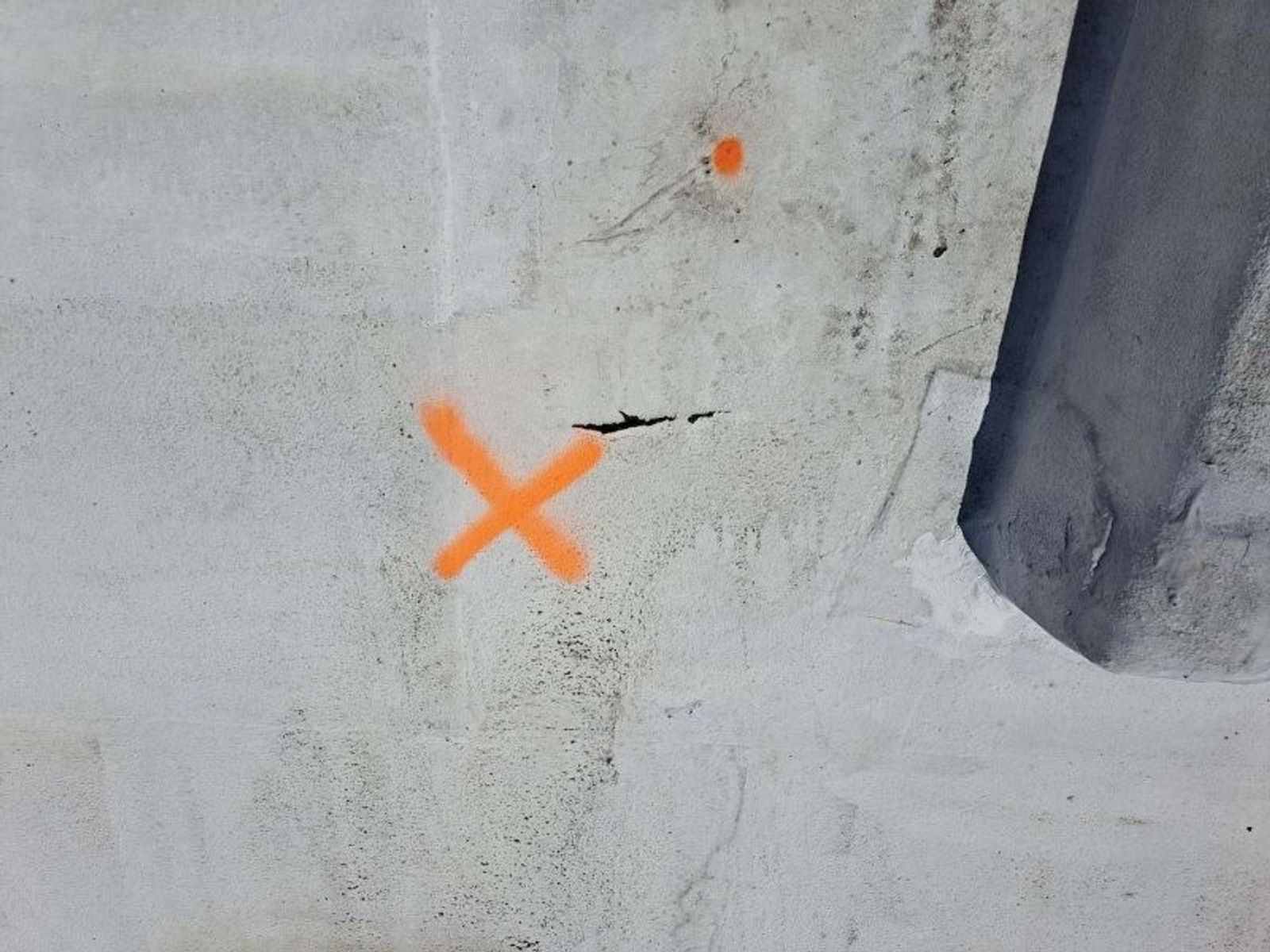
A commercial roof leak is rarely where the ceiling stain is. Water gets through one weak detail, runs along the deck or a seam, and drops somewhere else. Roof leak repair that starts at the drip usually patches the wrong spot.
We repair leaks on flat and low-slope commercial roofs across greater Los Angeles. That means warehouses, multifamily buildings, retail, and offices. The job is simple to describe: find the source, fix the detail that failed, and prove it with photos.
Where commercial roofs actually leak
The open field of a membrane is the least likely place for a leak. Water gets in at the places where the roof changes direction or something passes through it. These are the spots we check first.
- Flashings at walls, parapets, and curbs, where the membrane turns up and ends.
- Seams and laps, especially on older single-ply and built-up roofs.
- Penetrations: pipe boots, vents, conduit, and solar racking feet.
- Drains and scuppers, where debris holds water against every weak joint.
- HVAC curbs and equipment stands, where service crews walk and drop tools.
A detailed look at those failure points is on our roof flashing repair page. Flashing is the single most common source we find.
How we trace a leak to its source
Tracing starts inside the building. We map every stain, drip, and wet ceiling tile, and we ask when it leaks. A leak that shows up only in wind-driven rain points somewhere different than one that drips after every shower.
Then we walk the roof above and upslope of each interior spot. Seams get probed, flashings get checked for height and adhesion, and every penetration nearby gets a hand inspection. Most leaks are found at this stage.
When the source still hides, we narrow it down with testing. A controlled water test runs one area at a time. A roof moisture survey shows where water has spread inside the insulation, which is often far wider than the stain.
Why the first patch often misses
Many roofs arrive with a history of patches stacked over the ceiling stain. Each one sealed a spot that was never the source, so the leak came back after the next storm. We note every old patch we find, because a cluster of them tells us where water has been fighting to get in.
Leaks near rooftop equipment deserve extra suspicion. Condensate lines, loose curb flashing, and screws left behind by service crews all let water in. None of those show up from inside the building.
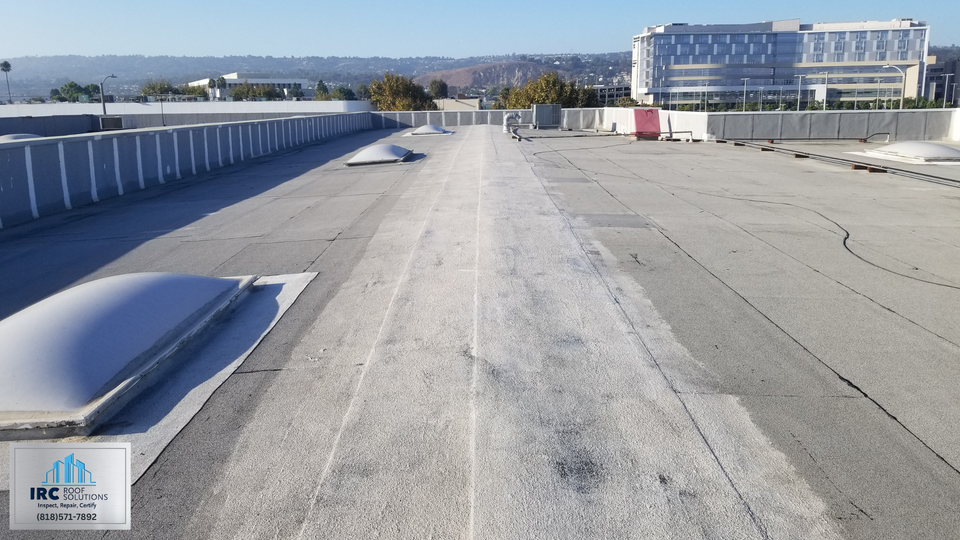
Flashings and seams get checked by hand before anything is opened.
What a proper leak repair includes
A repair is only as good as the surface it bonds to. The area gets cleaned, dried, and primed where the membrane calls for it. A patch on a dirty or wet surface is the reason many roofs leak in the same place twice.
The repair itself matches the roof. TPO and PVC seams are welded with hot air, built-up and modified roofs get compatible plies and mastic, and coated roofs get reinforced coating over the detail. Mixing incompatible materials is a common shortcut that fails early.
If insulation under the leak is wet, it comes out. Wet insulation loses its insulating value, adds weight, and keeps rotting the deck from inside. Closing a roof over it only moves the problem.
Leaks, drains, and standing water
Many Los Angeles roofs go months without rain, so drains fill with leaves and debris unnoticed. Then the first real storm backs water up over flashings that were never meant to sit underwater. Model property codes expect roof drainage to prevent dampness and stay free of obstructions.
Clearing drains before the wet season is the cheapest leak repair there is. It belongs in any preventive roof maintenance plan. We note ponding areas during every leak call so they can be fixed before they turn into the next leak.
When a leak points to a bigger scope
Most leaks are one failed detail on a roof with years left. Some are not. Repeat leaks in different areas, spreading wet insulation, and brittle, cracking membrane all mean the roof as a whole is near the end of its service life.
In that case we say so in writing. A roof with a dry deck and sound insulation may be a candidate for flat roof restoration. A roof that is wet across the field needs a replacement. Either way, you get the evidence, not just the opinion.
What drives the cost of a leak repair
The price of a leak repair follows the work, not the size of the stain. Four things move it most. We put each one in the written proposal so the number makes sense.
- How long the source takes to find. A split seam over the stain is quick. A leak that travels needs testing.
- The membrane type, because welding, plies, and coatings each take different materials and time.
- Wet insulation. Cutting it out and replacing it is often the largest part of the job.
- Access and timing. Tall buildings, occupied spaces, and after-hours work all add labor.
A cheap patch that misses the source costs more in the end. The leak returns, and the damage inside keeps growing while the roof looks repaired.
Working safely on your roof
Leak calls often happen in bad weather, on roofs with skylights and open edges. Commercial roof work falls under OSHA fall protection rules, wet or dry. If a roof is not safe to walk during a storm, the interior gets protected first and the crew goes up when it is.
What you get after the repair
Every leak repair ends with a short written record. It includes dated before and after photos, the source we found, and what was repaired. Property managers use it for owners, tenants, and insurance adjusters.
If the leak came from sudden storm damage, the record helps with a claim. The coverage decision belongs to your carrier. The California Department of Insurance commercial guide explains how commercial property policies work. Storm-specific steps are on our storm damage roof repair page.
Questions on this service
Why does my commercial roof leak only when it rains hard?
Light rain soaks in slowly and evaporates, while a heavy storm pushes water sideways under laps, over flashing heights, and into seams faster than it can drain. A partly blocked drain makes it worse, because the water sits deeper and finds the weakest detail. That pattern usually points to flashings, drains, or seams rather than the open field.
Can a roof leak be repaired while it is raining?
Only temporarily. A crew can set an emergency seal or a patch that holds on a wet surface, but most permanent repairs need a clean, dry membrane to bond or weld. Plan on a return visit once the roof dries.
How do you find where a flat roof is leaking?
We start inside, mapping every stain and drip, then walk the roof above and upslope of it. Seams, flashings, penetrations, and drains get checked by hand. When the source is still unclear, a moisture survey or a controlled water test narrows it down.
Is a leaking roof a sign it needs to be replaced?
Not by itself. Most leaks come from one detail, like a split seam or a failed pipe boot, on a roof that has years left. Replacement comes up when wet insulation spreads across large areas or the same sections keep failing.
How long does a commercial roof leak repair take?
A single seam, boot, or flashing repair is usually done in one visit once the source is found. Leaks with wet insulation take longer, because the wet material has to be cut out and replaced before the roof is closed up.
Related commercial roof repair services
This page is one part of commercial roof repair. The pages below cover the rest.
- Flat Roof Repair
- Emergency Roof Repair
- Storm Damage Roof Repair
- TPO Roof Repair
- Roof Flashing Repair
Other commercial roof services
Each property usually needs one clear scope, not all five at once. The walk tells us which page below matches the building.
- Commercial Roof Coatings
- Commercial Roof Restoration
- Commercial Roof System Installations
- Commercial Roof Inspection and Certification
Ready for a written scope? Request a site visit or call (747) 308-4045.