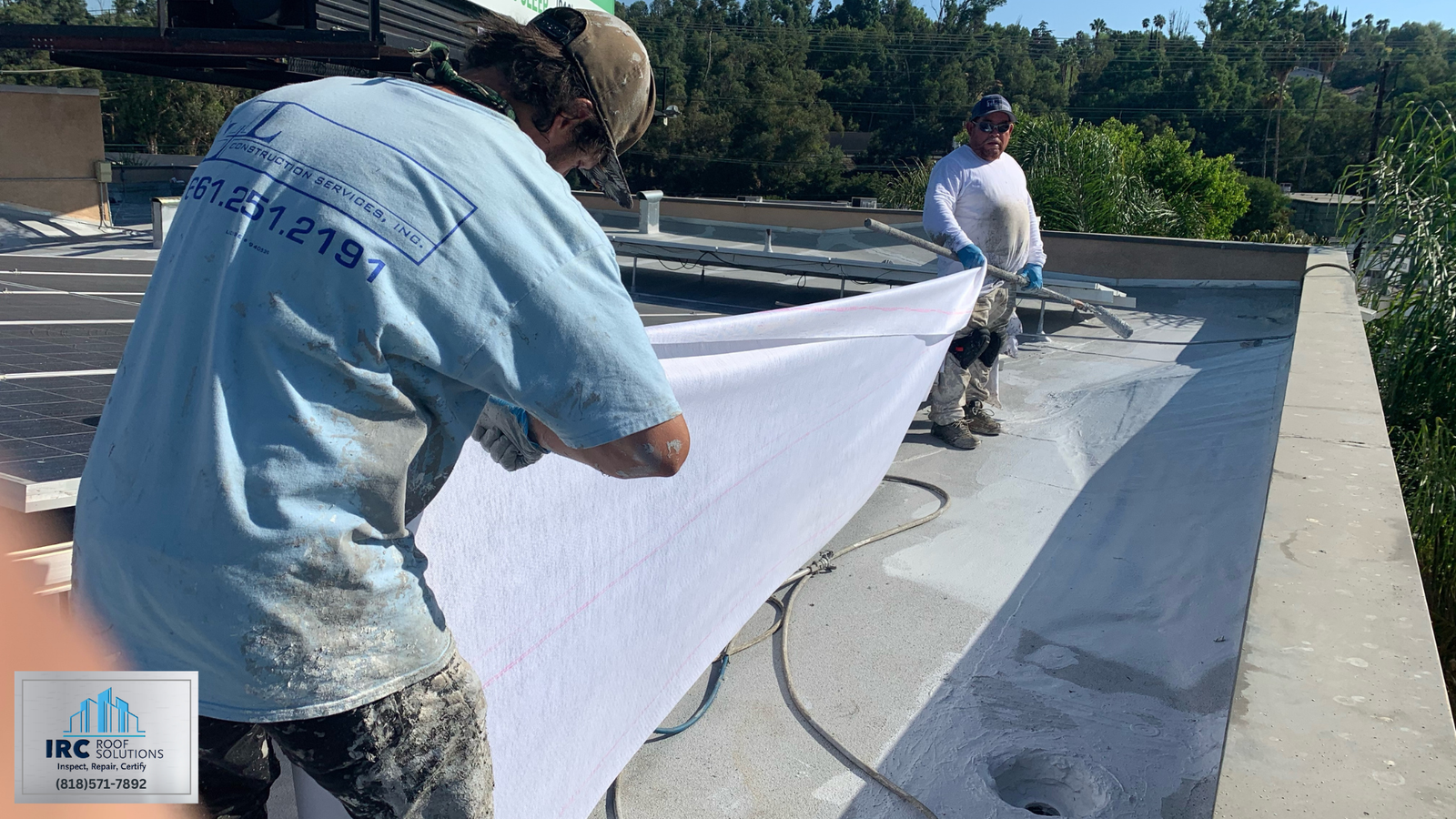
TPO roof repair is welding work. The membrane is a thermoplastic, which means heat softens it and two sheets can fuse into one. A good repair uses that property, and a bad one ignores it.
We handle TPO roofing repairs on commercial and industrial buildings across greater Los Angeles. That includes open seams, punctures, worn sheet, and commercial TPO leak calls. For problems that apply to every membrane type, see our page on repairing low-slope membranes of any type.
How a TPO roof is built
TPO stands for thermoplastic polyolefin. The sheet has a top and bottom layer with a fabric reinforcement, called scrim, between them. The ASTM D6878 standard covers the material specification for TPO sheet roofing.
Sheets are laid in rows and joined at overlapping seams. A hot-air welder melts both surfaces and presses them together. The sheets are then either mechanically fastened, fully adhered, or held down with ballast.
How the roof is attached shapes how it fails. Mechanically fastened sheets move in the wind at the fastener rows. Fully adhered sheets stay flat but can lose their bond in spots.
Common TPO failures
TPO problems follow a few patterns. Most start at a seam or a detail, not in the open sheet. The list below covers what we find most often.
- Seam failures from cold welds that never fused or hot welds that scorched the edge.
- Unpatched T-joints, where three sheet edges meet and leave a small channel for water.
- Punctures from dropped tools, fasteners, and foot traffic around rooftop units.
- Fastener plates wearing through the sheet from years of wind movement.
- Surface cracking and exposed scrim on older, sun-worn membrane.
- Damage from grease, oils, or solvents that TPO does not resist well.
Flashings at walls, curbs, and pipes are the other big category. Those have their own page on parapet, curb, and pipe boot flashing.
How a TPO patch is welded
A TPO patch is a piece of new sheet welded over the damaged area. The patch has rounded corners so the edges do not catch and peel. It extends well past the damage on every side.
Before welding, the old membrane is cleaned. Dirt, film, and chalky oxidation on the surface block the weld. We scrub the area and use a cleaner made for weathered membrane.
Then we run a test weld. A strip of new sheet is welded to the roof near the repair and pulled apart by hand. If the weld tears the sheet instead of peeling off cleanly, the settings are right and the real patch can go on.
Every finished seam gets probed. A blunt probe runs along the edge of the weld to find any gap. Gaps are rewelded before the crew leaves.
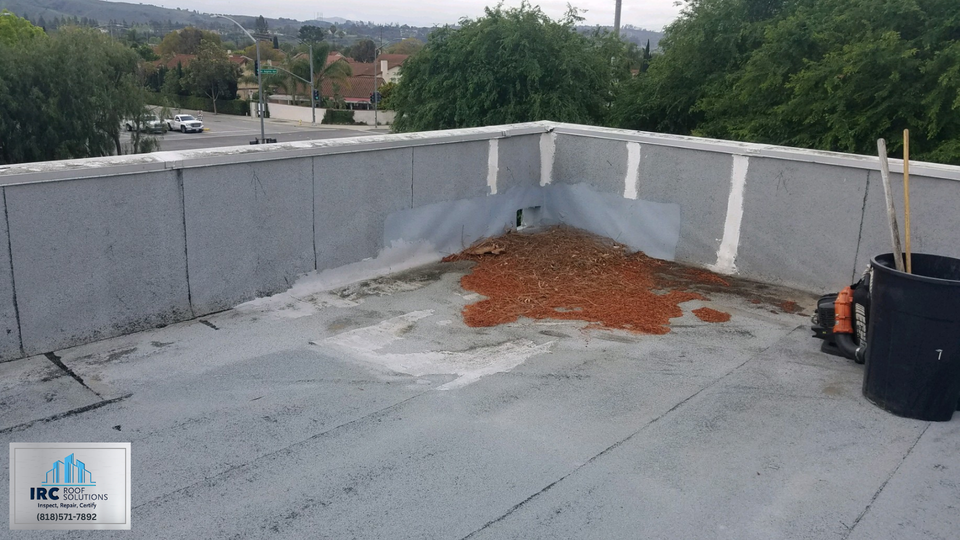
Large commercial roof field with mechanical units and open membrane sections.
Repairing aged and weathered TPO
Older TPO is the hard case. Years of Los Angeles sun wear down the top layer and dry out the surface. The sheet can stop accepting a weld, even after careful cleaning.
When a test weld fails, there are still options. A larger section of the old sheet can be cut out and new membrane welded to sounder material around it. In some areas a primed, tape-based cover strip works where welding will not.
HUD's useful life planning table lists thermoplastic roofs at 15 years as a planning average. It is a budgeting number, not a forecast for your building. Once repairs start failing across the field, it is time to talk about a wider scope.
Can a worn TPO roof be coated?
Coating TPO is possible, but it needs care. The smooth surface resists adhesion, so it takes thorough cleaning and a primer matched to the membrane. Every seam and patch should be sound first.
A coating does not fix open seams or wet insulation. It adds a new surface over a sound one. Our notes on which roofs can be coated and which cannot cover the limits.
Preventing the next TPO repair
Many TPO repairs come from people, not weather. HVAC techs, cable installers, and solar crews walk the same paths to the same units for years. Each visit risks a dropped screw, a dragged panel, or a knee on a hot seam.
Walkway pads welded along those paths spread the load and protect the sheet. They are a small addition during a repair visit. Service areas around rooftop units benefit most.
Grease and exhaust
Restaurant tenants create a different risk. Kitchen exhaust fans can deposit grease that softens and swells TPO over time. Grease containment at the fan and prompt cleanup keep that damage from spreading.
Loose debris after work
Sheet-metal scraps and fasteners left behind by other trades are a common source of punctures. They get stepped on and pressed into the membrane. A quick sweep after any rooftop work prevents a lot of small holes.
Asking contractors to report any roof damage before they leave helps too. A fresh cut found the same day is a quick patch. Found after the rain, it is a leak call.
What drives TPO repair cost
The written proposal carries the number, and a few factors set it. The condition of the old sheet matters most. Clean, weldable membrane makes for a quick patch, while weathered sheet takes more prep and sometimes new sections.
The number of repairs and their spread across the roof also count. So do wet insulation under the damage, access to the roof, and working around rooftop equipment. Each is listed so you can see where the time goes.
When repair gives way to a new roof
A handful of seam or puncture repairs on sound TPO is routine work. Widespread cracking, exposed scrim across the field, and saturated insulation are not. At that point the conversation moves to a new TPO roofing installation or another system.
We document the condition either way, with photos of test welds, cracked areas, and core samples where needed. That record supports the decision on our commercial roof repair and replacement recommendations. You see the same evidence we do.
Questions on this service
Why are the seams on my TPO roof coming apart?
Most seam failures trace back to the original weld. A weld made too cold never fused, and one made too hot can scorch the sheet next to it. Building movement and foot traffic then open the weak spots over time.
Can old TPO still be welded?
Often, yes, once the surface is cleaned down to fresh membrane. Aged sheet that has cracked, thinned, or exposed its reinforcing fabric may not accept a sound weld. A test weld on the actual roof answers the question before the repair starts.
What does exposed scrim on a TPO roof mean?
The scrim is the fabric reinforcement inside the sheet. When it shows through, the top layer has worn away and the membrane is losing its waterproofing in that area. Small spots can be covered with a welded patch, but widespread exposure points to a bigger scope.
Is it OK to use caulk or roof cement on a TPO roof?
Not as a permanent repair. Most general-purpose sealants and asphalt-based cements do not bond to TPO over time and can make future welding harder. Contaminated areas often have to be cut out before a proper patch can go on.
How can I tell if my roof is TPO or PVC?
They look alike from the ground and even up close. A roofer can tell by the original records, a small sample, or how the sheet responds to welding. Knowing which one you have matters because the patch material must match.
Related commercial roof repair services
This page is one part of commercial roof repair. The pages below cover the rest.
- Commercial Roof Leak Repair
- Flat Roof Repair
- Emergency Roof Repair
- Storm Damage Roof Repair
- Roof Flashing Repair
Other commercial roof services
Each property usually needs one clear scope, not all five at once. The walk tells us which page below matches the building.
- Commercial Roof Coatings
- Commercial Roof Restoration
- Commercial Roof System Installations
- Commercial Roof Inspection and Certification
Ready for a written scope? Request a site visit or call (747) 308-4045.