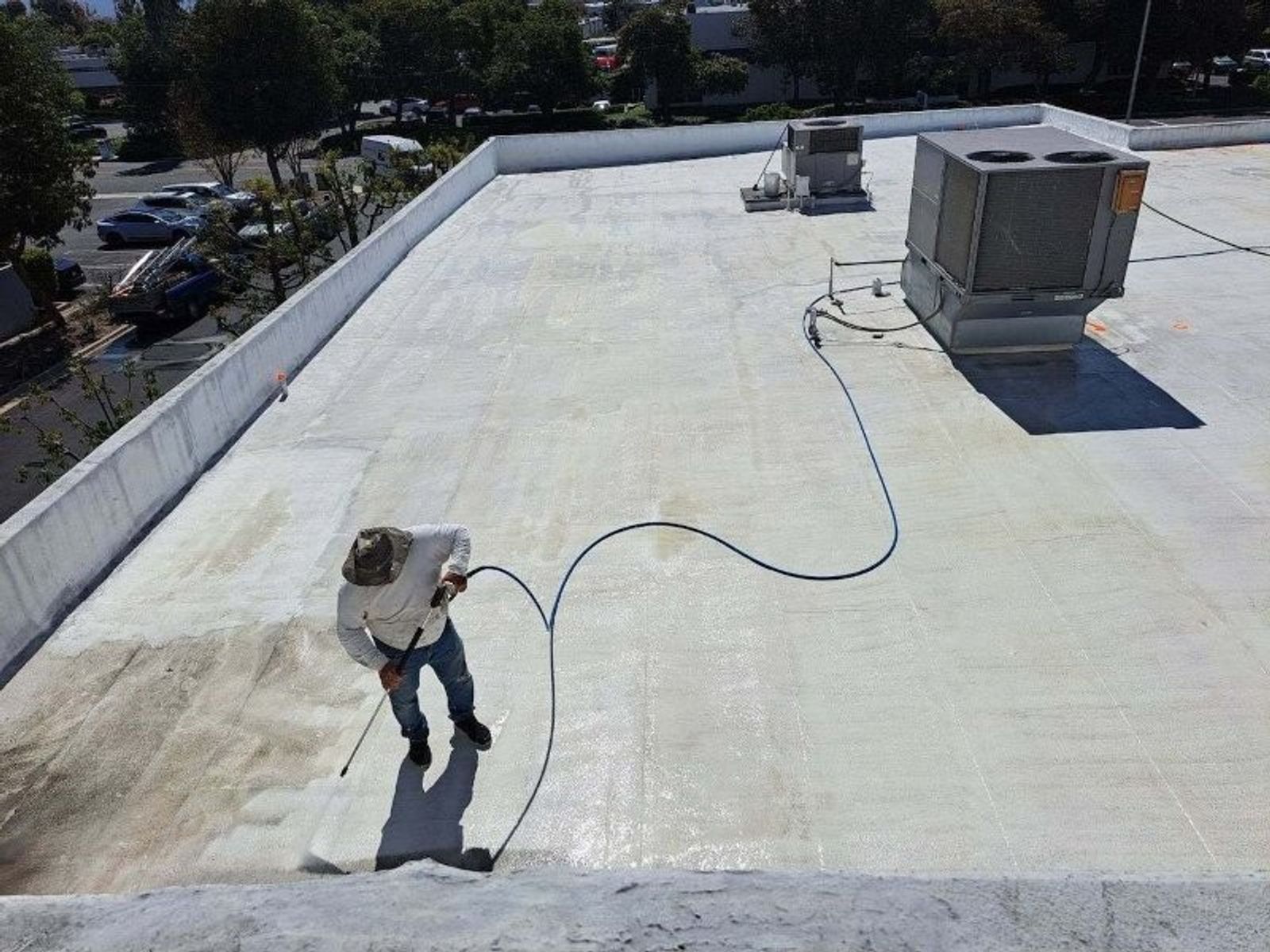
PVC roofing is a heat-welded single-ply membrane built for roofs that most other sheets cannot handle. Grease, animal fats, and many chemicals break other membranes down over time. A PVC roofing membrane resists them, which is why restaurants and food plants rely on it.
We install PVC on commercial roofs across greater Los Angeles where the exposure calls for it. This page covers what the sheet is, how it compares with TPO, and what changes on a roof with kitchen exhaust.
What PVC membrane is made of
PVC is polyvinyl chloride, made flexible with plasticizers and reinforced with a polyester scrim. The sheet is thermoplastic, so seams fuse with hot air into one piece. The standard for the sheet is ASTM D4434, and a proposal should name it.
The chlorine in the polymer makes PVC self-extinguishing. That same chemistry gives the sheet its resistance to oils and fats.
Like TPO, PVC comes in several thicknesses and is usually white. The reflective surface keeps the roof cooler under Los Angeles sun. It also helps the roof meet California's cool roof rules when a large area is replaced.
Plasticizers are the tradeoff. Over many years they can migrate out of the sheet and leave it stiffer. A quality formulation and a compatible layer underneath slow that process.
TPO vs PVC: where each fits
The tpo vs pvc decision mostly comes down to what lands on the roof. Both sheets are white, both are welded, and both install with the same tools. The difference is chemistry.
- PVC resists grease, animal fats, and many oils and chemicals. TPO holds up to them less well.
- PVC is the more flexible sheet, which helps at crowded, complex details.
- TPO usually costs less for the same roof area.
- PVC cannot touch asphalt or polystyrene insulation. It needs a separator or a compatible layer.
- TPO and PVC do not weld to each other, so mixing them needs a planned termination.
For planning, the HUD useful life table groups both under thermoplastic membranes at 15 years. On a greasy roof, that average means little for TPO, because the exposure shortens its life.
If the building has no grease or chemical exposure, TPO installed for warehouses and offices is usually the better value. PVC earns its premium where something on the roof would attack TPO.
PVC for restaurants and grease exhaust
Kitchen exhaust fans throw grease onto the roof every day they run. Over time it soaks into asphalt and rubber membranes, softens them, and leaves them brittle. PVC stands up to that exposure far longer.
The membrane is only half the answer. Grease containment at each exhaust fan keeps most of it off the roof, and that containment needs emptying on a schedule. Without it, grease spreads toward the drains and makes the roof slick underfoot.
Restaurant roofs also carry a crowd of penetrations. Exhaust fans, makeup air units, gas lines, and condensate lines each need a flashing built from compatible PVC. For how those details fail over time, see our page on repairing curb and pipe flashings.
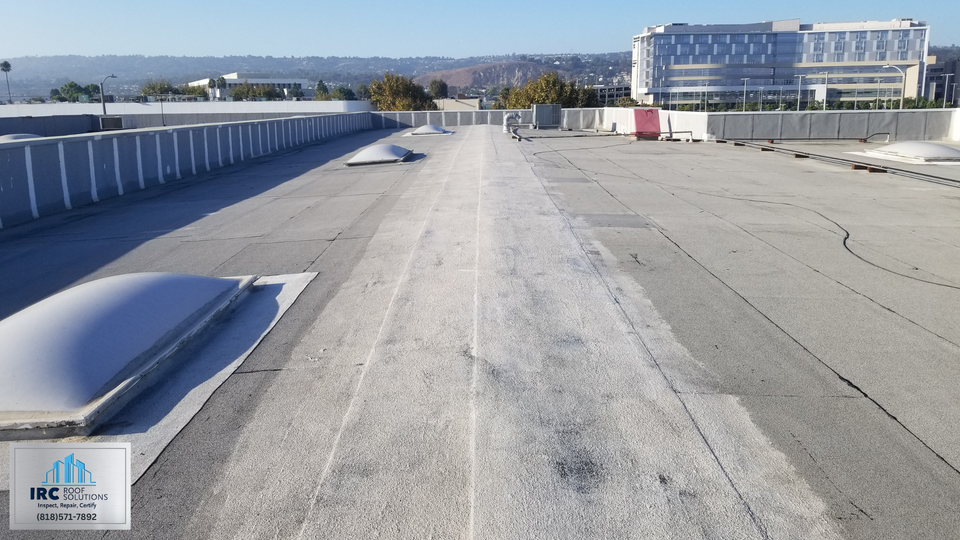
Close view of membrane seams and flashings on a commercial roof.
Chemical and industrial exposure
Food processing plants, labs, and some manufacturers vent more than grease. Solvents, oils, and process exhaust can settle on a roof and attack an incompatible membrane. PVC resists a wide range of these, but not all of them.
So the first question on these roofs is what the building vents. When the exposure is unusual, the membrane maker's published chemical resistance data settles it. That check belongs in the project file before the sheet is ordered.
Some exposures are local to one spot. A single process vent or a chemical storage area may only affect a small part of the roof. Knowing where the exposure lands shapes both the sheet choice and where extra protection goes.
Installing PVC on an existing building
Many PVC projects in Los Angeles replace an older built-up or modified bitumen roof. Both contain asphalt, which PVC cannot touch. Tear-off, or a separator layer over a single sound roof, keeps the two apart.
Insulation matters for the same reason. Polystyrene boards need a separator under PVC. The sheet is then mechanically attached or fully adhered, based on the deck and the wind design.
Restaurant buildings add their own constraints. Kitchens often run from early morning to late at night, and exhaust fans cannot simply be shut off for a day. Tear-off and fan curb work get sequenced around the kitchen schedule, with the owner and tenant agreeing on the plan first.
The welding itself is the same craft as TPO. Test welds are pulled each day, seams are probed, and details are closed before the crew leaves the roof.
Keeping a PVC roof in service
A restaurant roof needs more attention than a clean warehouse roof. Grease containment gets emptied, drains get cleared, and fan flashings get checked on a set schedule. A recurring roof maintenance program puts that on the calendar.
Grease that reaches the drains is its own problem. It can harden inside the drain lines and slow the roof's drainage. Walking the drains at each visit catches that before water starts to pond.
Lease terms often decide who pays for that upkeep. A restaurant tenant may be responsible for damage from its own exhaust. Our repair page explains how leases and insurance split roof costs.
What drives the cost of a PVC roof
PVC material generally costs more than TPO. Beyond the sheet, the number follows tear-off, insulation, access, and the count of penetrations. A small restaurant roof crowded with fans can take more detail labor than a larger open warehouse.
Ask each bidder how they will handle grease containment, fan curbs, and any asphalt left under the new sheet. Those answers separate a complete PVC scope from a cheaper one that leaves gaps. The details are where restaurant roofs succeed or fail.
The written proposal carries the number after the roof walk. To compare PVC with the other systems on the table, read our overview of commercial roof systems.
Questions on this service
Is PVC roofing better than TPO for a restaurant?
For most restaurants, yes. Kitchen exhaust puts grease and animal fats on the roof, and PVC resists them far better than TPO. The extra material cost is usually recovered in service life on a roof with active exhaust fans.
Can PVC roofing be installed over an existing asphalt roof?
Not in direct contact. Asphalt harms PVC, so the old roof either comes off or gets covered with a separator layer first. A recover is only possible when the existing roof is a single layer and the roof and deck are dry.
Does grease damage a TPO or EPDM roof?
Yes, over time. Grease and animal fats soak into those membranes, soften them, and shorten their life. That is the main reason restaurant roofs are usually specified in PVC around the exhaust fans or across the whole roof.
Is PVC roofing fire resistant?
The PVC sheet is self-extinguishing because of the chlorine in the polymer. The fire rating of the roof, though, belongs to the whole assembly, including the deck, insulation, and cover board. The proposal should name the rated assembly being installed.
How do you maintain a PVC roof on a restaurant?
Grease containment at each exhaust fan gets emptied on a schedule, and drains get cleared so grease does not spread. Fan curb flashings and seams near the fans get checked at every visit. Catching grease buildup early keeps the membrane and the roof surface safe to walk.
Related commercial roof system installations services
This page is one part of commercial roof system installations. The pages below cover the rest.
Other commercial roof services
Each property usually needs one clear scope, not all five at once. The walk tells us which page below matches the building.
- Commercial Roof Repair
- Commercial Roof Coatings
- Commercial Roof Restoration
- Commercial Roof Inspection and Certification
Ready for a written scope? Request a site visit or call (747) 308-4045.