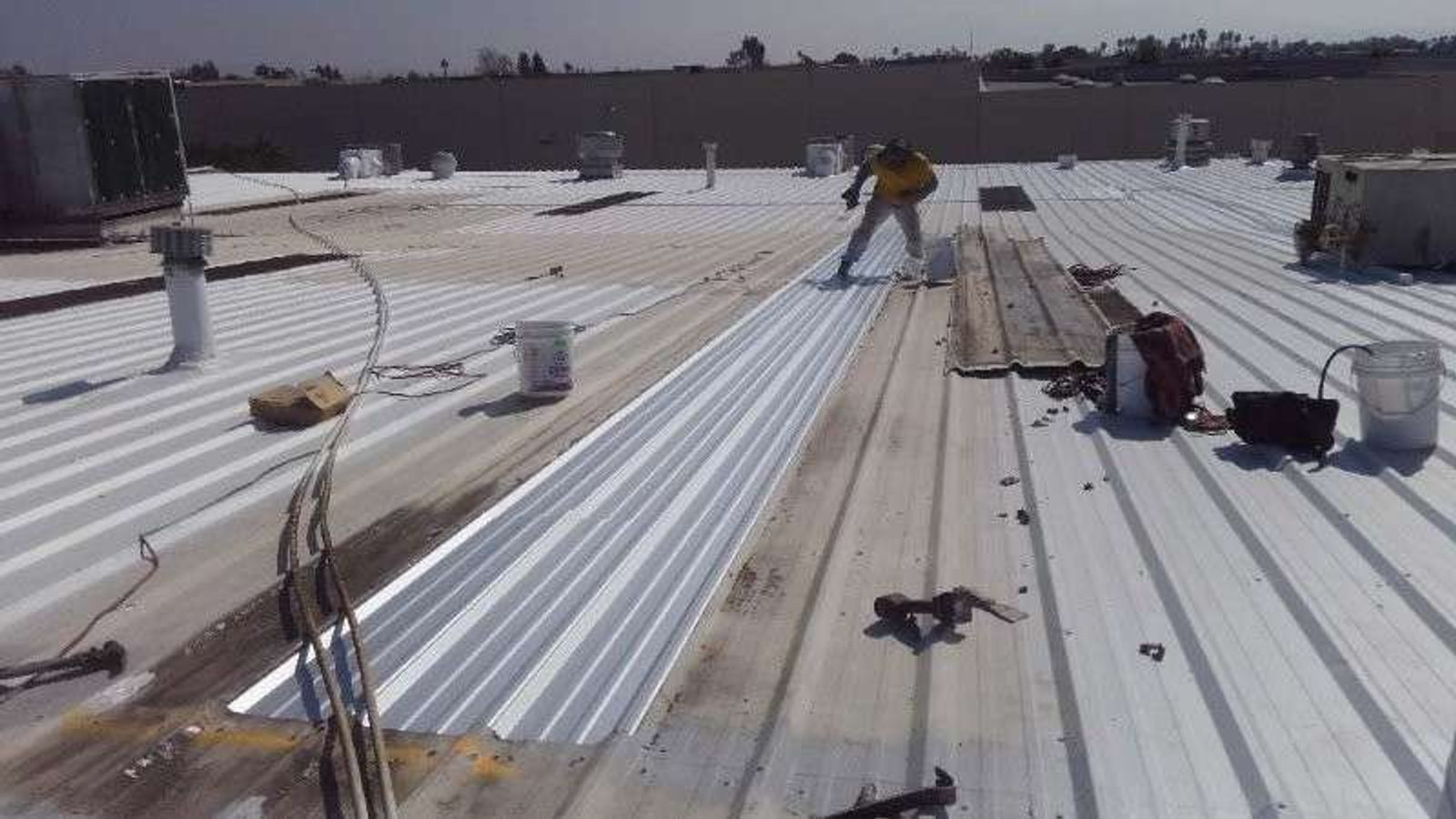
Commercial metal roofing covers warehouses, pre-engineered metal buildings, and industrial sheds across greater Los Angeles. Steel panels shed water fast and can last a long time with care. The HUD useful life table lists sloped metal roofs at 50 years for planning.
This page covers new metal roof panels, panel replacement on existing buildings, and the details that decide how long either lasts. It is written for owners and property managers weighing their options. It also lists what to ask before you sign.
Standing seam vs exposed fastener panels
A standing seam metal roof joins panels at raised seams that sit above the water line. Clips hidden under the seams hold the panels to the structure. The panels slide in those clips as they expand and contract with heat.
Exposed fastener panels are screwed straight through the metal into the framing. Each screw has a rubber washer, and those washers age in the sun. Years of heat cycling loosen fasteners and open small leaks.
Standing seam panels can run at lower slopes than exposed fastener panels. Exposed fastener panels need more pitch to move water past their end laps, and they cost less up front. Standing seam asks more at install and less over the life of the roof.
Gauge and finish matter as much as the profile. Heavier gauge panels resist dents and foot traffic better. Factory finishes protect the steel from rust and can be reflective, which keeps the building cooler in summer.
Where metal roofs leak
Metal panels themselves rarely fail first. The joints, fasteners, and add-ons do. These are the usual suspects on a commercial building.
- Fasteners with cracked or flattened washers, or screws that have backed out.
- End laps and side laps where the sealant has dried and split.
- Ridge caps, eave closures, and trim pieces that have shifted.
- Curbs and penetrations cut through the panels after the roof was built.
- Skylight panels that have gone brittle in the sun.
- Gutters and valleys where dissimilar metals touch and corrode.
Many leaks sit where the roof meets a wall or a parapet. The same flashing principles apply there as on a membrane roof. Our page on repairing flashings at walls and curbs covers how those joints fail.
Many of these leaks are small and slow. Water can travel along a purlin or down the inside of a panel before it drips, so the stain inside rarely sits under the source. Finding it takes a walk on the roof and a look at the underside.
Metal roof panel replacement
A tired metal roof does not always need to come off. Panels with rust-through, storm damage, or a history of leaks can be cut out and replaced while sound panels stay. The new panels have to match the old profile so the laps nest and seal.
Replacement panels go in with new fasteners and fresh sealant at every lap they touch. Trim and closures near the work are replaced at the same time. Where panels meet a different metal, the detail keeps the two apart so they do not corrode each other.
Wall panels often get the same treatment. On many metal buildings the roof and siding are one system, and the damage runs across both. Replacing wall panels at the same time keeps the trim and flashings at the roof edge continuous.
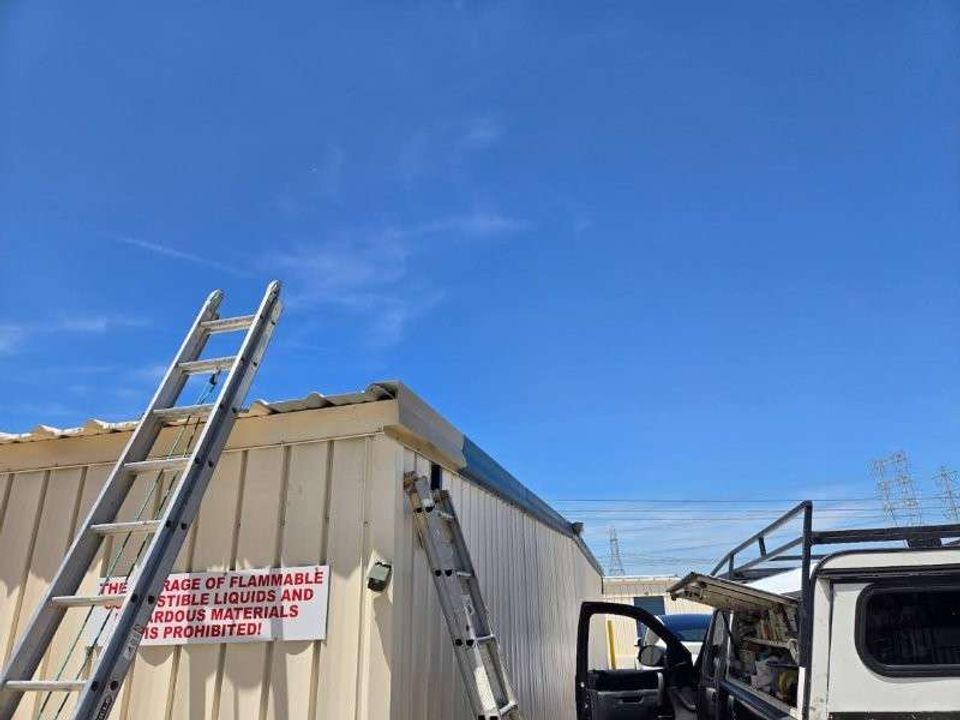
Metal roof repair on a commercial building with corrugated panels and rooftop equipment.
New metal roof installs
A new metal roof starts at the structure. Framing spacing, slope, and the condition of the purlins decide which panels can go on. On older buildings, some framing or clips may need attention once the old panels are off.
Insulation and condensation control come next. Many metal buildings use a faced blanket between the panels and the framing. A torn facer lets warm, moist air reach cold steel, and the condensation drips inside like a leak.
Panels, trim, and flashings go on last. Every penetration should be planned before the first panel is set. A curb cut in later, without the right flashing, is a common start for leaks.
Gutters and downspouts get sized for the new roof instead of reused by default. Metal roofs shed water quickly, and an undersized gutter overflows at the eave. That water runs down the wall and shows up inside as a leak.
Restore, replace panels, or reroof
An aging metal roof has three paths. Sound panels with loose fasteners and surface rust can often be restored with fastener work, seam sealing, and a coating. Our page on sealing and coating weathered metal panels explains that process.
Panel replacement fits when damage is limited to certain areas. A full reroof fits when rust has gone through across the roof or the panels no longer hold fasteners. For permits and code triggers on a full project, see tear-off, permits, and sequencing on a roof replacement.
Safety on metal roofs
Metal roofs turn slick with morning dew or dust. Old skylight panels will not hold a person's weight. OSHA's duty to have fall protection covers falls through skylights and other holes, not only open edges.
Your own maintenance staff face the same risks when they check HVAC units. Mark skylights and keep service paths away from them.
Heat is the other hazard. Steel panels in summer sun get hot enough to burn skin, so roof work is planned for the cooler hours when it can be.
Choosing metal roof contractors
Metal roof contractors should walk the roof and look at the underside before pricing it. The proposal should name the panel profile, gauge, finish, fastener type, and how laps and trim will be sealed. Vague scopes make bids impossible to compare.
Cost follows roof area, panel type, framing repairs, trim, access, and how much equipment is on the roof. The written proposal carries the number after the walk. Before you sign, check the license in the state license lookup.
After the work, keep the roof on a schedule. Our inspection page covers how often commercial roofs should be inspected. To see how metal compares with membrane options, read about our full range of commercial roof systems.
Questions on this service
How long does a commercial metal roof last?
HUD planning tables list sloped metal roofs at 50 years, far longer than the membranes in the same table. That is an average for budgeting. Fastener care, sealant at the laps, and corrosion control decide how close a real roof gets to it.
Is a standing seam metal roof worth the extra cost?
On a building you plan to keep, it often is. Standing seam hides its fasteners and lets panels move on clips, so there are far fewer places for water to get in. Exposed fastener panels cost less up front but need their fasteners serviced over the life of the roof.
Can you replace just a few metal roof panels?
Yes, when damage is limited to certain areas. The new panels have to match the existing profile so the laps nest and seal. New fasteners and fresh sealant go in at every lap the new panels touch.
Why does my metal building drip water when it is not raining?
That is often condensation. Warm, moist inside air reaches the cold underside of the panels and turns to water, usually where the insulation facer is torn or missing. It looks like a leak, but the fix is in the insulation and vapor control.
How often do metal roof screws need to be replaced?
There is no fixed schedule. Washers crack and flatten with sun and heat cycling, and screws back out as the panels move. Checking fasteners at each inspection and replacing the failed ones keeps small leaks from spreading.
Related commercial roof system installations services
This page is one part of commercial roof system installations. The pages below cover the rest.
Other commercial roof services
Each property usually needs one clear scope, not all five at once. The walk tells us which page below matches the building.
- Commercial Roof Repair
- Commercial Roof Coatings
- Commercial Roof Restoration
- Commercial Roof Inspection and Certification
Ready for a written scope? Request a site visit or call (747) 308-4045.