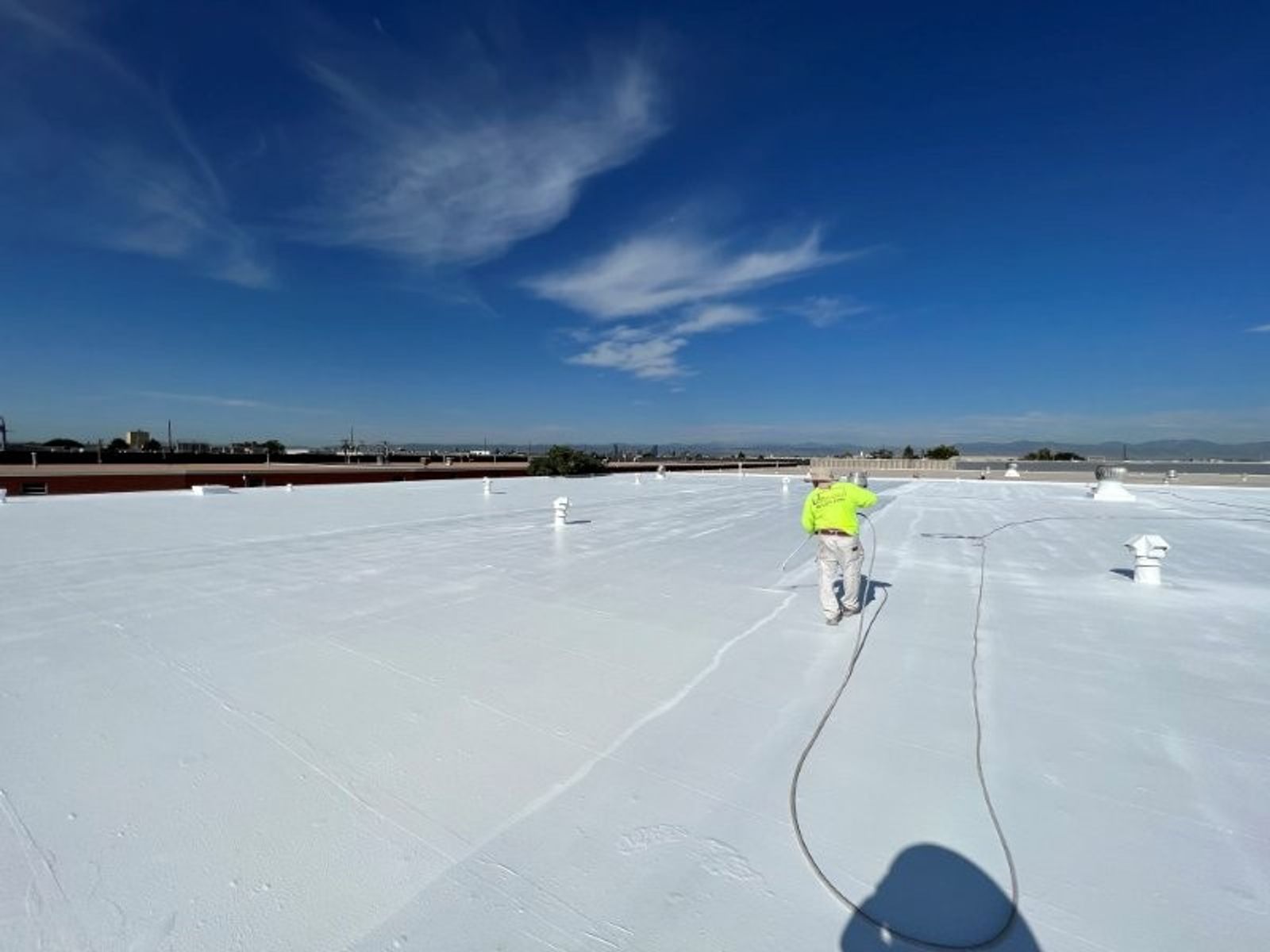
Silicone roof restoration is a full renewal of a low-slope commercial roof, finished with a silicone coating. The coating is only the last step. Before it goes on, the roof is surveyed, the wet insulation is removed, and every detail that leaks is rebuilt.
This page walks through that process in order. It covers what happens on the roof, what you should expect in the proposal, and how the system is maintained afterward.
Why restoration teams choose silicone
Silicone holds up well where water sits on a roof after rain. Many flat roofs in Los Angeles have a few spots that never drain completely, and silicone tolerates that better than most coatings. It also stands up to strong sun without breaking down quickly.
The choice between silicone and other chemistries is its own decision. We cover it on our page comparing silicone coating chemistry with the alternatives. This page assumes silicone is the fit and focuses on how the restoration gets done.
Step one: survey and adhesion testing
Every silicone restoration starts with a moisture survey with core cuts. The scan shows where insulation is wet, and the cores confirm it. The wet areas get mapped on a roof plan that becomes part of the scope.
Next comes adhesion testing. Small patches of the proposed system go down on cleaned sections of the existing roof. After they cure, they are pulled to check how well they bonded.
The adhesion results decide the prep. A roof may need a primer, a more aggressive cleaning, or a different approach on certain surfaces. Skipping this step is how coatings end up peeling in sheets a few years later.
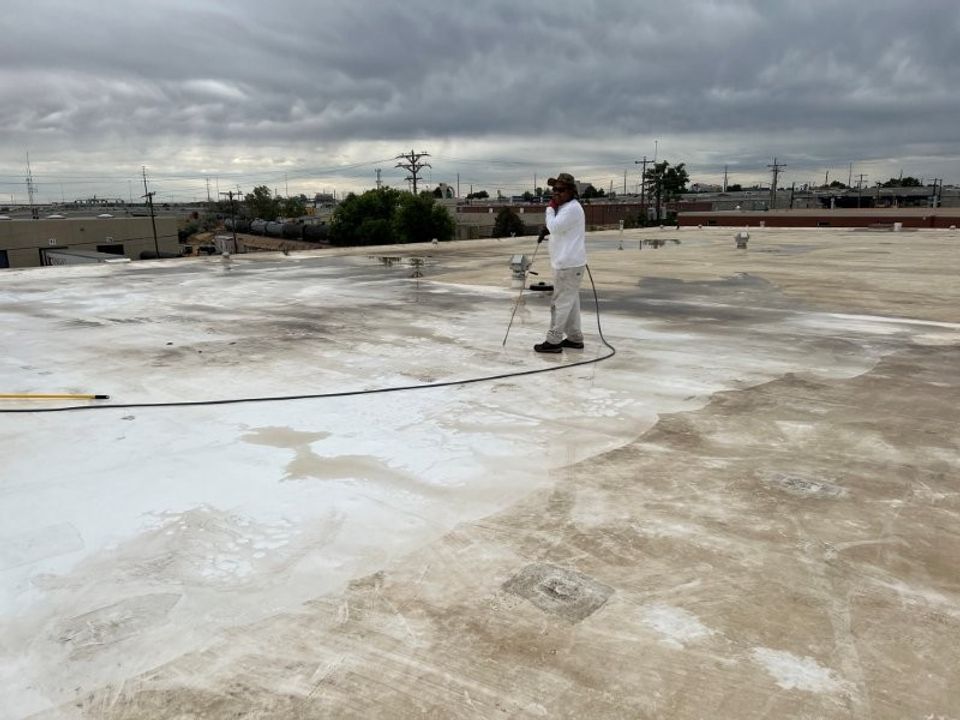
Aged rubber roof field with ponding, before any prep work.
Step two: wet insulation removal
Wet insulation has to come out before any coating goes down. Silicone forms a watertight film, so any water left underneath has nowhere to go. It keeps soaking the deck and the new surface starts to blister.
The crew cuts out each wet section down to the deck. New insulation and a compatible membrane patch go back in, fastened or adhered to match the roof. Those patches get the same prep and coating as the rest of the field.
Step three: cleaning, repairs, and reinforcement
The roof is cleaned down to a sound surface. Dirt, chalking, loose granules, and any flaking prior coating come off, and the surface is left to dry. Silicone will not bond reliably to a dirty or damp roof.
Then the details get rebuilt. These are the places a silicone restoration reinforces before the field is coated.
- Seams and laps, which get fabric or seam tape embedded in silicone.
- Wall and curb flashings, including the top edge where the flashing ends.
- Pipe penetrations, pitch pans, and equipment supports.
- Drains and scuppers, which are cleared and sealed at the clamping ring or opening.
- Blisters, splits, and punctures found during the walk.
Step four: coating the field
Silicone goes on by spray or roller, in one or more passes, to the thickness the specification calls for. Thickness is checked with a wet film gauge as the crew moves across the roof. The film thickness is what gives the system its service life, so thin spots matter.
Weather controls the schedule. Silicone needs a clean, dry surface, and most products cure using moisture from the air, so a sudden rain on fresh material is a real concern. The crew watches the forecast and coats one section at a time.
Larger nonresidential recoats in California fall under cool roof rules. The 2025 California Energy Code requires rated products when a nonresidential roof is recoated.
You can look up a product's aged reflectance in the Cool Roof Rating Council directory. The broader energy picture is covered in our section on cool roofs and energy savings.
Working around tenants and rooftop equipment
A silicone restoration happens with the building open. There is no tear-off, so the interior stays closed to the weather the whole time. Most tenants notice little beyond foot traffic on the roof and some noise during cleaning and repairs.
Rooftop units need planning. Spraying near air intakes can pull odor into the building, so units may be shut down or their intakes covered while that section is coated. Overspray is also controlled near parked cars, walls, and neighboring buildings.
Solar arrays add time. Coating under and around racking is slower, and some arrays have to be lifted or worked around in stages. The proposal notes how the array will be handled before work starts.
The recoat cycle
A silicone roof is designed to be recoated rather than torn off. As the film wears, a fresh layer renews it. According to the roof coatings trade association, coatings can be recoated as they wear, extending the life of the roof again.
Silicone generally bonds best to more silicone. That means a silicone roof commits you to silicone for future recoats. The recoat itself is simpler than the first restoration, because the details were already rebuilt.
Before each recoat, the roof gets checked for wet areas again. Any damage from trades, equipment swaps, or storms is repaired first. Then the surface is cleaned and the new silicone goes on over the old film.
Regular upkeep sets the timing. Cleaning, drain clearing, and small repairs keep the film intact and tell you when a recoat is due. A preventive maintenance program for coated roofs tracks that wear over time.
What drives the cost of a silicone restoration
Cost depends mostly on what the survey and adhesion tests find. The amount of wet insulation, the number of details to reinforce, and whether the roof needs a primer all move the price. Film thickness and roof size matter too.
Two roofs of the same size can be far apart on price for these reasons. A dry roof with tight seams needs little beyond cleaning and coating.
Access, solar arrays, and working around occupied spaces add labor. The written proposal carries the number and breaks out each part of the work.
Some roofs turn out to be poor candidates once the survey is done. For a wider view of when restoration makes sense at all, see our guide to restoring commercial roofs.
Questions on this service
Can you put new silicone over an old silicone roof coating?
Yes, and silicone is usually the only thing that bonds well to it. The old surface is cleaned thoroughly, damaged areas are repaired, and a fresh silicone coat goes over the top. That compatibility is part of why a silicone roof is planned around future recoats.
Why does a silicone roof get dirty so fast?
Silicone surfaces tend to hold airborne dirt more than some other coatings. Over time that dirt dulls the white finish and lowers how much sunlight it reflects. Periodic cleaning during scheduled maintenance helps keep the roof reflective.
Is a silicone coated roof slippery?
It can be, especially when wet or dusty. Walkway pads or a textured surface along service paths to rooftop equipment make it safer for other trades. We point out where those paths should go during the restoration.
What roof types can a silicone restoration go over?
Silicone can go over many low-slope surfaces, including single-ply, modified bitumen, built-up, sprayed foam, and metal, once they are prepared. Some surfaces need a primer first, such as asphalt roofs that can bleed through. An adhesion test on the actual roof confirms the right prep before the scope is final.
How do you know silicone will stick to my roof?
We test it. Small patches of the proposed system go down on the prepared surface and are pulled after they cure to check the bond. The result decides whether the roof needs a primer, extra cleaning, or a different approach.
Related commercial roof restoration services
This page is one part of commercial roof restoration. The pages below cover the rest.
Other commercial roof services
Each property usually needs one clear scope, not all five at once. The walk tells us which page below matches the building.
- Commercial Roof Repair
- Commercial Roof Coatings
- Commercial Roof System Installations
- Commercial Roof Inspection and Certification
Ready for a written scope? Request a site visit or call (747) 308-4045.