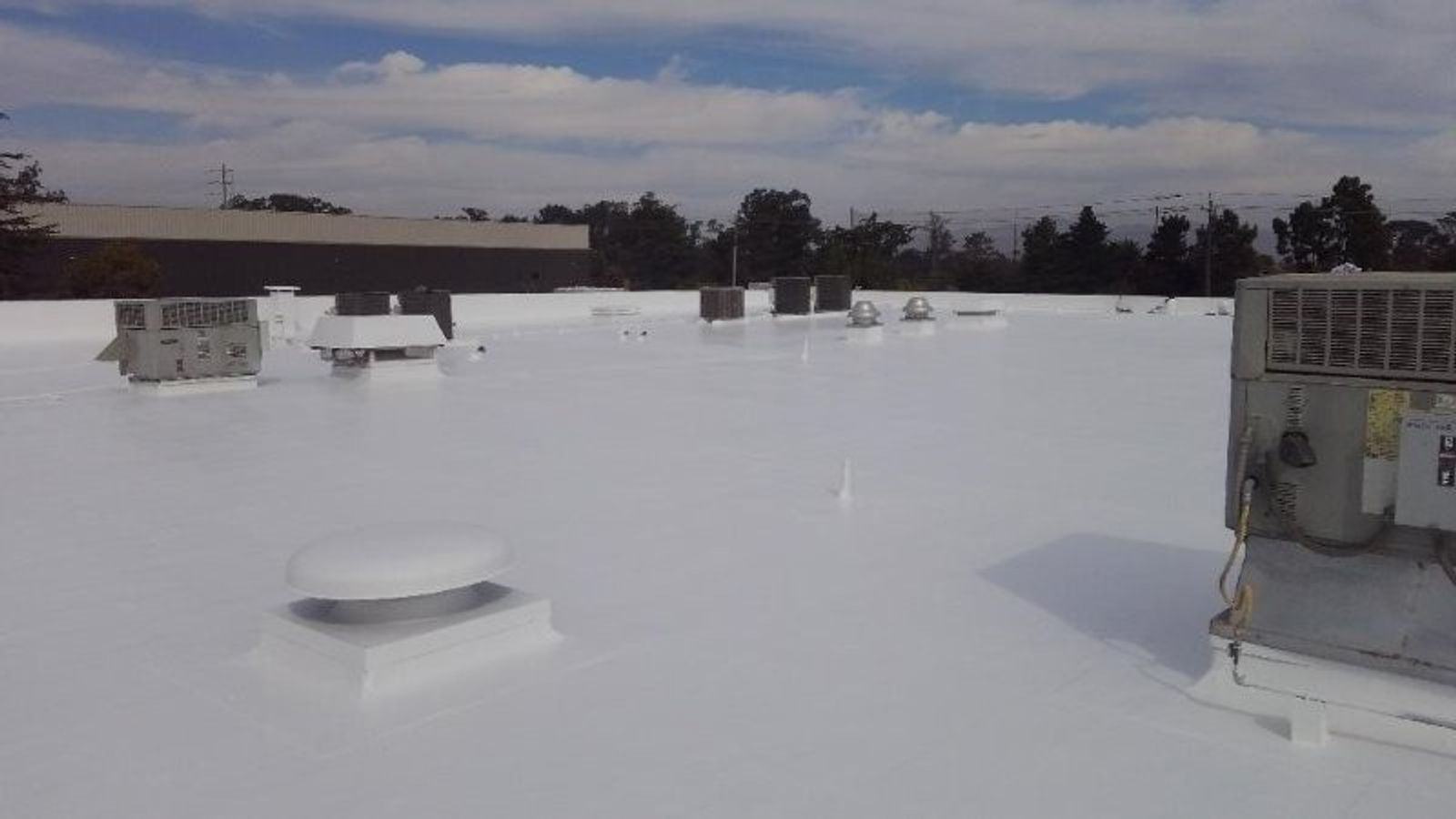
An acrylic roof coating is a water-based, highly reflective film for commercial roofs that drain well. It is easy to recoat, holds up to service traffic, and stays bright white when kept clean. It is also the coating most often put on the wrong roof.
We apply acrylic coatings on low-slope commercial and industrial roofs across greater Los Angeles. This page covers where acrylic fits, what the ASTM standard tells you, and the prep and weather rules that decide whether it lasts.
Where acrylic fits on a commercial roof
Acrylic works best on a roof with positive drainage, where water is gone within a day or two after rain. Metal roofs, sprayed foam, and well-drained single-ply and built-up roofs are common candidates. Roofs that see frequent HVAC service also suit it, because acrylic takes foot traffic well.
Sprayed foam roofs are a common acrylic application. Foam breaks down quickly in sunlight once it is exposed, and the coating is what shields it.
It also suits owners who plan to keep recoating. Acrylic bonds readily to clean, aged acrylic, so each cycle adds a fresh surface without stripping the last one. That makes it a natural choice in a long-term roof maintenance program.
What ASTM D6083 tells you
ASTM D6083 is the standard specification for liquid-applied acrylic coatings used in roofing. It sets baseline physical properties those products should meet. When a data sheet states compliance, you have a common reference for comparing bids.
The standard does not tell you how thick to apply the product. It also says nothing about prep, primer, or detailing on your roof. Those belong in the job specification, and they matter more than the label.
Acrylic vs silicone on ponding roofs
Standing water is the one condition acrylic handles poorly. A water-based film that sits under a pond for days can soften, blister, and lose its bond. On a roof with widespread ponding, acrylic is usually the wrong product.
There are two honest fixes. The first is correcting the drainage, with added drains, crickets, or tapered insulation, so acrylic becomes a fair choice. The second is choosing a chemistry built for it, covered on our silicone roof coating and ponding water page.
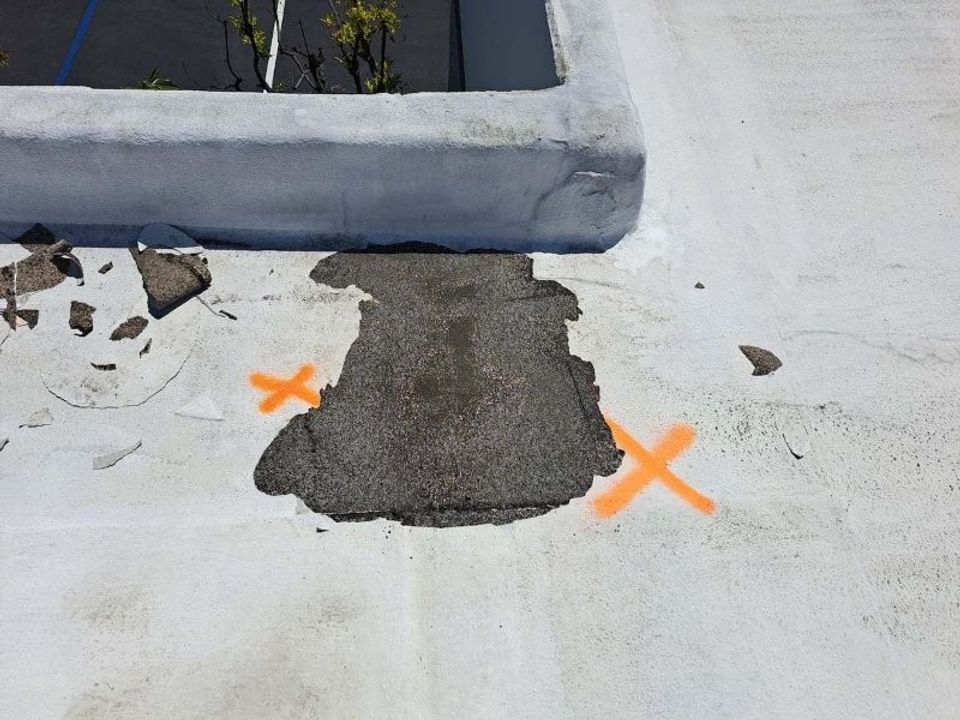
Dark weathered cap sheet on a commercial roof before any coating goes on.
Prep, primers, and bleed-through
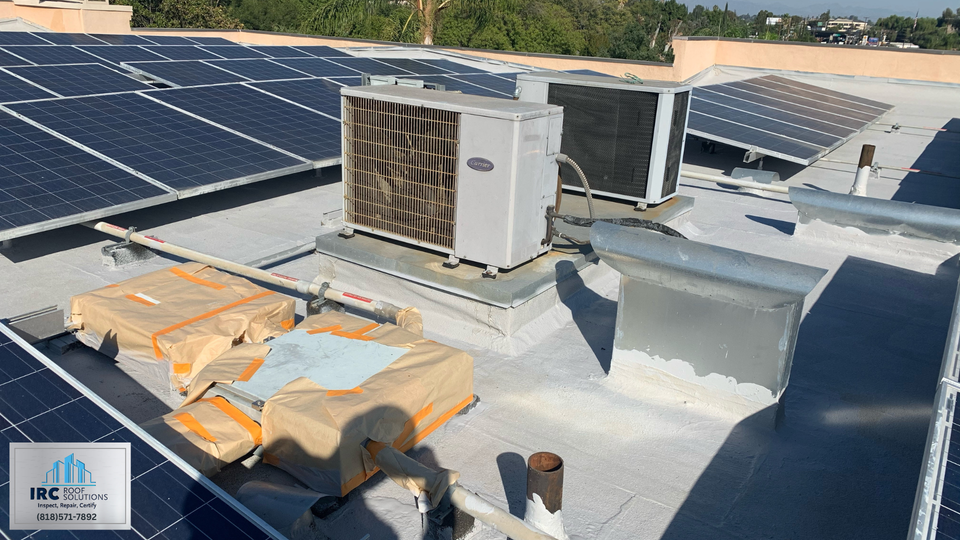
Acrylic needs a clean, sound, dry surface. The roof is pressure washed, loose granules and failed coating come off, and open seams and flashings are repaired. Any wet insulation found is cut out and replaced before coating.
Primer depends on what the acrylic goes over. Asphalt cap sheets like the one above can bleed oils that stain a white coating, so they usually get a bleed-blocking primer. Rusted metal gets treated and primed, and some single-ply sheets need an adhesion primer.
Adhesion test patches settle the primer question on the actual roof. A fabric strip set into a cured test area is pulled by hand. If it peels clean off the substrate, the system changes before the full roof is coated.
Coats, film thickness, and reinforcement
Acrylic goes on in multiple coats, usually a base coat and a top coat. Many crews tint the base coat a different color, so a missed spot in the top coat shows immediately. Each coat has a specified wet thickness checked with a mil gauge.
Acrylics carry a lot of water, so the dry film is much thinner than the wet coat. The specification should name the target dry film thickness and the rate per coat that reaches it. Without that number, two bids for the same roof are not comparable.
Details need more than film. Fabric reinforcement is set into a wet base coat at these points, then covered by the following coats.
- Seams and laps in the existing membrane.
- Curbs, parapet transitions, and flashing terminations.
- Drains, scuppers, and pipe penetrations.
- Repaired cracks, splits, and blisters.
Cure and weather windows in Los Angeles
Acrylic cures by drying, so every coat needs warmth and dry air to set. Each product lists a minimum temperature and a dry time before rain or dew. Rain on uncured acrylic can wash it off the roof and into the drains.
Los Angeles gives acrylic a long season, with limits. Coastal marine layer mornings leave dew that has to burn off first, and late starts risk evening dew on a fresh coat. Winter storms shorten the workable days, so we schedule around the forecast and coat only what can cure.
Summer heat in the San Fernando and San Gabriel valleys brings the opposite problem. A coat can skin over on top while the film underneath is still wet. Hot-day work starts early and each coat goes on at the specified rate, never heavier to save a trip.
Coated roof surface after cleaning and repair work.
Recoat cycles and Title 24
An acrylic surface wears thinner with sun and weather. A recoat means washing, repairing any damaged details, testing adhesion, and adding fresh coats to the specified thickness. On a roof that is still dry and attached, that cycle can repeat many times.
Each recoat also falls under California's energy code. The 2025 Energy Code requires products rated by the Cool Roof Rating Council on nonresidential recoats. When more than 50 percent of the roof or more than 2,000 square feet is recoated, whichever is less, the numbers apply.
A low-slope nonresidential roof then needs an aged solar reflectance of at least 0.63 and a thermal emittance of at least 0.75, or an SRI of at least 75. The rated values are listed in the Cool Roof Rating Council directory. Recoats skip the insulation requirement but not this rule.
What drives the cost of an acrylic coating
The written proposal carries the number. Roof area, prep and repair scope, primer, the number of coats, and the dry film target move it most. Drainage corrections, when needed, are listed as their own line.
Sometimes the right answer is not a coating yet. If the membrane is failing in several places, we explain how we decide between repair and replacement, or whether full flat roof restoration fits better. The broader roof coating comparison covers the other families.
Questions on this service
Can acrylic roof coating handle ponding water?
Not well. Acrylic is water based, and a film that sits under standing water for days can soften and lose its bond. Ponding areas should be corrected with better drainage, or the roof should get a coating built for standing water.
How long does acrylic roof coating need to dry before rain?
It depends on the product, the temperature, the humidity, and how thick the coat is. The product data sheet lists the dry time needed before rain or dew. In Los Angeles that usually means coating in the middle of a dry day with no rain in the forecast.
Can you apply new acrylic coating over an old acrylic roof coating?
Yes, if the old coating is still bonded. The roof is washed, loose or chalky material is removed, and a test patch confirms adhesion. Areas where the old film has let go get scraped back before the new coats go on.
What is ASTM D6083?
ASTM D6083 is the standard specification for liquid-applied acrylic coatings used in roofing. It sets baseline physical properties for those products. A data sheet that states compliance gives you a common reference for comparing bids.
Can acrylic roof coating go over an asphalt or modified bitumen roof?
Often yes, once the surface is cleaned and primed. Asphalt can bleed oils that stain a white coating and weaken it, so a bleed-blocking primer is usually needed. An adhesion test on the roof confirms the system before the full job.
Related commercial roof coatings services
This page is one part of commercial roof coatings. The pages below cover the rest.
Other commercial roof services
Each property usually needs one clear scope, not all five at once. The walk tells us which page below matches the building.
- Commercial Roof Repair
- Commercial Roof Restoration
- Commercial Roof System Installations
- Commercial Roof Inspection and Certification
Ready for a written scope? Request a site visit or call (747) 308-4045.